Online Reporter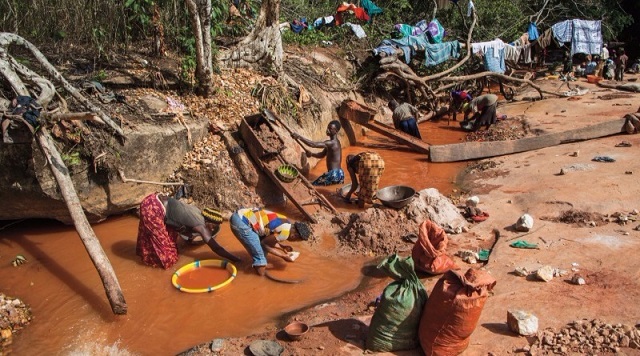
Judith Phiri
Zimpapers Business Hub
THE Zimbabwe School of Mines (ZSM) has called for zero fatalities in the artisanal and small-scale mining (ASM) sector, urging miners to undergo appropriate training to strengthen occupational safety and health practices as well as reduce mine accidents.
The call comes amid persistent safety concerns in the sector, with 64 artisanal and small-scale miners losing their lives between January and March 2026, a six percent increase from the corresponding period last year.
Officially opening the two-day Mining Safety and Rehabilitation Symposium on Friday at the institution in Bulawayo, ZSM principal Engineer Edwin Gwaze raised concerns over rising fatality statistics.
“They were not statistics. They were sons, daughters, fathers, mothers and breadwinners. Before we say anything else, let us remember them and the families they leave behind.
“The Ministry of Mines and Mining Development figures tell us how they died. Thirty were killed when the ground collapsed, 16 died from the improper use of explosives and gassing, 10 fell into abandoned or unprotected shafts and four were lost to electrocution and (dangerous) equipment,” he said.
“The minister has described these deaths as, in the overwhelming majority, preventable. I agree and when a death is preventable, it is not fate. It is a gap in knowledge, in systems and in our collective responsibility.”
He said ground collapse and blasting reflect a skills gap and unsafe practices, while abandoned shafts show a lack of rehabilitation after mining ends.
Eng Gwaze said it demonstrated the need for formalisation and adherence to proper governance frameworks, because a miner working in the shadows rarely has access to appropriate training, the requisite equipment, or inspectors who could have saved his life.
“We also cannot ignore what this sector means to our country. In 2025, artisanal and small-scale miners delivered a record 34.9 tonnes of gold to Fidelity Gold Refinery, about three-quarters of Zimbabwe’s national output of 46,7 tonnes,” he added.
“The sector sustains more than half a million livelihoods directly and many more across our rural economy. A sector that produces three of every four ounces of our gold cannot be allowed to remain as above. Safety and productivity are not competing goals. A safe mine is a more productive mine, and a rehabilitated mine leaves a legacy instead of a liability.”
He said this symposium was part of a longer story as some of the institutions present were born out of the ASM Academy held at ZSM in 2022, made possible by ZELO and ActionAid through the Global Environment Facility.
Eng Gwaze said the Academy taught them that when small-scale miners are given structured, practical training, they organise, formalise and take safety seriously.