Nqobile Bhebhe
Zimpapers Business Hub
Zimbabwe is uniquely positioned to unlock billions of dollars in potential private capital required to revolutionise its power sector, providing it takes decisive action to address some financing modalities.
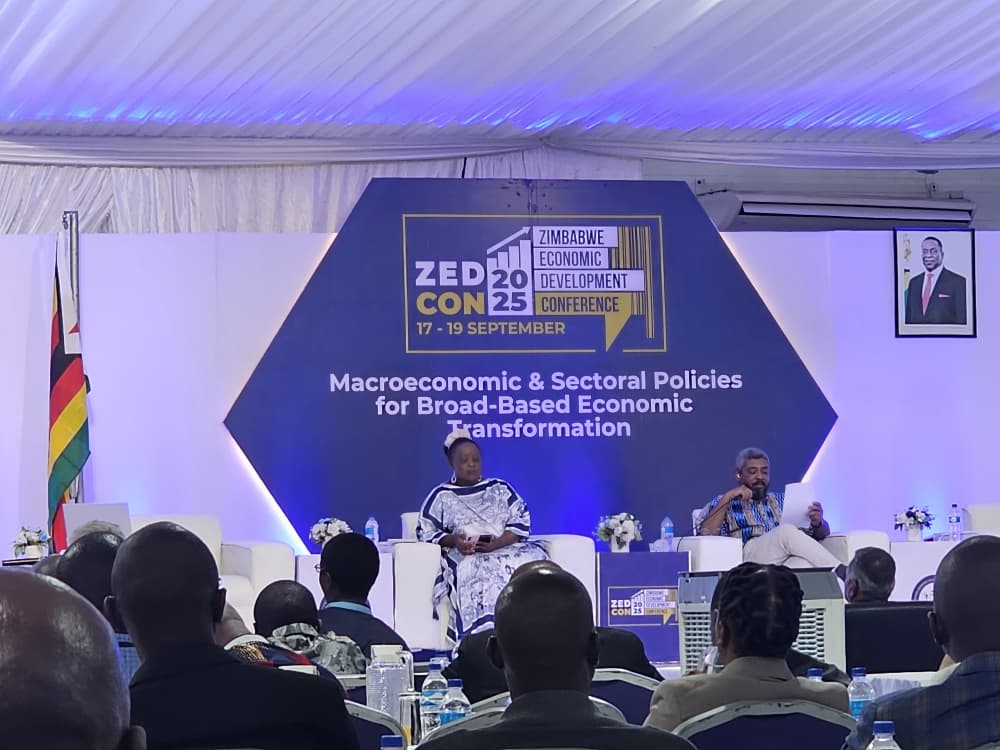
While the country has built strong investment frameworks, energy experts at the Zimbabwe Economic Development Conference (ZEDCON) 2026 in Bulawayo emphasised that taking the final step to resolve financial closure bottlenecks will fully unleash the funding needed to power Zimbabwe’s ambitious economic future.
Under the National Energy Compact, Zimbabwe is targeting 5 432 megawatts (MW) of installed generation capacity by 2030, up from about 1 500MW of peak supply currently, while renewable capacity is expected to rise to 2 640MW from 1 282MW in 2024.
Zimbabwe is targeting universal household electricity access by 2030, from about 41 percent in 2024.
Meeting the targets requires a total investment of US$9,13 billion, with approximately US$5 billion expected from private investors.
It means the country should mobilise the required private capital over the next 51 months.
This translates to US$100 million every month until December 2030.
The scale of the financing requirement underscores the urgency of addressing structural impediments that have continued to deter investors and lenders.
The National Energy Compact identifies legacy debt at power utility ZESA Holdings, sub-cost tariffs and currency risk as key constraints affecting investment.
A presentation on “Recommendations to Improve the Enabling Environment for Investments in Energy’ delivered by independent power producer and renewable energy company Centragrid, noted that Zimbabwe Electricity Transmission and Distribution Company carries arrears to regional suppliers, legacy loans and expensive domestic borrowing; high cost of capital limits investments in infrastructure and connections are slow, the presentation notes.
Centragrid owns and operates a grid-scale 25 megawatts (MW) solar photovoltaic (PV) power plant in Nyabira, which supplies clean electricity to the national grid.
According to Centragrid, network expansion is also lagging behind requirements, with Zimbabwe connecting between 40 000 and 60 000 households annually against a requirement of about 520 000 households a year to achieve the 2030 access target.
At the same time, technical network losses remain high at between 18 and 20 percent, compared with a 14 percent target by 2030.
The presentation argued that the country could no longer rely primarily on State and utility balance sheets to finance generation.
The scale of investments required calls for private sector balance sheets, project finance and long-term domestic and international capital.
What 2030 demands is for private balance sheets to carry most of the build, with success measured through financial closes rather than approvals, while risks are structured in ways that lenders can underwrite.
A major concern noted was the gap between approved investment frameworks and actual projects reaching financial close.
The Government Implementation Agreement (GIA), despite being approved more than three years ago, has yet to result in a project reaching financial close.
“When a well-designed framework produces no closure, the constraint is structural. It must be diagnosed and fixed, not waited out,” the presentation said.
If Zimbabwe fails to secure the necessary US$9,13 billion under its newly launched National Energy Compact, the consequences will deeply destabilise the country’s grid, economy and social framework.
Zimbabwe’s industrial sector already loses an estimated US$80 million every month due to production delays and diesel generator costs.
Without capital to rehabilitate aging thermal plants and build new capacity, this deficit will worsen.
Massive power shortages already wipe out approximately 6,1 percent of Zimbabwe’s GDP annually. A failure to secure funding will trap the economy in a cycle of stagnation, preventing the realisation of the country’s Vision 2030 upper-middle-income goals.
Under the compact, Zimbabwe committed to an ambitious 520 000 connections annually (320 000 on-grid and 200,000 off-grid) and failure to secure the requisite funding would widen the energy access gap.
Unlike massive mining operations, Small and Medium Enterprises (SMEs) cannot afford alternative power setups like large diesel plants or commercial solar. A prolonged investment drought means potential widespread SME closures and job losses.
Priority should also be on restoring investor confidence by addressing the ability to repatriate funds.
Banks are reportedly seeking resolution of blocked funds as a precondition for new lending, while investors require assurance that debt service and dividends can be transferred out of Zimbabwe when due.
“Banks tell us directly that resolving blocked funds is a precondition for new lending.
“Make repatriation of debt services and dividends work in practice, not only on paper.
“Set out a clear, time-bound plan to resolve existing blocked funds,” the presentation adds.
The country must also resolve or restructure historical obligations, particularly legacy arrears owed by the electricity offtaker to regional suppliers and lenders.
Such obligations increase the risk priced into new projects and ultimately raise the cost of capital.
Fiscal certainty was identified as another critical requirement.
The proposals include maintaining a zero percent corporate tax rate for the first five years of an energy project and 15 percent for the remainder of its life, alongside zero-rated import duty on energy equipment.
The sector is also seeking relief from value-added tax during construction.
Although VAT is recoverable after construction, the presentation estimated that it could add about US$1 billion to upfront funding requirements across the US$5 billion private investment programme, it noted.
The presentation also called for Zimbabwe to deepen its domestic pool of long-term capital.
Domestic banks currently provide mainly short-term and expensive funding, creating refinancing risks and forcing projects to seek longer-term international debt.
It noted that energy projects should continue to qualify as prescribed assets, while national project status, which has been repealed, should be reinstated.
The proposals are aimed at answering the fundamental questions lenders ask before committing capital: whether investors can get their money out, whether the offtaker will pay, whether project economics are predictable and who will provide capital alongside them.