Online Reporter
Judith Phiri,Zimpapers Business Hub
Zimbabwe shoemakers and leather sector players are set to enhance precision with the latest shoe design software that increases efficiency by speeding up the design and modification process.
Such software improves communication between design teams and manufacturers enabling rapid prototyping that can help brands stay ahead of trends through faster production cycles and artificial intelligence (AI)-powered idea generation.

Speaking at the official opening of the Computer-Aided Design (CAD) Training for Lead Designers in the Zimbabwe Leather Clusters at the Leather Institute of Zimbabwe (LIZ) on Thursday, LIZ Executive chairman Mr Cornelious Sunduza said they were in need of US$3 000 to ensure they install the latest software.
“In June Comesa, through its Africa Leather and Leather Products Institute (ALLPI), officially launched the Zimbabwe Leather Satellite Design Studio here at LIZ, a major step forward in empowering small to medium enterprises (SMEs) and advancing the region’s leather value chain,” he said.
“What we now need is about US$3 000 to install the latest software for comprehensive three-dimensional (3D) CAD programmes such as Shoemaster for prototyping and creating precise virtual models.”
The Leather Satellite Design Studio was funded by the European Union through the RECAMP programme at €150 000 (Euro) received cutting-edge equipment for equipping local artisans and entrepreneurs with tools to enhance product quality, innovation and competitiveness.

Mr Sunduza said the CAD training will ensure leather sector players are able to enhance their creativity through improved visualisation and accuracy by using software like Shoemaster.
The Zimbabwe Leather Development Council (ZLDC) chairman, Mr Clement Shoko represented by the Secretary Mr Jacob Nyathi, said as the apex body of the Zimbabwe Leather Value Chain, such initiatives were key to the leather sector growth.
“We are mandated to coordinate all the activities of the development of the Zimbabwe Leather value chain and we are proud to be part of this initiative. It aligns with objective 2 of the Zimbabwe Leather Sector Strategy (2021-2030) implementation matrix and is also in line with the Zimbabwe’s Vision 2030 aspiration of becoming an upper middle income nation by 2030,” he said.
“This training is a critical step towards equipping our leather clusters with skills and knowledge needed to access new technologies, develop innovative designs and improve products quality. By leveraging the ALLPI’s Zimbabwe Regional Leather Satellite design studio housed at LIZ, we aim to increase our competitiveness in both local and international markets.”

He said the training will ensure participation of leather clusters in local procurement tenders as well as accessing regional and international markets thereby increasing the share of exports of Zimbabwe’s leather products.
Mr Shoko urged participants to take full advantage of the opportunity to engage actively with the trainers and to share their experiences as well as knowledge with one another.
“Also share and cascade knowledge with other leather players after this training as you go back to different work places around the country. Such initiatives support in implementing the Zimbabwe Leather Sector Strategy and the development of leather clusters in particular.”
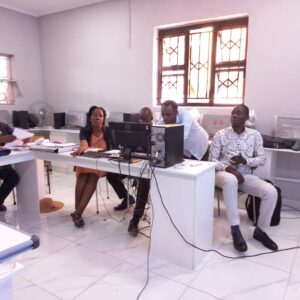
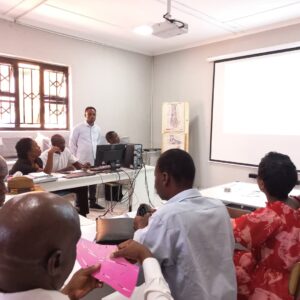
Over 10 participants from different parts of the country are undergoing the training for 10 days being equipped on key roles and functions of a product development team in design studio, overview of CAD/CAM systems in the footwear industry as well as introduction to software interface and navigation among others.