

 Online Reporter
Judith Phiri [email protected]
As the world gathers at the 17th Conference of the Parties to the United Nations Convention to Combat Desertification (UNCCD COP17) in Ulaanbaatar, Mongolia, Zimbabwe is presenting a compelling model for global ecosystem restoration.
Through the implementation of the Drylands Sustainable Landscapes Impact Program (DSLIP)—locally known as the GEF 7 project, Zimbabwe is demonstrating how aligning science, policy and community ownership can halt land degradation while building resilient rural livelihoods.
The DSLIP initiative is part of a broader global effort spanning 11 countries across Southern, East, and West Africa, as well as Asia. Launched in response to the UNCCD’s call for a Land Degradation Neutral World by 2030 under the Land Degradation Neutrality Target Setting Program (LDN-TSP), Zimbabwe set its national targets in 2017.
In an interview, National Project Coordinator for DSLIP, Mrs Precious Magwaza, said she is expected to share Zimbabwe’s experiences and lessons from the implementation of the programme during COP17 side events.
“Today, the country’s efforts focus heavily on reversing desertification within the vulnerable Save and Runde river sub-basins. The program is implemented by the Ministry of Environment, Climate and Wildlife through the Environmental Management Agency (EMA) as the executing entity, with support from the Food and Agriculture Organisation (FAO) as the GEF-accredited entity,” she said.
“Implementing partners include the Forestry Commission, World Vision, the Community Technology Development Organisation (CTDO) and the Zimbabwe Parks and Wildlife Management Authority (Zimparks).”
She said a core pillar of the project’s success was putting local communities at the centre of decision-making rather than treating them merely as passive beneficiaries.
Mrs Magwaza said to date, sustainable land and forest management interventions have successfully restored or placed under improved management over 200 000 hectares of land degradation hotspots across Midlands, Manicaland and Masvingo provinces.
She added: “More than 15 000 people, the majority of whom are women have directly benefited through agricultural support as there has been provision of climate-smart agricultural inputs, traditional grain seeds and equipment.”
Mrs Magwaza said on infrastructure support, the project has provided solar powered boreholes, tree nurseries, community seedbanks and processing plants, to mention a few.
On business development, she said enterprise development focused on non-timber forest products (NTFPs) and small livestock production as well as diversified income streams.
She said on ecosystem protection: “There is active community involvement in the management of rangelands, croplands and forests to increase land productivity and boost household incomes.”
On key lessons for COP17, Mrs Magwaza said beyond local impact, Zimbabwe’s participation in the 11-country network facilitates vital cross-border knowledge sharing, allowing effective practices to be scaled up nationally and regionally.
She said at COP17, under the overarching theme “Restoring Land. Restoring Hope,” Zimbabwe’s experience offers a crucial lesson for global environmental governance: complex environmental challenges cannot be solved in silos.
“By mainstreaming sustainable land and forest management across development, agriculture, and business sectors, Zimbabwe is demonstrating that land degradation is not merely an environmental crisis, but an opportunity for socio-economic survival,” she added.
“When rigorous science guides policy and local communities own the solutions, degraded landscapes can thrive once more, restoring both the soil and the livelihoods that depend on it.”
A broad delegation comprising representatives from Government ministries, State-owned enterprises, members of the Parliamentary Portfolio Committee on Environment, Climate and Wildlife and civil society organisations is also attending COP 17, reflecting a whole-of-nation approach to environmental governance.
Environment, Climate and Wildlife Minister Evelyn Ndlovu will lead Zimbabwe’s participation in the High-Level Ministerial Segment, high-level policy dialogues and strategic bilateral engagements.
While Permanent Secretary Mr Simon Masanga led the technical proceedings and subsidiary body negotiations during the initial phase of the conference.



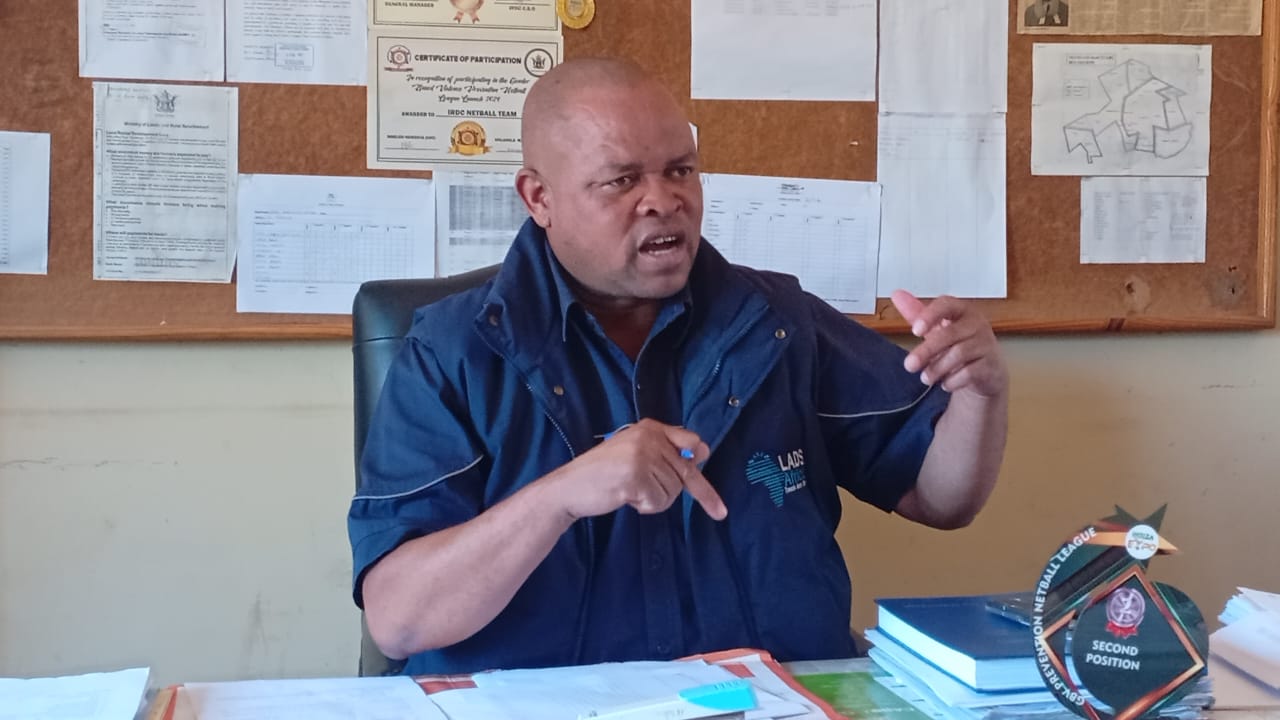
 Bongani Ndlovu