

 admin
admin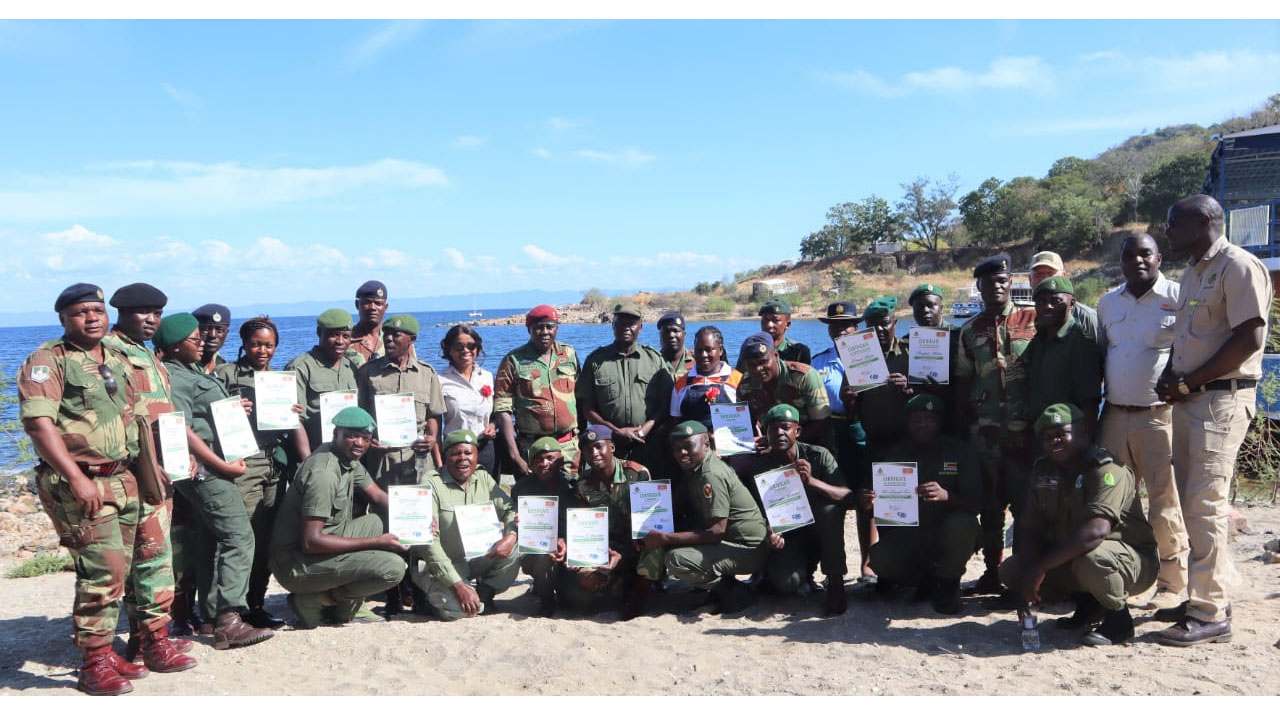
Sifelani Tsiko Agric, Environment & Innovations Editor
Zimbabwe is ratcheting up the training of key personnel associated with waterborne patrolling activities to reduce poaching, illegal wildlife trade, trafficking and strengthen law enforcement operations in the Mid Zambezi Valley region.
A total of 15 Zimbabwe Parks and Wildlife Management Authority (ZimParks) rangers and Zimbabwe National Army (ZNA) Boat Squadron Regiment officials completed an Advanced Coxswain Course recently.
The advanced coxswain training brought the total to 33 of rangers that have been trained in the country since the first one that was done in 2021.
Trainees completed a rigorous 3-week advanced coxswain course which equipped them with critical knowledge and skills on wildlife conservation with a particular focus on anti-poaching and law enforcement activities within marine or water-based environments.

The training was made possible by the technical support from AWF in partnership with the Zimbabwe Parks and Wildlife Management Authority (Zimparks) and the Zimbabwe National Army (ZNA) Boat Squadron Regiment.
The training is funded by the European Union (EU) under the Convention on International Trade in Endangered Species, Monitoring the Illegal Killing of Elephants (CITES MIKE) project.
“I am happy with the way it was done because this will strengthen how anti-poaching river and land patrols are done in the Mid Zambezi Valley landscape,” said AWF Zimbabwe Country Director Dr Olivia Mufute.
“With these skills, Zimparks rangers will be instrumental in conducting local and transboundary patrols and will contribute significantly to species protection through reducing poaching and illegal wildlife trafficking.
“The training of rangers on river anti-poaching patrols is in line with AWF Zimbabwe’s 10-year Conservation Strategy (2020-2030) which spells out the need to conserve Zimbabwe’s wildlife, reduce poaching and trafficking through supporting wildlife monitoring and protection systems.”
This advanced coxswain training included five women – two from Zimparks while three were from ZNA.
“These trainings have continued to recognize the importance and capabilities of the girl child as we continue to value the need for gender balance and equality. I applaud [women] for continuing to defy the odds and for showing that female rangers can even outcompete their male counterparts by participating in more risky tasks such as operating in turbulent waters of Lake Kariba and other water bodies,” said Zimparks director general Dr Fulton Mangwanya in a speech read on his behalf by Arthur Musakwa.
Zimparks coxswains will be deployed on Lake Kariba, Hurungwe Safari Area, Chewore Safari Area, and Dande Safari Area stretch to enhance anti-poaching operations.
Advanced coxswain training has strengthened the capacity of rangers to curb poaching activities in the Mid Zambezi Valley.
“Our efforts are not going in vain. I am reliably informed that we have not received any incidences of elephant poaching in protected areas like Mana Pools recently,” Dr Mufute said.
The training covered the following subjects: handling of suspects, observing human rights in anti-poaching work, first aid, physical training, weapon handling, embarking and disembarking water vessels, ecology, routine ambush and raiding patrols, boat operations, and other relevant modules to improve river patrols.
Rosemary Kateguru, a ranger operating from the Zambezi River Specialized Anti-Poaching Unit (ZARSAU) from the Doma community was named as one of the best Advanced Coxswain trainees.
In December 2021, Kateguru made history by becoming the first Class 1 holder of the Launch-Master Coxswain certificate, which allows her to operate big boats in Zimbabwe.



 Online Reporter