Freeman Razemba
Senior Reporter
Zimbabwe has taken another significant step to strengthen its commitment to safe, secure and orderly civil aviation by acceding to the Protocol incorporating Article 3bis of the Convention on International Civil Aviation.
The Article prohibits states from using weapons against civil aircraft in war situations.
It requires that interceptions should not endanger lives or aircraft safety and it was adopted by consensus on May 10, 1984 and has been in force since October 1, 1998.
It balances state airspace sovereignty against passenger safety. States cannot use weapons against civil aircraft in flight or risk lives and safety during interceptions, without altering UN Charter obligations.
States may order unauthorised or non-compliant aircraft to land at a designated airport using lawful methods under published regulations.
Aircraft must obey these orders, and states must enforce domestic laws ensuring compliance for registered or operated aircraft.
It was formally adopted at the 25th International Civil Aviation Organisation (ICAO) Assembly in Montreal, and the protocol continues to expand internationally, with Zimbabwe being a recent state to accede in November 2026.
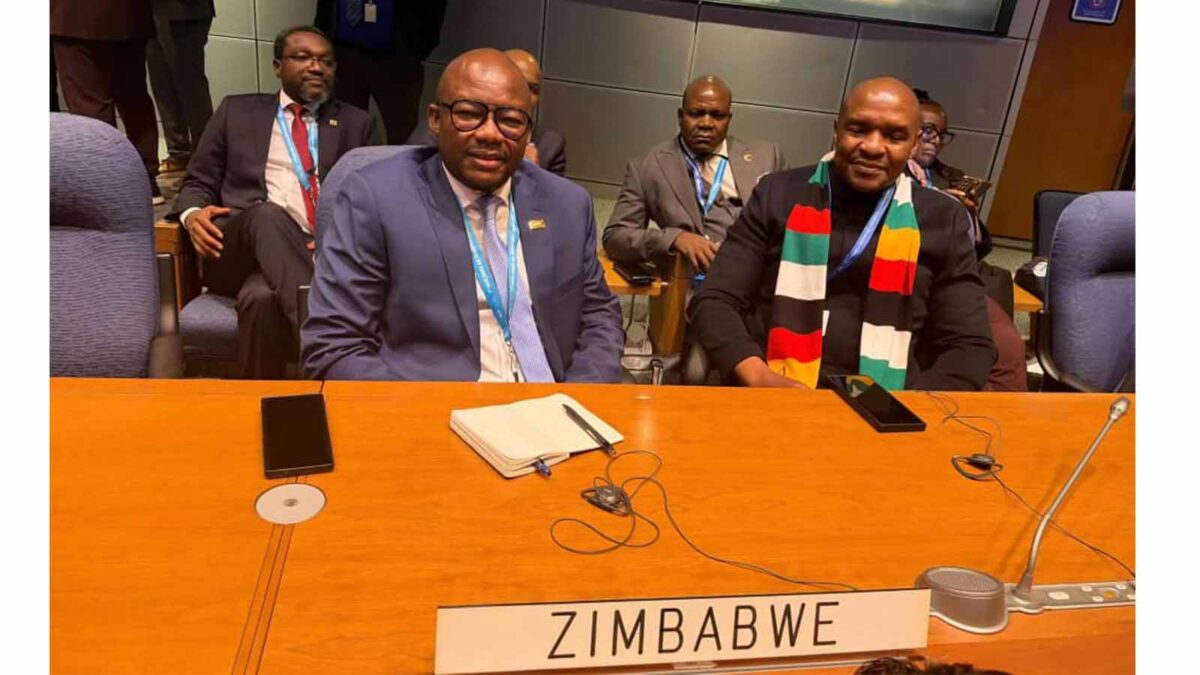
Last week, Transport and Infrastructural Development Minister Advocate Felix Mhona, led a delegation to attend the 7th International Civil Aviation Organisation (ICAO) Air Transport Conference held in Montreal, Canada, which was aimed at shaping the future of international Air Transport.
This is a high-level global forum that was dedicated to long-term strategic direction of international air transport.
Minister Mhona was accompanied by the Civil Aviation Authority of Zimbabwe director general Mr George Mashababe; the director in the Ministry of Transport and Infrastructural Development, Mr Kudzai Choto, head of legal services Advocate Kingston Magaya; Mr Munyaradzi Waniwa, who is the Head of Air Transport and Development and senior officials from the ministry.
In a statement, the Ministry of Transport and Infrastructural Development said: “The Instrument of Accession was deposited on November 20, 2026, at the International Civil Aviation Organisation (ICAO) headquarters in Montreal, Canada, by the Minister of Transport and Infrastructural Development, Advocate Felix T Mhona, following its approval by Cabinet and signing by His Excellency, President Dr Emmerson Dambudzo Mnangagwa.
“Article 3bis reinforces the protection of civil aircraft, passengers and crew by requiring States to refrain from the use of weapons against civil aircraft in flight and to safeguard lives during aircraft interception.”
According to the ministry, this milestone underscores Zimbabwe’s commitment to upholding international aviation standards, strengthening cooperation with the global aviation community and advancing a safe and sustainable aviation sector.
The International Civil Aviation Organisation (ICAO) Air Transport Conference meets approximately every 10 years in Montreal to debate and decide on the priorities and work programmes for the organisation.
The 7th ATConf was held from November 16 to 20, 2026. The conference was held under the theme “Air Transport: Powering Global Connectivity, Economic Development and Resilience in a Dynamic World”.
As an official observer organisation to ICAO and the only airline organisation permitted to submit papers and provide technical input, ATConf/7 is an important opportunity for IATA to influence ICAO’s agenda to reflect the priority concerns of our members.
This conference is a highest-level global forum dedicated to the long-term strategic direction of international air transport and ATConf/7 examines the trends, opportunities and challenges that aviation faces, and helps define priorities for the decade ahead.
This event brought together senior government officials responsible for aviation policy—including representatives working across transport and infrastructure, alongside invited international and regional organisations and key industry stakeholders engaged in the economic development of air transport.
Discussions addressed policy issues ranging from economic regulation and infrastructure financing to innovation, resilience and sustainable growth.