Mukudzei ChingwereSenior, Zimpapers Reporter
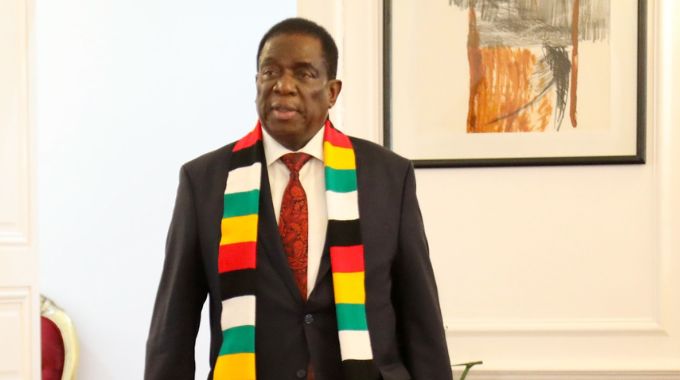
ZIMBABWE assumes the Common Market for Eastern and Southern Africa (COMESA) chairmanship today, with President Mnangagwa taking the helm of the regional bloc amid calls for stronger cooperation to end conflicts, dismantle trade barriers and translate regional integration into improved livelihoods.
The handover from Kenya at the 25th COMESA Heads of State and Government Summit in Harare places Zimbabwe at the forefront of efforts to advance regional integration, industrialisation and investment while strengthening peace and security across the region.
Ahead of President Mnangagwa’s assumption of the chairmanship, Foreign Affairs and International Trade Minister Professor Amon Murwira yesterday said peace and security must underpin the region’s economic ambitions, warning that conflict destroys the productive capacity needed to lift communities out of poverty.
Opening the 21st Meeting of COMESA Ministers of Foreign Affairs, Prof Murwira said the bloc’s mission must remain firmly focused on improving the well-being of its citizens.
“COMESA is a strategy for eradicating poverty. Poverty is our enemy and prosperity is our objective,” he said.
His remarks underscored a people-centred approach to regional integration, linking the movement of goods, investment and people with the responsibility to protect communities and create sustainable economic opportunities.
“Peace and security are not peripheral to regional integration. They are its foundation, its enabler and, ultimately, one of its outcomes,” said Prof Murwira.
“Conflict destroys people’s confidence, damages infrastructure, undermines productive capacity, displaces communities and disrupts trade. It deters investment and economic growth, deepens poverty and perpetuates a vicious cycle between poverty and conflict.”
The summit is being held under the theme “One Market, One Future: Advancing Inclusive Industrialisation, Investment and Regional Integration in COMESA”.
For Zimbabwe, the chairmanship presents an opportunity to translate these ambitions into practical cooperation in trade, infrastructure, energy and food security.
Prof Murwira said regional integration should offer citizens more than access to larger markets, enabling them, particularly young people, to enjoy higher living standards in peaceful communities.
He urged member states to invest systematically in early warning and response mechanisms, preventive diplomacy, mediation and dialogue, while addressing the political and socio-economic conditions that fuel conflict.
“The humanitarian consequences of conflicts in our region require urgent and collective attention. We do not need guns; we need ploughs,” he said.
Questioning the supply of weapons fuelling African conflicts, Prof Murwira contrasted the destruction wrought by war with the aspirations of ordinary people seeking peace and productive livelihoods.
“So, whose guns are blazing in Africa? Whose factories are producing the guns that are killing Africans? Who is fuelling these conflicts? Do our people deserve this? These are questions we must ask ourselves.”
He called for an immediate cessation of hostilities, the protection of civilians, dialogue and unhindered humanitarian access.
Prof Murwira said COMESA could not remain indifferent when lives and livelihoods were at stake, adding that the bloc should continue working with the African Union, other regional economic communities and relevant partners to help resolve conflicts.
“We must protect the vulnerable, who bear the brunt of conflict. Leadership must embody peace and inspire trust,” he said.
He also urged African countries to resist being drawn into geopolitical rivalries and strengthen their capacity to develop collective solutions to the continent’s challenges.
“We are Africa, and as Africans, we should resist being drawn into geopolitical rivalries. We have a continent to manage. We have people to feed, protect and treat with dignity,” he said. No member state could effectively shield itself from global shocks by acting alone, he said, making deeper regional cooperation essential.
Stronger intra-COMESA trade, regional value chains, interconnected infrastructure, energy cooperation and food security could help address vulnerabilities that undermine economic development and stability.
Prof Murwira urged member states to make their commitment to a common market meaningful by removing barriers that constrain commerce.
“Let our borders become administrative boundaries, not barriers to trade.
“Let us create a region, and an Africa, where our citizens can work, trade, invest and reside freely across borders.”
He said all 21 member states must translate the shared ambition of “One Market, One Future” into tangible benefits for their citizens.
“Peace must ultimately deliver tangible dividends to our people. Our citizens must experience peace not merely as the absence of conflict, but also as a driver of prosperity.”
COMESA Secretary-General Ms Chileshe Mpundu Kapwepwe reinforced the link between security and economic development, saying ministers needed to develop practical responses to an increasingly complex regional environment.
“A conflict that sheds blood, destroys infrastructure, interrupts trade, displaces communities and undermines investor confidence is not only a security problem; it is also an economic development problem,” she said. “Similarly, an economic crisis that creates unemployment, food insecurity or social exclusion can become a peace and security issue.”
Ms Kapwepwe said ministers were considering a report from the Committee on Peace and Security, which met virtually on October 15 to assess developments across the region.
She identified continuing challenges in the eastern Democratic Republic of Congo, Ethiopia, Somalia, Libya and Sudan, warning that the effects of conflict rarely remain within national borders.
In eastern DRC, armed conflict and its humanitarian consequences continue to affect population movements, regional stability and cross-border economic activity.
Sudan’s conflict, she said, remained among the region’s most devastating challenges, with displacement and humanitarian needs affecting neighbouring countries.
COMESA’s responsibility was to complement existing peace initiatives while promoting African ownership of solutions to the continent’s conflicts.
l More on www.chronicle.co.zw
Ms Kapwepwe also called for greater emphasis on credible, transparent, peaceful and inclusive elections, supported by effective dispute-resolution mechanisms, political tolerance and the participation of women and young people.
Beyond armed conflict, she said economic shocks, climate change, food and energy insecurity, organised crime and cyber threats were becoming increasingly interconnected.
She warned that disruptions beyond COMESA’s borders could affect member states through higher fuel and fertiliser prices, freight costs and insurance premiums.
“We must reduce excessive dependence on single sources of energy and critical imports, strengthen intra-COMESA trade, improve transport and logistics corridors, and promote energy diversification,” she said.
Climate pressures, including droughts, floods, land degradation and water scarcity, could also undermine livelihoods and intensify competition over resources.
On migration, Mrs Kapwepwe called for an approach that combines effective border management with protection against trafficking and exploitation, information-sharing and action to address the conditions driving dangerous journeys.