Sikhulekelani Moyo, [email protected]
THE newly formed Clothing Manufacturers and Retailers Association of Zimbabwe has introduced a five-point plan to transition the nation from exporting raw cotton to producing finished garments.
The strategy focuses on boosting the domestic cotton-to-clothing value chain and scaling up local manufacturing capabilities.
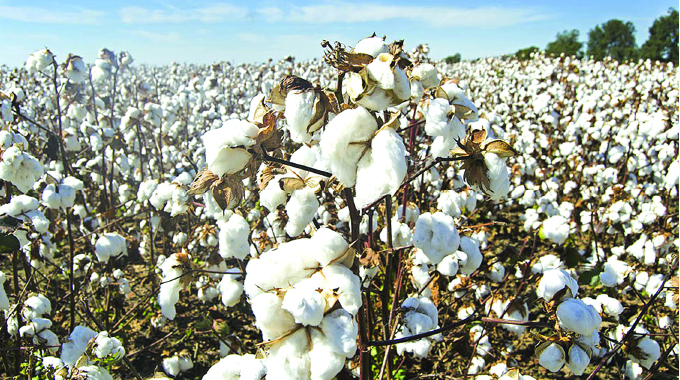
Most of the cotton produced in Zimbabwe is exported raw or as semi-processed lint rather than value-added finished goods, with domestic textile processing remaining very low.
Zimbabwe’s seed cotton output for the 2026 season is projected at approximately 38 500 tonnes, having reached a peak of 351 000 tonnes in 2011.
The wider cotton-to-clothing value-chain exports peaked at US$175 million in 2010 (comprising around US$120 million in cotton lint and US$55 million in textiles and clothing), according to the Zimbabwe Economic Policy Research Institute.
Responding to the questions from Zimpapers Business Hub, CMRAZ president Mr Sevious Mushosho said the association will champion initiatives that translate policy discussions into measurable industrial and commercial outcomes.
“Our association intends to champion practical initiatives that translate policy discussions into measurable industrial and commercial outcomes,” said Mr Mushosho.
“First, we will advocate for an enabling policy environment that supports local manufacturing, encourages investment, promotes fair competition and improves the ease of doing business.
“Second, we will promote stronger partnerships between manufacturers and retailers. Retailers are an important route to market and can help stimulate domestic production through structured procurement arrangements, forward orders, product development partnerships and commitments to local sourcing where commercially viable.”
Cotton is a strategically key export and agricultural pillar in Zimbabwe—frequently called “white gold”—due to its economic, climatic and social importance across the country.
Over 300 000 to 400 000 smallholder farming households—supporting more than 600 000 to 1 million people—depend directly on cotton cultivation for their primary cash income.
The growth of Zimbabwe’s textile and clothing industry is being constrained by a combination of infrastructure deficits, high production costs and severe foreign competition.
Established this year, CMRAZ is a non-profit industry association representing stakeholders across Zimbabwe’s clothing, textile and retail industries.
The association’s vision is to establish Zimbabwe as a globally competitive cotton-to-clothing, textile, manufacturing and retail hub.
Its mission is to represent, support and advance the interests of clothing manufacturers through advocacy, capacity building, market development and industry collaboration.
Its key objectives include promoting local manufacturing, developing the cotton-to-clothing value chain, advocating for supportive government policies, facilitating investment into the sector, promoting exports and market development, supporting skills development and encouraging research and innovation.
Mr Mushosho said the association will support initiatives aimed at attracting investment into textile mills, garment manufacturing facilities, industrial technology and skills development.
“We will encourage the development of Zimbabwean clothing brands capable of competing on quality, design, price and reliability,” he said.
“We will also work with stakeholders across the value chain to identify opportunities for import substitution, export development and regional industrial partnerships.”
He said the objective is not simply to protect existing businesses but to build a modern, efficient and internationally competitive industry.
Mr Mushosho said CMRAZ was established to provide a unified, coordinated and influential voice for stakeholders in clothing manufacturing and retail, with a primary mandate to promote growth, competitiveness and sustainability through policy advocacy, investment promotion and stronger collaboration across the value chain.
“Our primary mandate is to promote the growth, competitiveness and sustainability of Zimbabwe’s clothing industry through policy advocacy, investment promotion, industrial development, market access and stronger collaboration across the cotton-to-clothing value chain,” he said.
“We recognise that clothing manufacturing and retailing cannot operate in isolation. Their success is intrinsically linked to the performance of cotton farmers, ginners, spinners, textile manufacturers, garment producers, wholesalers and retailers.”
He said the vision is to rebuild an integrated, competitive and export-oriented industry that creates employment, supports local production and promotes Zimbabwean brands.
On the current state of the sector, Mr Mushosho said Zimbabwe continues to produce cotton but is not extracting full economic value through local spinning, weaving, fabric production, garment manufacturing, branding and retailing.
“Today, Zimbabwe continues to produce cotton, but the country is not extracting the full economic value that could be generated through local spinning, weaving, fabric production, garment manufacturing, branding and retailing. This represents both a challenge and an enormous opportunity,” he said.
“The economic value of cotton increases significantly as it moves through successive stages of processing into finished garments. Every stage creates opportunities for industrial investment, entrepreneurship, skills development, employment and export earnings.
“Our ambition should therefore be to ensure that a greater proportion of Zimbabwean cotton is transformed into finished products within Zimbabwe, rather than exporting raw materials and subsequently importing finished clothing.”
He said the industry faces high production costs, limited access to affordable capital, competition from low-cost imports and second-hand clothing, weak integration across the value chain, outdated equipment, skills gaps and market access challenges.
Meanwhile, Mr Mushosho said Zimbabwe’s Common Market for Eastern and Southern Africa (COMESA) Chairmanship presents an opportunity to advance regional industrialisation and strengthen the cotton-to-clothing value chain through cross-border investment, regional sourcing, technology transfer and harmonisation of standards.
He added that revitalising the value chain would stimulate demand for locally grown cotton, support formal employment and improve foreign currency earnings through value-added exports, particularly for youth and women.
“Our ultimate goal is to transform Zimbabwe from a country that primarily exports cotton and imports clothing into one that increasingly manufactures, brands, retails and exports finished garments,” said Mr Mushosho. “The future of Zimbabwe’s clothing industry lies in moving from raw material production to value addition, from fragmented operations to integrated supply chains and from import dependence to competitive domestic manufacturing and exports.”
Cotton to clothing value chain is one of the 10 priority value chains, which are targeted by the Government in driving robust economic transformation and trade.