Debra Matabvu in Antalya, Türkiye
ZIMBABWE and Türkiye are targeting the first quarter of next year to establish a Joint Permanent Commission for Cooperation (JPCC), setting the stage for expanded trade, investment and partnerships in mining, agriculture and industrial development.
The two countries have already drafted memoranda of understanding covering key areas of cooperation, with the proposed commission expected to provide a formal framework for implementing agreements, coordinating bilateral programmes and unlocking investment opportunities.
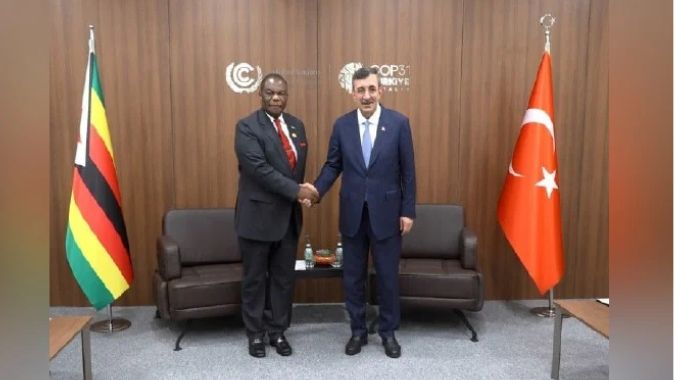
The development emerged yesterday after Vice President Dr Constantino Chiwenga met his Turkish counterpart, Cevdet Yilmaz, on the sidelines of the COP31 World Leaders’ Summit in Antalya, Türkiye.
VP Chiwenga said the establishment of the commission would give fresh impetus to bilateral relations by ensuring that areas of mutual interest were translated into concrete economic programmes.
“So, we touched on a number of very important areas in terms of trade and economic cooperation,” he said.
“These areas are so critical that MoUs have already been drafted and what now remains is a Joint Permanent Commission (on Cooperation) which we have proposed that it be done next year, probably in the first quarter.
“We will be discussing these matters with Foreign Affairs after briefing His Excellency the President. I think from there a number of things are going to start rolling.”
The discussions covered mining, mineral beneficiation and agriculture, with Zimbabwe inviting Turkish investors to explore opportunities in its special economic zones.
VP Chiwenga said bilateral trade had more than doubled from US$24 million in 2024 to US$52 million this year, but noted that the figures remained below the two countries’ potential.
“In short, we have touched on the areas of agriculture, areas of mining, mineral beneficiation, and we have also invited them to come and make an interest in the special economic zones which we would want so that we can see our cooperation getting to, being elevated,” he said.
“Although it has gone up from about US$24 million in 2024 to about US$52 million now, we think a lot of things can be done between us and Türkiye.”
The VP said Türkiye had also expressed interest in engaging Zimbabwe’s investment promotion authorities, with the Zimbabwe Investment and Development Agency (Zida) expected to make a presentation to Turkish businesspeople.
The engagement is expected to showcase investment opportunities in Zimbabwe and encourage greater private-sector participation in bilateral economic relations.
Meanwhile, VP Chiwenga has invited Turkish company Cantek to explore opportunities in Zimbabwe’s food storage and processing sector as the country seeks to reduce post-harvest losses and maximise returns for farmers.
The VP toured Cantek and its subsidiary, Farminova, which specialise in advanced food cold-storage facilities, industrial cooling systems and meat processing.
He said the company’s technologies could help advance Zimbabwe’s farm-to-fork policy by ensuring agricultural produce was properly stored, processed and marketed.
Speaking after the tour on Thursday, VP Chiwenga said he wanted the company to consider establishing food storage facilities in Zimbabwe to support farmers and strengthen national food security.
“What we have seen here inspires us. That’s exactly what we are looking for, to take our country a step further, especially on the farm-to-fork policy, which we propelled during the Zimbabwe Agriculture Show,” he said.
He said farmers needed to move beyond simply producing and selling their commodities to benefiting from storage and value addition.
“The farmer must not only produce and sell, but must produce, benefit, store it, so it gets value.
This is to do with our food security.
“A lot of food is being thrown away after harvest, because we don’t have any storage,” he said.
Cantek founder and chief executive officer Mr Can Haran Karaca expressed readiness to work with Zimbabwe, saying his company was already operating in more than 25 African countries.