admin
admin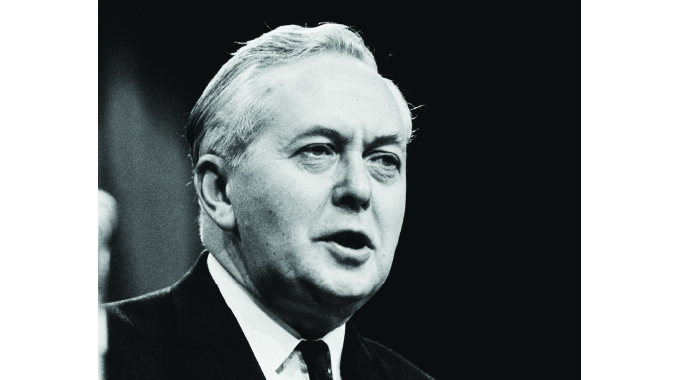
@JAMWANDA2 ON SATURDAY
British sense of Justice
Many radical Indian scholars will remind you how belief in “the British sense of justice”, which Britain carefully built into its colonial ethos, exported and then cultivated in the minds of colonised Indians, and for so long, circumscribed or even forestalled struggles against the Raj, thereby delaying India’s Independence.
That belief and faith in “the British sense of justice” created a psychosis of waiting in the colonised and a comfortable belief that British colonialism would, in the final analysis, resolve itself for their freedom and Independence.
Throughout British Colonial Africa
Except this psychosis was not peculiar to India alone; belief in “the British sense of justice” was a standard, reassuring menu permeating the minds of most British colonial subjects across the world.
It became a powerful, pacifying and governing myth by which British colonialism built a self-validating legitimacy, and pre-empted any challenges to itself thus prolonging its tenure.
Natives demanding early Independence were labelled agitators who only needed to be patient as this British inherent sense of justice and innate goodness matured and determined the right time for native self-government.
The story was the same throughout British colonial Africa, including here in our Zimbabwe, a story seemingly vindicated by a string of independence conferences traditionally convened at Lancaster House, through which independence was granted to many African countries, most after no or very modest struggles.
Cultivating false consciousness among nationalists
Cast to rot away in Gonakudzingwa and Sikombela — both isolating restriction centres located in havens for wildlife — Zimbabwe’s persecuted nationalists across the party divide for quite some time banked on this “British sense of justice” to put right all ills and wrongs of settler colonialism, and to finally deliver Independence on a platter, as had happened elsewhere, beginning with India in 1947.
This mistaken disposition did not change over much, even as Ian Smith prepared to pronounce his ill-fated Unilateral Declaration of Independence, UDI, which he did on 11 November, 1965.

Ian Smith
Harold Wilson, then Britain’s Labour Prime Minister, in October of that precipitous year effusively intoned: “We have never granted independence except on the basis of democratic majority rule…I want you to realise we have a responsibility for Rhodesia which we cannot escape or evade.”
Such “warm” words by the colonial master, feeding off this myth of “British sense of justice”, not only comforted the colonised, but also buoyed and buttressed this reigning belief among the colonised Africans that the paternal and colonially immaculate Britain would always rise to the occasion in defence of the colonised, ultimately handing over Independence, whatever the initial or temporary vicissitudes or delays.
A rude awakening for nationalists
Of course in our case, it did not take long for this myth to explode.
UDI was declared a mere month later, following Mr Wilson’s soothing reassurances; settler repression aggravated as a result.
Much worse, the goodly, paternal Harold Wilson told African nationalists straight in their face at Government House in the then Salisbury that Britain would not intervene militarily to stop or reverse UDI, his reason being that “the British public would not stand for” such military intervention which, in any event, would pit white British kith against her equally white Rhodesian kin with whom she had shared trenches in the fight against Nazi Germany.
Only then were African nationalists stung into realising that the black Rhodesian stood alone in his struggles, and that Zimbabwe would only be liberated through sacrifices and through the barrel of the gun, as indeed it was.
The myth of “the British sense of justice” could no longer wash among disappointed nationalists.
Only then did history get back its wheels, driven by Africans themselves this time.
Through pots and pans
I write this piece at a time when Zimbabwe’s bilateral relations with Britain have now improved, and seem poised for some promising and even hopeful phase.
I am happy this has not come about because of the much vaunted intrinsic “British sense of justice”.

Peter Vowles
Zimbabwe today shows ample wounds of agency, most of them still fresh and weeping. Britain’s new man here, Peter Vowles, is building on this by making right noises, and consolidated through his filling, gastronomy-driven soft diplomacy. Never has so much been done through mere clangour of pots and pans!
Handsome auguries
Britain, too, has played her part, nobly. She has already indicated her readiness to support Zimbabwe’s arrears clearance and debt resolution efforts, and to support Zimbabwe’s bid for readmission into the Commonwealth.
Similar assurances have also come from Australia and Canada, suggesting Zimbabwe’s second coming into the Commonwealth is well-nigh, come Bahamas.
British investments and investment missions are on the rise, as is the volume of bilateral trade which continues to rise between the two historically-linked Nations.
Next month, Zimbabwe is likely to play host to some high profile visit from His Majesty’s Government. These are sturdy strides and auguries to better bilateral times ahead.
No to diplomacy through NGOs or Legislatures
Not that there are, or will not be differences now, in months and years ahead.
Differences will always be there, in fact are necessary markers of both nations’ distinctiveness and sovereignty, their intertwined histories, identities, cultures and aspirations notwithstanding.
For starters, Zimbabwe will jealously guard and police the boundaries of its sovereignty against any encroachment by whosoever, the British included.
Politics of interference in each other’s internal affairs, or those of hectoring each other through condescending haughtiness and pretensions to superior values, now have to make way to mutual respect, cordial and respectful differences.
Friends never engage through dubious third parties prettified as nongovernmental organisations, NGOs.
Interacting nations meet directly as equals, never behind the parapet of self-created proxies which seek to demean the other.
Or to coerce one another other respective legislative arms as if Executive arms of Governments reside in hoary and embittered Houses of Lords.
Anglo-American foreign relations are never mediated through NGOs. Anglo-Zimbabwean relations shouldn’t either, unless an imputation of racial less-ness is intended, which would be repugnant here.
Ukraine is Russia’s Mexico
Second, there will always be differences on global foreign policy and relations. Not because Zimbabwe enjoys playing contrarian, but because we have key differences based on real principles.
Zimbabwe opposes NATO’s eastward-encroachment towards Russia, itself a liberation wartime ally and partner, but also an equal Nation whose sovereignty must be respected and secured, both in itself and geopolitically.
Ukraine is to Russia what Mexico is to the United States of America: Russia cannot be expected to suffer a beachhead on its shores the same way America will not.
Zimbabwe stands for multipolarity
Zimbabwe, too, contests the West’s American-led China containment policy which not only attacks another of its Liberation Struggle ally, but a key partner in quest for contemporary development and global struggles of small nations like Zimbabwe, as these play out in multilateral settings.
Such a pro-China disposition which now is so prevalent in many nations and among many regions of the world, emerged, after all, from the West’s perniciously self-centred, and alienating global policies which the rest of the world, in particular the so-called lesser world, finds repugnant and odious.
Even the idea that British and Western attitudes towards Zimbabwe have to be shaped and defined through Zimbabwe’s attitude towards third countries, itself reeks of colonial patronage and a mistaken belief the West and its values pivot the rest of mankind.
We know where such a world view has taken us in history; there is no readiness to re-live that past.
We also know how a multipolar world has generated possibilities foreclosed under a uni-polar, monocultural world exclusively dominated and led by the West. No one but the West likes it; everyone but the West is working for it.
Western policy in the Middle East has no admirers
Zimbabwe and the United Kingdom will differ sharply on the Middle East and Persia, on Palestine and Israel specifically. Both British and American policies on the Middle East are in a mess.
Not even their own nationals find those policies persuasive; it is sheer impudence to then expect Zimbabwe, a sovereign African country whose history and struggles mirrors that of Palestine and Palestinians, to love despicable policies which even citizens of those pursuing them find objectionable.
Own up to costs of your past policies!
Of course there will be other areas too, including areas governing the utilisation and preferred partnerships around the exploitation of our subsoil assets. For more than 20 years, Britain, America and the European Union shut themselves out of Zimbabwe by wilfully pursuing policies which did not show enlightened self-interest.

Zimbabwe would not, and did not wait until “the British sense of justice” paid a second visit.
All countries which have pursued a hostile foreign policy towards Zimbabwe should come to terms with the costs which a policy levied; they should strive to re-engage and play catch-up with those nations which have been friendly and engaged all along, which Zimbabwe will only be foolish to jettison merely because “the British sense of justice”, so wont to deserting it once in a while, has finally rallied back and returned.
We call them nhinhe
All which is to say? Simply that as we refashion our relations, Mister British Ambassador, we should do so on the basis and realism of differences: both extant and probable, existing now and likely in future.
Not all such differences will heed faggots that burn between the three legs of an African hearth; not all beans do cook well, or at the same time.
A few are indifferent to both fire and boiling water. Here we call them nhinhe, or the stubborn ones. Enjoy the happy days ahead!


 Online Reporter