

 admin
admin
THE OTHER SIDE NATHANIEL MANHERU
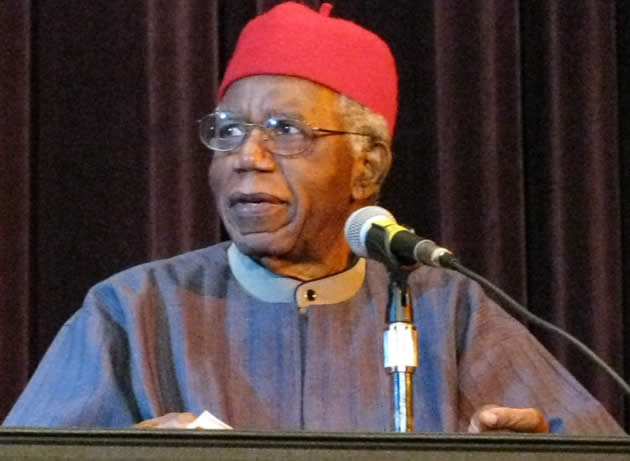
In March we will mourn the passing on of the real godfather of African literature, Chinua Achebe. I am aware that there is a body of thought which accords Amos Tutuola that accolade. I do not, and the reasons are pretty obvious. There should be a clear distinction between pioneering an art form and giving it an emphatic echo that rings across generations and ages. What Tutuola began, Achebe made and perfected, and the argument ends there. The doyen of African literature died on 22 March, 2013. Happy Birthday Chinua!
Seeing, not reading
I dedicate this piece to this Nigerian writer. He deserves no less. And my dedication takes the form of reading our society against those things he saw, and of course measuring our society against the age-long precepts he culled from those things he saw, that experience he lived. Seen against both — I am afraid — we come third best, something that deepens and renders timeless the didactic value and appeal of his works to all of us. I sometimes wonder whether the fault that makes us Africans remain unaffected by such compelling works Achebe gave us is that we don’t read. Or if we do — and that is doubtful given the way our fingers have overtaken our eyes and minds — whether we at all understand or grasp what is put before us by this great seer. Judging by the frequency with which Chinua’s works — portions thereof — are memorised and delivered with such aplomb and pageantry, I am left in no doubt that we still read — or at worst see that heritage Chinua bequeathed to us through the novel art form. I chose to rehash one of the most quoted yet least grasped portion from Achebe’s 1958 novel, Things Fall Apart. And here we go . . .
Things Fall Apart
As always, the sages of Umuofia were its elders, a leading member of whom was Obierika. Noticing the ominous developments — largely imperceptibly subtle yet inexorable — overtaking his community at the outset of colonialism, Obierika the old man laments the divisions wreaked on the once united and heroic fighting community of Umuofia. His words are not just memorable; they are loaded and packed with figures of speech to the point of being timeless, ageless. Words that still drop down the lips of any and every student of literature with a chance encounter with the prose of the inimitable Achebe. The white missionaries had invaded Umuofia, winning a handful of converts who no longer identified with the ways of the clan. Obierika — alongside many of his generation — was exercised and registered a memorable lamentation:
“How do you think we can fight when our own brothers have turned against us? The white man is very clever. He came quietly and peaceably with his religion. We were amused at his foolishness and allowed him to stay. Now he has won our brothers and our clan can no longer act like one. He has put a knife on the things that held us together and we have fallen apart”.
Idea that was mightier
For a community known throughout the nine villages of Mbaino for its martial attributes, for its manliness, indeed this new effeminate cast was such a profound departure and regressive transformation. A turn for the worst given that all its founding values and etiquette was built around the machete. The fact of being unable “to fight” was a mortal act of being disarmed, an abomination heralding the demise of a once valorous community, a defeat. Made worse by the fact that the defeat had not been handed down to it from the battlefield. Rather it had come about from a little book called a bible, indeed from a mere sermon talking about some never — never being alleged to live above – in the skies — a sermon delivered by some frail-looking, idiosyncratic white loner called a missionary. How a bearer of such formidable arms, a community built behind such impregnable ramparts, could ever fall so uneventfully to the “word” — to an idea — is what compounded the tragedy, indeed what added to Obierika’s perplexity. And the potency of the divisive idea was total, meriting the metaphor of a knife sundering all those “things that had held [Umuofia] together”. And the disintegration of Umuofia was so total that the aftermath deserved the phrase “things fall apart”.
Are all the sons — here?
At a meeting at which the community was summoned to digest the impact of the new religion on its ways, the elders bring out the full scope of the mortal dilemma:
“This is a great gathering. No clan can boast of greater numbers, of greater valor. But are we all here? I ask you: Are all the sons of Umuofia with us here? A deep murmur swept through the crowd. “They are not”, he said. “They have broken the clan and gone their several ways. We who are here this morning have remained true our fathers, but our brothers have deserted us and joined a stranger to soil their fatherland. If we fight the stranger we shall hit our brothers and perhaps shed the blood of a clansman”. And in terms of the moral or martial code of Umuofia, it was a taboo to shed the blood of a member of the clan. Fratricide was anathema, an abomination. But a new reality — a new normal — confronted this community which all along enjoined one to be thy brother’s keeper. The new reality was one of colonial invasion and occupation, but one facilitated by local collaborators — the askaris — all drawn from Umuofia and who thus spotted the tattoos of the clan, wore its complexion and — only a while before — lived by its ways. Resignedly, the clan elder reached a despairing resolution: “But we must do it. Our fathers never dreamed of such a thing, they never killed their brothers. But a white man never came to them so we must do what our fathers would never have done.”
When Umuofia would not go to war
Before long, that martial resolve is put to the test. The white man’s askaris invade the community to break a meeting. To the absolute consternation of all around, a masked dancer — an egwugwu — is unmasked, clearly on the prompting of the missionaries who have enlisted the arms and men of the colonial administration to put an end to Umuofia’s traditional religion regarded all along as an affront to the proselytisation project. The act is sacrilegious, an abomination. The impulsive Okonkwo is roused into action and before long, a head drops next to one of the askari’s colonially dressed torso, both lifeless. What follows is heart-rending, indeed completes and seals the conquest and defeat of Umuofia:
“In a flash Okonkwo drew his machete. The messenger crouched to avoid the blow. It was useless. Okonkwo’s machete descended twice and the man’s head lay beside his uniformed body. The waiting backcloth jumped into tumultuous life and the meeting was stopped. Okonkwo stood looking at the dead man. He knew that Umuofia would not go to war. He knew because they had let the other messengers escape. They had broken into tumult instead of action. He discerned fright in the tumult. He heard voices asking: “Why did he do it?”
Soon, Okonkwo was dead
In despair Okonkwo gave his back to a clan already in tumult, then walked away. Before long, he was dead. How? His body was found dangling beneath the branch of a tree, tied to it. He had committed suicide. Had chosen — in other words — to die by the cord. Not by the sword as befitted a real man. Dying by the cord was unmanly — the path of death open to women and weaklings. With masterly irony, Achebe loads so simple an episode with multiple ironies. Okonkwo who had raised his sword in defence of his clan — its values, its identity, its independence – had, by that act alone, hastened and completed its demise and defeat. The severing of the askari’s head became a metaphor of the “knife” that cut through the things that had held Umuofia together, accelerating its falling apart. Without knowing it, the action which was supposed to rouse Umuofia to a generalised war of resistance, simply disarmed it, motivating it to ask: “Why did he do it?” It was an existential question, a question to a community which ironically became the dilemma of a single man, indeed a question whose boomerang effect was enormous, lasting. For to so ask amounted to questioning the premise of “a just war” in defence a collective shameful death by the cord, something Okonkwo — its foremost fighter — proceeds to do for it. Thereafter, Umuofia lived in conquest and had to learn to survive under yoke of colonialism, much like a woman. And I am not being mysognistic. I am just reflecting the chauvinism of Umuofia. At a personal level, Okonkwo, all along sworn to running away from the humiliating example of his father Unoka — the man who feared war and the sight of blood — meets his end in such an ignominious way as befitted a womanly coward. Except his shameful end arose from a betrayal by the very community that taught and equipped him with the arts and arms of war, which he ironically raised and levied for its defence. When the moment requiring a manly response came, the community merely murmured: Why did he do it?
When the white man came
The one strand in the history of the coming of the white man to our country is the near — universal, insistent complaint by whites against locals’ importuning presence. Whether these whites were hunters, gold-seekers, prospectors, concessionary — seekers or and especially missionaries, their chorus complaint was how locals demanded or even forcibly grabbed articles of convenience associated with the white visitor. These ranged from calicoes (clothing), knives, to guns. In Matabeleland, the whites hated to hear the exhortative cry —“tusa”! This meant “give”. Where diplomacy did not carry the day, grabbing simply settled the matter. The general disposition was not of fearing the whiteman, not kow-towing to him. It was one of exploiting his presence to the maximum, including abusing him forever daring to come to our land in the first place. He had to give. He had to pay duty. He had to buy his passage. Above all, he had to pay handsomely for our produce by which he and his horses and cattle lived. The price for produce was extortionate and the white man had to pay without grumbling. Or even if he did, no one paid attention. Much worse he paid dearly to secure the service of guides who showed him the way, paid dearly for porters who carried his loads.
Pay me for the healing
An illustrative and dramatically memorable encounter involved a village elder who came to Inyati for medical attention done by the early missionaries led by young Moffat and Sykes. She had a nagging toothache. In due course the tooth was extracted. Naturally the missionary expected the old woman to wear a grateful demeanour after the medical intervention. She didn’t. Healed and putting on a haughty demeanour, she walked up to the healer – a white missionary: “Tusa calico!’’ “But why, what for”, asked the missionary, mournful and bemused. “For removing my tooth!” And the determined woman would not be shooed away without a piece of cloth. The missionary relented hoping the cloth would soften her heart for the Lord’s Word. Stone-faced and hearted, she retreated into the village, unbridled by obligation or by the missionary’s strange ministration! At that stage the white man had not taken from us, stolen anything from us, least of all our sovereignty. But the assertiveness was total.
Enter #This Flag
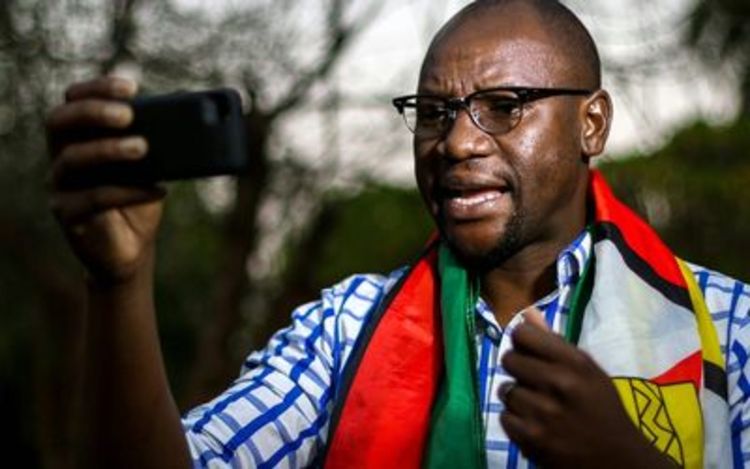
Two nights ago I watched that returnee on social media. I am talking about the so-called Pastor Mawarire, Zimbabwe’s own aspiring Barrow. He raved and ranted, against god, youth, citizen and man. He accused people of calling him a Central Intelligence Organisation agent. Pity the dignified C.I.O! Why would anyone do such a disservice to that Organisation? Or the obverse — do such a favour to such an out and out quisling? A turncoat? I thought he plays agent to the other central intelligence agency? Not ours? Or is that his wish image — to hide his treachery by dressing himself in the garb of our National Intelligence Organisation. Too late my brother! Everyone knows where you are coming from, whose message you bear in your bald head, on your broadened shoulders. He announced he is reaching 40, an age which by dint of our Constitution allows him to aspire to be a President of this land. Judging by his frenetic, prayerful act, he will soon declare himself a candidate, hoping to ride on God and Zimbabwe’s Youth vote. To ride on the demographic factor, which is why he hectored everyone, anyone to register to vote. Yet he shall have neither, prayerful though he might pretend to be. In his haranguing act, he made an important disclosure: he had had a session with the British Ambassador to Zimbabwe. Our man nearing 40! And meeting the British Ambassador was so important to him, so assuring to him and news to all of us that it was a Eureka moment for this country! It even assured him of reaching 40! Kikiki! #Tosetichavhota! This foreign-sent keyboard warrior.
Another white figure
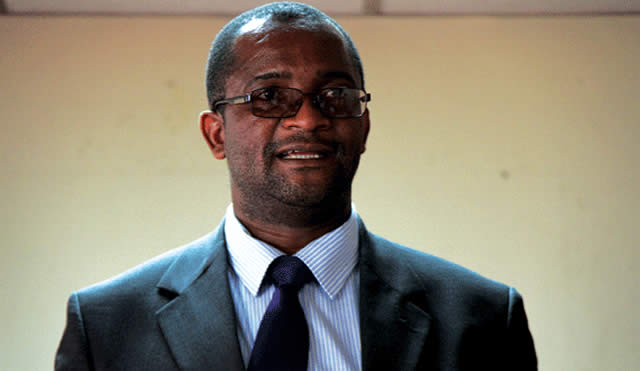
The other day – barely three days ago – I got a call from a character in our health sector. Did I know – he asked – that behind Mahere, Advocate Mahere, was a white person called Sean Mullens? Of course I didn’t, I who knows my own history, my company. But it got me to think long and hard. The missing Dzamara needed some white boy to hover above and around him. Even his wife lives off white benevolence, the latest excuse being a phoney award by the white-led Amnesty International. And then the Queen Bee and her charade: fussing, fighting and falling out over money from white Britain? Then our so-called NGOs? All feeding off the $5m bounty from Van Damme’s European Union. Using it to foment conflict ahead of 2018; to create what Mahere calls “a good chaos” which the opposition must profit from. It is this psychosis and belief that the kingmakers in this land are whites and white foreigners which beats me.

Enter Biometric Saga
Before our ears are done with the above outrage, another clanquor, this time concerning the Biometric Voter Registration Kits purchase. Government of Zimbabwe – itself mandated to ensure elections are run in this country – has announced it is buying the kits. Lo and behold, the Heavens collapse! Mayhem and the threats of mayhem, in our streets! What is the cause? The Kits must be bought by UNDP, says MDC-T and other opposition, all led by one Mwonzora! Why? Because the opposition does not trust the Government of Zimbabwe. Instead they trust foreign governments – all channelling their resources through UNDP! How so? The Government of Zimbabwe is the lawful, constitutional authority which must fund and organise elections. Yet it must cede that authority to western governments stalking behind UNDP! Or else the opposition goes to war! A good 36 years after Independence vakomana? Still exhibiting a clear insufficiency of national pride? National responsibility? National Independence? Against all that has been done by ZEC to involve the opposition, almost to the point of undermining ZEC’s independence? A white man, a white official, a white government, must still hover above us? Only then do we certify our elections free, credible and fair? Are we not the askaris sent by Winterbottom to stop the meeting? To unmask the egwugwu?
We have fallen Apart
Our forefathers – whether Mwenemutapa, Mzilikazi or Lobengula – knew what they wanted from the white man. They wanted his cloth, wanted his articles of convenience, his technology. Above all they wanted his guns for the defence of the realm. They knew what they had to give, to cede, what to keep as sacred. They also knew that worse than a sword was a noxious idea which, knife-like, would cut through those things that held them together. They may have been cheated, deluded and vanquished in the end. But they knew that the realm had to be defended and proceeded to fight in its defence. Including defending the collective dignity of the people, of the Nation and its processes and sacred rituals. And in the case of Lobengula, the advisor who sided with the white man, who misled the King into making concessions, into signing the fateful Rudd Concession, had to fall. And he did. Treachery was paid for by death. Not now; not anymore. The brazenness of it all. You take to the social media to proclaim your treachery, and still walk with your full dignity and head – unimpaired – the next day? You invite treachery into our ballot box, even threaten street action in defence of white interference of our electoral processes, and you still prance about, head held high, even to yodels from the media? Are we all here? I ask you: Are all the sons of Umuofia with us here?
Icho!


 leeroy
 Online Reporter