Business Reporter
Zimbabwe is making steady progress towards durable macroeconomic stability, supported by improving foreign currency inflows and key policy reforms, but must navigate a complex landscape of global geopolitical friction, sticky inflation and regional growth disparities, a global economic research firm has said.
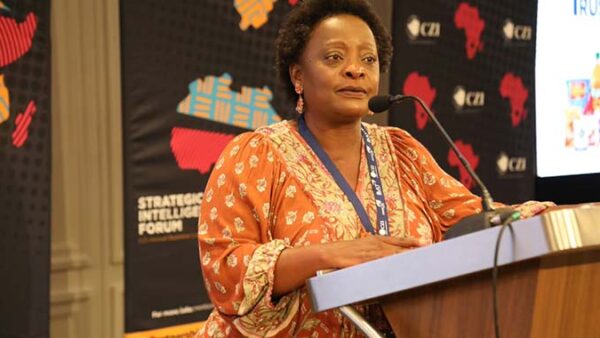
Addressing top business leaders, policymakers and development partners at the three-day Confederation of Zimbabwe Industries Strategic Intelligence Forum—organised in partnership with Zimpapers—Ms Chiedza Madzima, head of operational risk at BMI Fitch International, presented a detailed breakdown of Southern Africa’s growth prospects, highlighting both domestic opportunities and significant global risks.
According to BMI Fitch International’s latest Country Risk Index, Zimbabwe’s overall economic risk profile has recorded tangible improvements over recent quarters. While structural challenges remain, the country has begun closing the gap with regional peers through improved exchange rate stability, lower measured inflation and rising foreign currency inflows.
“Zimbabwe’s overall country risk is starting to close the gap with regional peers,” said Ms Madzima. “Key improvements are showing in the short-term picture—particularly around economic growth and financial market conditions. The real task now is building sustained confidence and buffering external resilience factors.”
Ms Madzima noted that the transition towards a mono-currency framework will require time, discipline and adequate reserves. Pointing to the Reserve Bank’s mono-currency barometer score of 50.1 per cent, she emphasised that operational foundations are taking shape, but the US dollar remains heavily embedded in domestic savings and commercial transactions. Maintaining fiscal discipline, keeping inflation low and building import cover—currently under two months against a three-month target—will be critical to deepening local currency adoption.
Zimbabwe’s annual economic growth is projected to hover near the regional average of around 4 per cent through to 2030, underpinned by solid mining investments and commodity exports. However, climate-sensitive sectors such as agriculture, as well as power-generation challenges, continue to act as speed bumps to faster acceleration.
Regionally, economic growth presents a mixed picture. Ms Madzima said South Africa continues to lag behind, constrained to roughly 1 per cent growth this year and sub-2 per cent annual growth through to 2030.
Zambia is outperforming, driven by copper expansion and aggressive reform momentum.
Mozambique and Namibia are leading medium-term regional growth, boosted by major oil, gas and mineral developments.
For sub-Saharan Africa as a whole, output is projected to expand by just over 4 per cent in 2026, outperforming the broader global economy, which is expected to slow to 2.3 percent amid elevated global interest rates.
Despite favourable regional momentum, African economies face significant global headwinds. Ms Madzima outlined several critical risk factors currently affecting trade, inflation and capital flows. Sticky global inflation is expected to keep central banks—most notably the US Federal Reserve—restrictive for longer, maintaining pressure on local currencies and raising borrowing costs across emerging markets.
Tensions surrounding the US-Iran conflict and disruptions in the Strait of Hormuz continue to compromise global shipping corridors. BMI Fitch projects that Brent crude will average around US$93 per barrel before easing to US$81 next year, though prompt delivery premiums and refined fuel costs remain exceptionally high.
Beyond crude oil, the Gulf region accounts for critical global supply shares—including 37 percent of global bitumen and 70 percent of sulphur. Disruptions in these feedstocks reprice essential inputs such as fertilisers, plastics and industrial chemicals across downstream supply chains. Climate volatility poses persistent risks to rural agricultural incomes and hydropower generation across Southern Africa.
Rapid growth in global technology and AI infrastructure has buoyed demand for African industrial metals. However, any potential market correction in global tech equities could soften commodity demand and export revenues.
Ms Madzima advised local businesses to prepare for supply-chain volatility, noting that normalisation of global shipping might not occur until mid-2027, and to build operational strategies that accommodate multi-currency environments and fluctuating input costs.