

 Online Reporter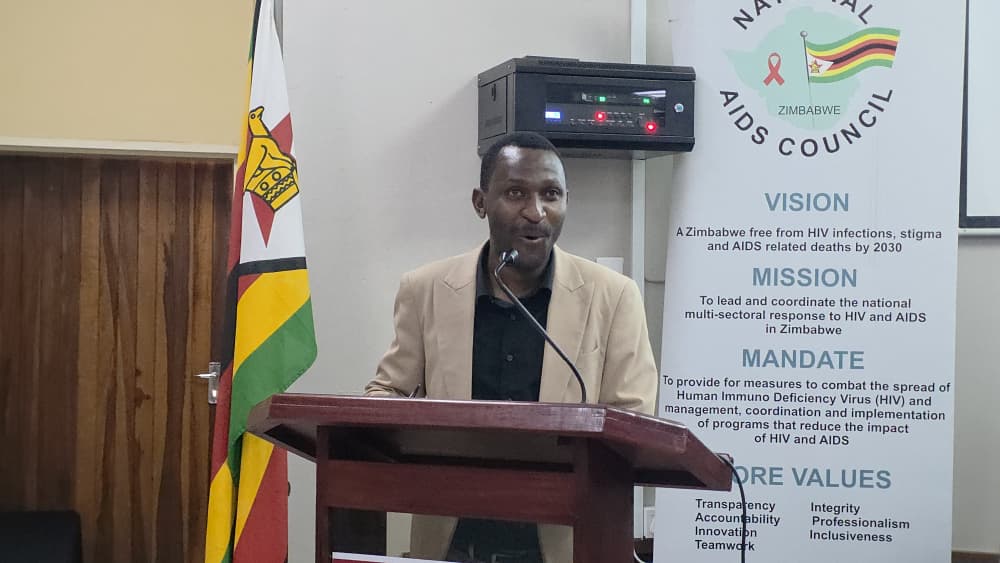
Rumbidzayi Zinyuke
Senior Health Reporter
MEMBERS of Parliament have committed to push for the expansion of the National AIDS Council (NAC) into a National Health Council that will administer the existing AIDS Levy alongside a share of other health-related taxes, as part of efforts to secure sustainable domestic financing for the country’s health sector.
The proposal emerged at an HIV and AIDS sensitisation meeting held in Kadoma on Saturday, where members of the Thematic Committee on HIV and AIDS, Parliamentary Portfolio Committee on Health and Child Care, chairpersons of various parliamentary committees, development partners and young people came together to discuss the sustainability of Zimbabwe’s HIV response.
Chairperson of the Parliamentary Portfolio Committee on Health and Child Care, Honourable Decent Bajila, said legislators would use the 2027 national budget processes to push for a dedicated health fund, with the expanded NAC retaining the AIDS Levy and receiving 50 percent of other health-related taxes.
“Members commit to push for a dedicated fund housing health taxes and levies in the 2027 national budget processes,” he said.
“The proposal is that the National AIDS Council be expanded into a National Health Council, with the National AIDS Council continuing to house the AIDS Levy while also housing 50 percent of other health-related taxes.”
Hon Bajila said Parliament would also demand greater accountability over the collection and allocation of health-related taxes, including clarity on how much was collected, how much was transferred to the proposed health fund and what remained in the Consolidated Revenue Fund.
The proposal comes as Zimbabwe seeks to strengthen domestic health financing amid changes in external support for HIV programmes.
The United States is set to end funding for Zimbabwe’s health programmes this week following the collapse of negotiations over a proposed new bilateral health agreement.
Hon Bajila said the changing financing environment made it necessary for Parliament to consider how more domestic resources could be directed towards health.
He also called for Zimbabwe to renew its push towards the 15 percent health financing commitment under the Abuja Declaration.
The Abuja Declaration was adopted by African Heads of State and Government at a special summit in Abuja, Nigeria, in April 2001, where countries pledged, among other commitments, to work towards allocating at least 15 percent of their national budgets to improving the health sector.
“Zimbabwe signed the Abuja Declaration, which was 15 percent of the national budget going to health. This is our Abuja commitment and this is what we need to push for; 15 percent of the national budget goes to the Ministry of Health,” he said.
He said Parliament also needed to help Government respond to competing demands created by the loss of external health financing and the need to respond to food-security challenges arising from the predicted super El nino induced drought.
Hon Perseverance Zhou, Proportional Representation MP for Midlands Province, said the proposal was particularly important as the country faced declining donor support.
“This is something we have spoken about before, but now that we are going towards the budget process, we now have to push for it. If we look at the taxes we are already collecting, we have the 3 percent AIDS Levy, the sugar tax and the health levy among others,” she said.
“If we have part of these taxes ring-fenced for health, it can be used to close the gap being left by dwindling donor funding.”.
Zimbabwe already has a statutory Health Fund Levy component of the special excise duty on airtime. The law provides for five percent of the 10 percent special excise duty on airtime to be designated as a Health Fund levy for the purchase of drugs and equipment for Government hospitals.
The sugar tax which was introduced in 2024 has also been contributing towards the country’s response to non Communicable diseas.
At least US$50 million has to date been disbursed towards the procurement of cancer treatment and diagnosis equipment.
Zvimba South MP Hon Taurai Dexter Malinganiso , however said Parliament should first establish a broader definition of health expenditure when considering the Abuja target.
He argued that spending by other ministries could contribute to health outcomes.
“If money is given to a certain ministry and is invested in a manner that allows another to attain its goals, do we say that money was given to that ministry or the other?
“We must ask ourselves what exactly it is that we want; do we just want money for the sake of it, or do we want to invest money in a manner that will allow for healthy living in Zimbabwe?” he said.
Hon Malinganiso said a defined proportion of the sugar tax and airtime levy could also be channelled directly into health programmes, including medicines and public awareness initiatives.
Hon Edwin Mushoriwa, MP for Dzivarasekwa Constituency, said Parliament should avoid creating additional institutions if they would increase administrative expenditure.
He said an expanded NAC could provide an existing institutional framework through which various health-related taxes could be administered.
“If you look at the administration component of the NAC budget, it eats into programming. Establishing a number of new institutions also means that we are creating expenditure on administration for each institution that we want to create,” he said.
“My view has always been that the National AIDS Council has done sufficiently well in terms of its mandate, and that its mandate could be expanded to become a National Health Council.
“We could then say all these taxes go to that expanded National Health Council, so that it administers both the AIDS Levy and the other levy.”
MPs argued that expanding this mandate could enable the country to build on the NAC’s existing experience in coordinating a national health response and managing a dedicated levy, while bringing other priorities such as non-communicable diseases (NCDs) and related health challenges into a broader financing and coordination framework.


