Online Reporter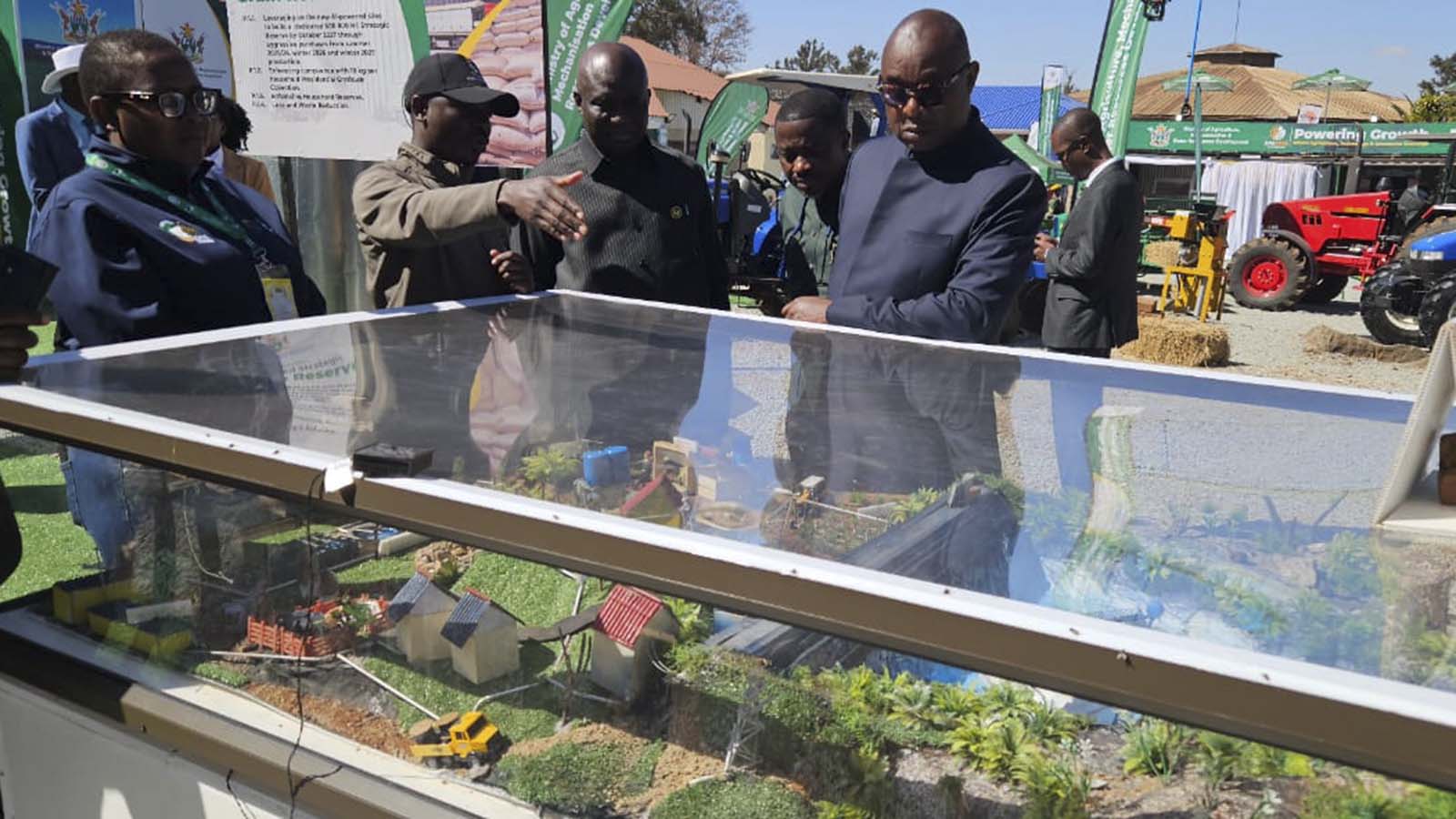
Nyasha Simbisai
Agriculture Correspondent
Zimbabwe’s agricultural technology has caught the attention of Ghana, with a high-level delegation touring the country’s premier agricultural show in search of solutions to climate-proof food production.
Ghana’s Minister of Food and Agriculture, Eric Opoku, who was accompanied by Deputy Minister of Agriculture, Mechanisation and Water Resources Development, Davis Marapira, said he was impressed by the exhibitions, which reflected advancing agricultural technology in irrigation, mechanisation and livestock development in Zimbabwe.
His tour followed discussions with Zimbabwean agriculture authorities on strengthening cooperation and using agriculture to improve livelihoods in both countries, as Ghana and Zimbabwe seek deeper collaboration to leverage agriculture for food security, employment creation and sustainable economic growth.
“Our discussions bordered on how we can collectively use agriculture to transform lives and deliver prosperity to the people of our countries, Ghana and Zimbabwe.
“We talked about transitioning agriculture from rain-fed to irrigation agriculture so that we can ensure all-year-round production. That is how we can be food secure. That is how we can use agriculture to keep food prices at moderate levels,” said Minister Opoku.
He said investment in irrigation infrastructure would enable farmers to remain productive from January to December, while increased mechanisation would allow them to expand production and improve efficiency.
He was particularly impressed by the range of agricultural machinery, implements and technologies exhibited at the Zimbabwe Agricultural Show.
“I am so much impressed by what I am seeing here in Zimbabwe. Exhibitors are exhibiting everything that is required for agricultural development,” he said.
Minister Opoku also commended efforts to connect agricultural producers with processors, warning that increasing production without establishing reliable markets could discourage farmers from reinvesting.
He said farmers ultimately produce in anticipation of demand, making guaranteed markets critical to profitable and sustainable agriculture.
“It is most appropriate that we bring them together so that farmers will have guaranteed markets to incentivise them to invest all that they have and make maximum profit out of their sweat and labour,” he said.
Agriculture, he added, should be deliberately harnessed to create gainful employment for young people, fight poverty and generate sustainable prosperity. Sustainability, he stressed, should remain central to agricultural transformation, with the present generation having a responsibility to utilise land and water resources productively while preserving them for future generations.
Deputy Minister Marapira said Zimbabwe was increasingly embracing technology to modernise agriculture and strengthen resilience.
He said the country had developed capacity in livestock vaccine production, including interventions against tick-borne diseases, while further work was being undertaken to address diseases affecting dairy production.
He added that Zimbabwe’s development philosophy around water infrastructure had also evolved beyond merely constructing dams towards creating economic activity from the water.
“The construction of our dams is not the economy, but what comes out of those dams is our economy,” he said.
He said dams should anchor irrigation development, hydro-electricity generation, potable water supply and Village Business Units, among other productive activities.
In livestock production, he urged farmers to prioritise locally adapted cattle genetics, particularly as the country prepares for climate-related production challenges during the 2026/27 summer season.
Locally adapted breeds offer important advantages in drought resilience and tolerance to prevailing production challenges, compared with some exotic breeds that require more intensive management.
Deputy Minister Marapira said technologies such as artificial insemination were also enabling local cattle genetics to reach international markets without physically exporting animals.
These developments, he said, demonstrate how technology, mechanisation, resilient genetics and productive use of water infrastructure could be combined to transform agriculture into a modern and sustainable economic sector.