Online Reporter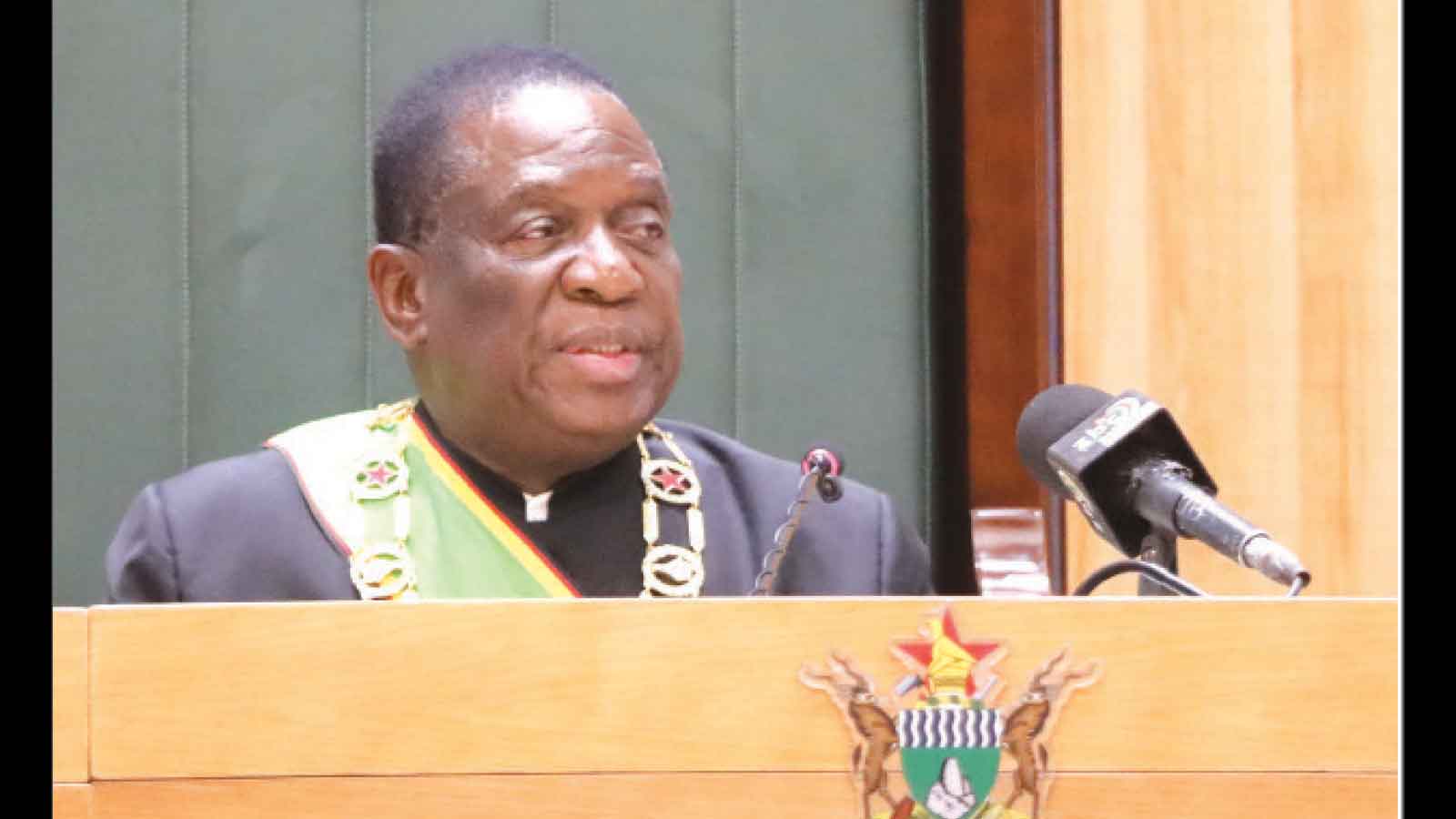
MacDenias Moyo
The State of the Nation Address delivered by President Mnangagwa in on Monday was not a perfunctory ritual, but a solemn proclamation of triumph, a declaration of a nation that has chosen progress over paralysis, resilience over despair and destiny over drift.
It was a moment when the President, standing before the august House, did not merely outline aspirations but enumerated achievements, did not merely sketch visions but presented tangible realities and in so doing, reaffirmed Zimbabwe’s march toward Vision 2030 under the guiding framework of National Development Strategy 2.
The President’s announcement that inflation had been reduced to single-digit levels since January 2026 was a thunderous vindication of the Second Republic’s economic stewardship.
In a continent where inflationary storms often ravage households and destabilise governments, Zimbabwe has carved out stability.
Foreign currency inflows of US$10.7 billion in the first half of the year, projected to reach US$20 billion by year-end, are not abstract figures but living proof of investor confidence and productive vitality.
The World Bank, once cautious, has acknowledged Zimbabwe’s progress, removing the country from its list of fragile economies.
The African Development Bank has lauded Zimbabwe’s reforms as a model of resilience.
The International Monetary Fund has noted the stabilisation of macroeconomic fundamentals.
These voices, once sceptical, now testify to the renaissance unfolding in Harare, Bulawayo, Mutare and every corner of the nation.
The President’s emphasis on mineral beneficiation was not rhetoric but revolution. The production of Africa’s first locally manufactured lithium sulphate is a milestone that situates Zimbabwe at the epicentre of the global energy transition.
No longer shall Zimbabwe be a mere exporter of raw ore. Instead, it is becoming a hub of value-added mineral products, a nation that refuses to be relegated to the periphery of industrial civilisation.
The President declared that load shedding had become a relic of the past. Kariba Hydro, Hwange Thermal and solar projects have stabilised electricity supply, ensuring that factories hum, households glow and hospitals function without interruption. Energy security is not a luxury but the backbone of industrialisation, agriculture and dignity.
Roads are being rebuilt, arteries of commerce restored.
The Harare-Beitbridge highway, once a symbol of neglect, now stands as a continental lifeline.
The Harare-Kanyemba, Harare-Nyamapanda and Bulawayo-Victoria Falls highways are being rehabilitated, knitting together provinces and communities. Aviation upgrades at Kariba and Victoria Falls airports signal Zimbabwe’s readiness to welcome the world, while new wagons for the National Railways of Zimbabwe restore the veins of commerce that connect the nation.
This infrastructure renewal is the scaffolding upon which Vision 2030 is being constructed. It is the tangible manifestation of the President’s declaration that development must be measured by results on the ground.
The President’s Six Pillar Plan for agricultural resilience is a shield against the vagaries of climate change. Agriculture has contributed 27,9 percent growth to GDP in 2026, demonstrating that food security is not a dream but a reality.
Wheat sufficiency, maize stability and record tobacco output are the fruits of deliberate policy and farmer empowerment.
The Food and Agriculture Organisation has commended Zimbabwe’s agricultural reforms as a model for climate resilience.
The Southern African Development Community (SADC) has hailed Zimbabwe’s wheat sufficiency as a regional triumph. This resilience is not only about crops but about safeguarding livelihoods, protecting farmers and ensuring that the nation’s economic gains are not washed away by droughts or floods.
The President’s announcement that Zimbabwe will assume a United Nations Security Council Non-Permanent Seat for 2027–2028 is a diplomatic triumph. It is recognition that Zimbabwe is no longer a pariah but a respected voice in global governance.
Guided by the principle of being a friend to all and enemy to none, Zimbabwe’s foreign policy has matured into a beacon of constructive engagement.
Sport too has become a symbol of renewal.
The refurbishment of the National Sports Stadium and the construction of the Mosi-oa-Tunya International Cricket Stadium in Victoria Falls are not mere projects but declarations that Zimbabwe is ready to host the world, to showcase its talent and to inspire its youth.
The International Cricket Council has praised Zimbabwe’s preparations for the 2027 World Cup, while FIFA has welcomed the return of international football to Harare.
The President’s SONA was not a catalogue of promises but a ledger of achievements. It was a reminder that development is measured by tangible results — roads built, power supplied, jobs created, investments secured and lives improved.
It was a call for unity, discipline, and innovation, urging Zimbabweans to convert resources into prosperity, infrastructure into growth and human potential into national greatness.
The United Nations Development Programme has recognised Zimbabwe’s strides in human capital development.
The African union has hailed Zimbabwe’s infrastructure renewal as a continental model. These voices, combined with the testimonies of communities across the nation, affirm that the Second Republic has delivered.
Zimbabwe today stands as a nation reborn.
The Second Republic has delivered stability, industrialisation, agricultural transformation, mineral beneficiation, infrastructure renewal and diplomatic recognition. International organisations, legislators and analysts have testified to this progress.
The World Bank has acknowledged it. The African Development Bank has praised it.
The International Monetary Fund has noted it.
The Food and Agriculture Organisation has commended it.
The United Nations has recognised it. Parliament has hailed it. Communities have felt it.
President Mnangagwa has delivered and continues to deliver.
Everything else is noise. The trajectory is clear, the path is firm and Vision 2030 is no longer a distant aspiration but a destiny being realised.