Vusumuzi Dube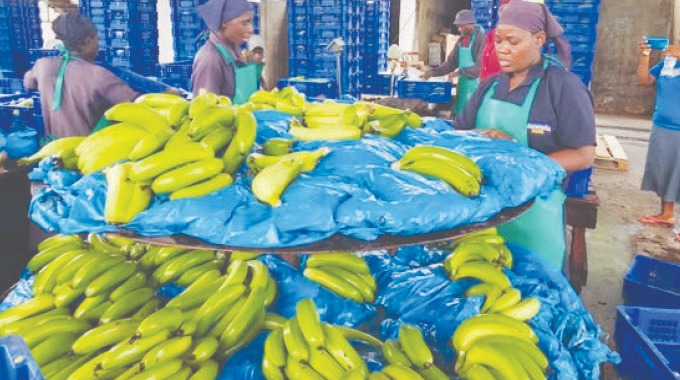
Judith Phiri, Zimpapers Business Hub
THE Ministry of Lands, Agriculture, Fisheries, Water and Rural Development has said that Zimbabwe’s banana value chain continues to play a critical role in the US$2 billion horticulture drive.
Banana production in the country is a thriving agricultural subsector, with major commercial farms and thousands of smallholders cultivating varieties such as Cavendish. This contributes significantly to local food security, employment and exports to regional markets.
During a recent tour of the Matanuska Banana Estate in Burma Valley, Manicaland Province, the Ministry’s Permanent Secretary, Professor Obert Jiri, commended the estate, which employs 450 workers and grows bananas on 321 hectares with average yields of 50 tonnes per hectare.
“They reported that they are exporting 60 percent of their produce to South Africa and supplying 40 percent of the premium fruit locally. We laud the estate for producing high-quality bananas that dominate the South African market, reaffirming that the banana value chain is critical to the Government’s US$2 billion horticulture growth drive,” he said.
He noted that value addition is central to the National Development Strategy 2 (NDS2) agricultural drive, which prioritises beneficiation and value addition beyond primary production. Prof Jiri urged farmers to process crops at the farm level and take finished products to the market.
Local agronomist Mr Leonel Maphosa said that, unlike many seasonal cereal crops, bananas provide a consistent, year-round source of income and food security.
“Bananas are widely recognised as a critical, year-round source of income and food security, particularly for smallholder farmers in tropical and developing regions. As a perennial, non-seasonal crop, they provide a consistent daily or weekly supply of food and cash, helping to stabilise household finances and bridge the ‘hungry periods’ between other harvests,” he said.
He added that the plants are hardy and able to survive droughts and floods, making them a reliable crop in difficult conditions. Mr Maphosa noted that to succeed in the horticulture sector, it is critical to transition to high-tech farming, including tissue culture propagation, drip irrigation and fertigation.
“This can help farmers achieve higher yields and better quality. Regarding post-harvest management, reducing losses through better packaging, cold storage and efficient transportation is equally important.”
He said diversifying beyond fresh fruit into products like banana chips, flour, purees and beverages extends shelf life and increases market value.
Horticultural specialist Ms Treggie Mpofu said strengthening links between smallholder farmers and large-scale exporters through joint ventures and out-grower schemes ensures small producers benefit from premium export markets.
“Bananas are among the most produced, traded and consumed fruits globally. They provide vital nutrients to populations in producing and importing countries alike. Therefore, it is critical for farmers to come together to form co-operatives,” she said.
She added that more training is needed for farmers on how to organise themselves into legally empowered co-operatives for banana production to boost income and create jobs.
Economic analyst Mr Reginald Shoko said the horticulture sector is crucial for agricultural development, economic growth and food security.
“It provides nutrient-rich foods, generates high income and supports sustainable intensification, making it vital for adapting agriculture to population growth and environmental challenges.”
According to the Food and Agriculture Organisation of the United Nations (FAO), the world banana trade has recorded comparatively high levels of around 20 million tonnes per annum in recent years.
Key drivers of trade include supply growth in both leading and emerging export countries, as well as ample global import demand. However, increasingly erratic and adverse weather conditions, rising production costs, tight producer margins and the spread of plant pests and diseases are causing severe concern within the industry.


 Online Reporter