Online Reporter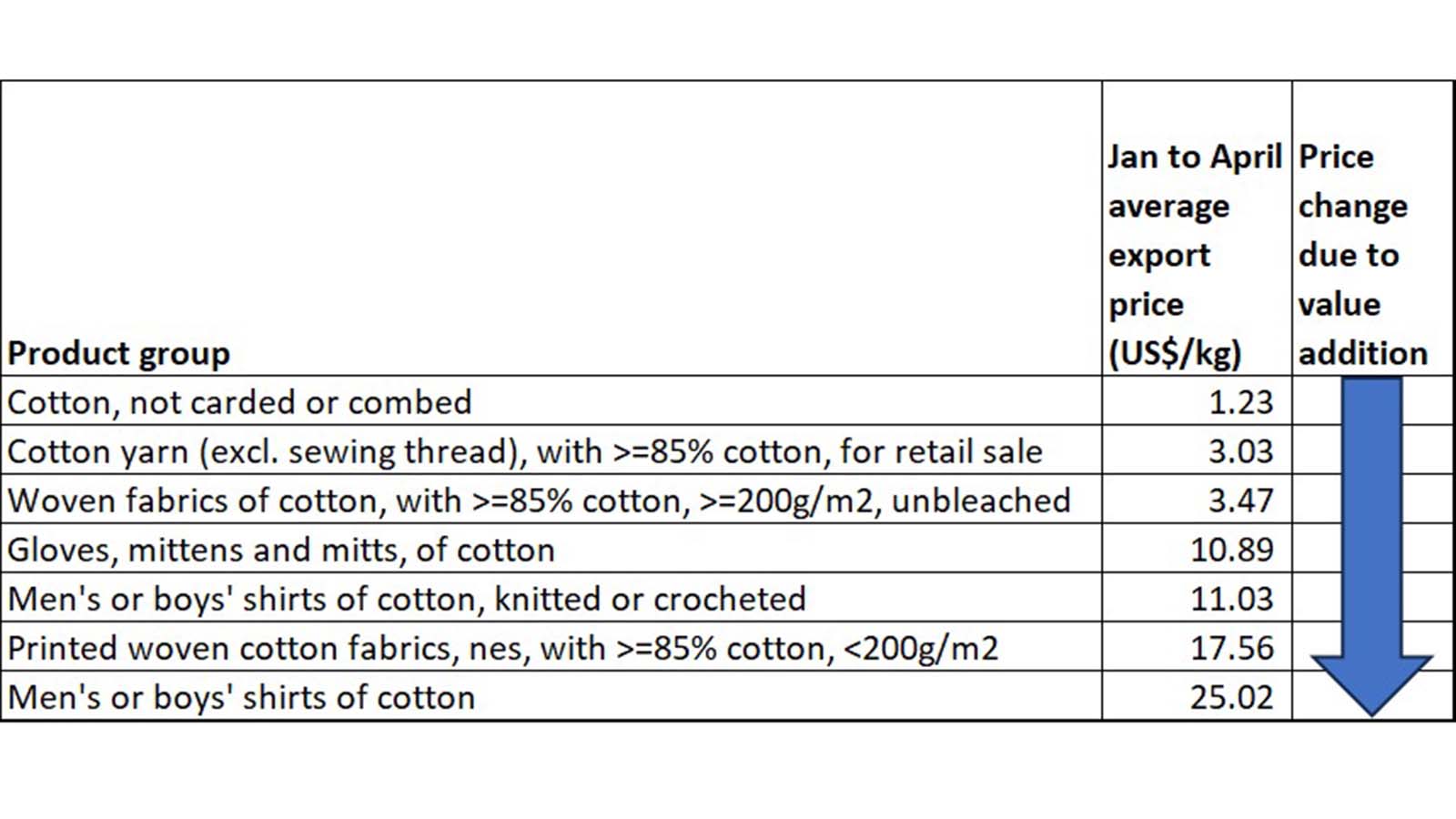
Edgar Vhera
Specialist Writer – Agribusiness
COTTON product export earnings shot 252 percent to US$5 million from January to April this year against US$1,4 million in the comparable period last year, as stakeholders call for value addition policies and incentives.
Recent statistics from the Zimbabwe National Statistics Agency (ZimStats) show that the export of cotton products surged to US$4,96 million from US$1,4 million.
Among the cotton products exported are cotton not carded or combed, cotton yarn, unbleached and printed woven fabrics of cotton, men’s or boys’ shirts, gloves, cotton mittens and refined cottonseed oil and fractions.
To show the positive influence of value addition, average prices received for various exported cotton products show that low prices were recorded for raw cotton, while high prices were received for shirts.
Even though cotton not carded or combed accounted for 87 percent of total exports by volume, it only contributed 69 percent of earnings in value terms as a result of a low average price of US$1, 23 per kilogramme.
On the other hand, men’s or boys’ cotton shirts contributed less than one percent in volume but a seven percent in value terms a result of a high price of US$25 per kg.
Had the country exported value-added shirts instead of raw cotton, much foreign currency would have been received.
Cotton Pro Company Pvt Ltd chief executive, Mr Tararama Gutu said the US$5 million earned over four months could be enhanced if value addition is put in place.
Historically, Zimbabwe’s textile industry operated tens of thousands of spindles and supplied regional markets.
“Viewed in that context, US$5 million is not evidence of a booming sector, it is evidence of a sector operating far below potential. Zimbabwe still has ginners, spinning and weaving capacity, yet many spindles remain idle,” he said.
Mr Gutu said arbitrage losses and lower profitability have resulted in firms prioritising the domestic market, while export competitiveness declines and capacity utilisation falls, resulting in some mills being shut down entirely.
A single medium-sized spinning mill operating efficiently can generate several million dollars of yarn exports annually.
Zimbabwe’s cotton value-addition policy reserves 25 percent of lint production for local processing. Historically, spinning companies would draw down this lint over 12 months, allowing mills to buy according to their production schedules while ginners carried the stock.
“In recent years, however, ginners have argued that holding lint is costly as they incur financing and warehousing costs, hence the need to export quickly after ginning to improve cash flow.
“If that argument is valid, then it is surprising to see substantial exports of cotton lint in the first quarter of 2026 that would have originated from cotton ginned between April and September 2025,” he said.