admin
admin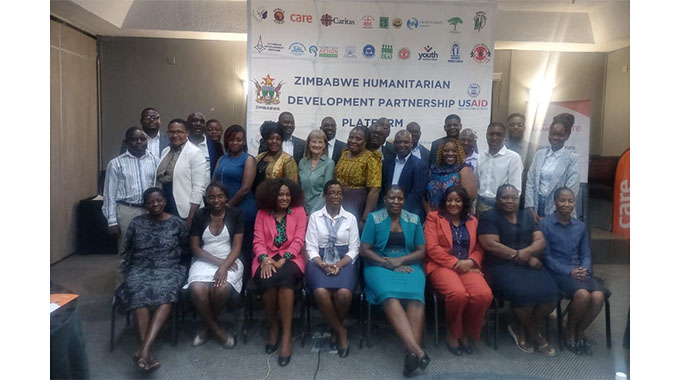
Sifelani Tsiko Agric & Environment Editor
Government, local and international humanitarian agencies have signed the Zimbabwe Humanitarian and Development Partnership Platform (ZHDPP) charter that aims to support disaster management efforts in the country by building synergies and cooperation between different stakeholders.
Government agencies that included the Department of Civil Protection, Ministry of Women’s Affairs, Community, Small and Medium Enterprises Development and 20 NGOs signed the ZDHPP in the capital on Tuesday to strengthen the effectiveness and efficiency of partners’ humanitarian and development work.
Patrick Sikana, CARE International country Director, said local NGOs and the government must work together to build their capacities to mitigate disasters and respond to emergencies.
“When we pool resources and expertise, our collective action is greater and more impactful than what we can deliver on our own, hence this gathering we see today. This is what the ZHDPP is about,” he said.
“This platform operates at the humanitarian development nexus level, which is a partner-based emergency preparedness, response and resilience building network.
“It will contribute and increase pathways to securing possible resources for the government and local actors within the humanitarian aid sector in Zimbabwe.”
The scale, complexity and protracted nature of humanitarian crises around Zimbabwe, Africa and the world continue to undermine progress towards the achievement of a number of Sustainable Development Goals.
Broadly, the platform largely seeks to support Zimbabwe’s strategic engagement in national disaster risk reduction, preparedness, response and recovery.
Government and other local and international NGOS have over the years provided food and other life-saving assistance to the most vulnerable people affected by drought, floods, cyclones, crop failures and epidemics.
“Climate induced disasters, often leave a trail of disaster affecting the well – being of our people and many find it hard to manage and adapt to emerging shocks and stresses in an ever-changing world,” said said Farai Hokonya, acting director in the Department of Civil Protection,
“The question on everyone’s mind is how we can tackle this big elephant in the room. The answer: is collaboration and coordination of efforts between government, private sector and civil society. “
Hokonya said the ZDHPP will streamline efforts, minimise duplication of work and optimize the available resources.
“Through this partnership, we can pool together our expertise, knowledge, and resources to create tangible and sustainable change in the lives of our fellow citizens,” he said.
Ministry of Women’s Affairs, Community, Small and Medium Enterprises Development, Director Lilian Matsika – Takaendesa said it was important to note the unique challenges and vulnerabilities that women face during emergencies such as natural disasters or public health emergencies.
“In times of crisis women are at a heightened risk of experiencing gender based violence. It is essential that we prioritise the safety and protection of women and girls and other vulnerable groups providing them with safe spaces, support services and legal protections to prevent and respond to gender based violence,” she said.
Care International spearheaded the establishment of the platform in the country.
Other countries such as Malawi, Madagascar and Mozambique which are prone to similar disasters like Zimbabwe have developed Humanitarian Development Partnership Platforms and have seen great success in response.
The platforms steer and galvanise a collective humanitarian response to the climate and environmental crises.


 Online Reporter