Online Reporter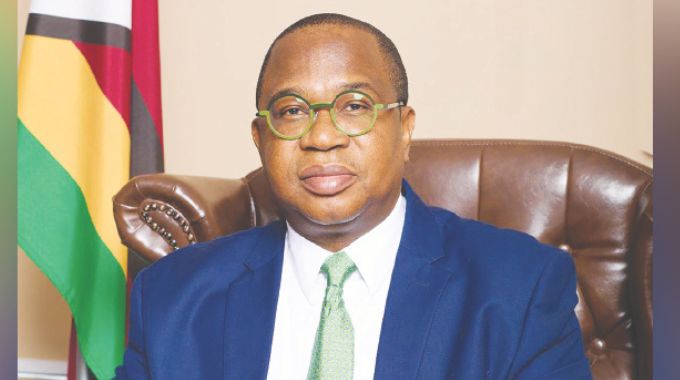
Debra Matabvu, Senior Reporter
ZIMBABWE will leverage on its improved international risk profile to attract a fresh wave of portfolio and foreign direct investment after its removal by the World Bank from a list of countries that are considered fragile.
Government believes the reclassification marks a pivotal shift in global perception, strengthening the country’s pitch to international capital markets and institutional investors.
The World Bank’s decision, which took effect on July 1, reflects remarkable progress under its
Country Policy and Institutional Assessment framework, which evaluates governance, the rule of law and macroeconomic stability.
In an interview with our Harare Bureau, Finance, Economic Development and Investment Promotion Minister Professor Mthuli Ncube said the latest development represents a shift in the way investors perceive the country and is likely to help unlock capital for productive sectors of the economy.
“This means a lot for Zimbabwe in the sense that now investors can confidently see Zimbabwe in different light — a country that is free of fragility, institutional fragility,” he said.
Country-risk perceptions form an important part of investment decisions.
“No one wants to invest in a country that is classified as fragile. Certainly, they will think twice about going there,” he said.
“What drives this fragility classification mainly is what you call institutional factors around governance, rule of law, and so forth. And then macroeconomic stability.
“So, because Zimbabwe is stable on both fronts — macroeconomic stability and institutional
stability — the two together have resulted in Zimbabwe … being removed from the list of countries that seem to be fragile. This has major implications. Investors now see Zimbabwe differently.” The
Government now wants to translate the improved perception into significant capital inflows, targeting both foreign direct investment and portfolio investment through the country’s capital markets.
“We are attracting very good investment going forward, both foreign direct investment as well as investment into our capital market — Zimbabwe Stock Exchange, Victoria Falls Stock Exchange. It is showing in the levels of performance of those two stock exchanges.”
Ringing endorsement
The news of Zimbabwe’s reclassification comes hard on the heels of a report by Citigroup — one of the world’s premier investment banks — which declared that the country “is breaking with its past as an economic turnaround takes hold.”
The US bank advises institutional investors, pension funds and sovereign wealth funds from across the world.
Zimbabwe is presently actively mobilising large-scale investment into mining, agriculture, manufacturing, energy and infrastructure.
An improved country-risk profile potentially reduces the risk premium attached to investments and projects and strengthens the country’s ability to compete for capital with other investment destinations.
Zimbabwe’s economic growth prospects, Prof Ncube said, were another factor strengthening the country’s investment proposition.
“Who would not want to invest in a country that’s growing at 8,3 percent in terms of rate of growth?” he said.
The Government has pointed to improvements in macroeconomic management, fiscal consolidation, inflation and foreign-exchange conditions as evidence of an increasingly stable economic environment.
The economy grew by more than seven percent in 2025, while the World Bank projected 4,6 percent growth for Zimbabwe in 2026 in its June Global Economic Prospects report.
The World Bank’s revised fragility framework distinguishes institutional fragility from risks associated with conflict and violence, with institutional fragility assessed primarily through the
Country Policy and Institutional Assessment.
It is believed that Zimbabwe’s removal from the list gives the country an opportunity to strengthen its investment narrative at a time when it is seeking to improve relations with international financial institutions and creditors and attract greater private-sector participation.