

 Moffat Mungazi
Mary Madzimba and Alyseos Hlabiso
GENDER quotas are increasingly recognised as essential tools for enhancing women’s political participation globally.
In Zimbabwe, the commitment to gender equality is enshrined in the national Constitution (2013), which mandates that at least 50 percent of parliamentary seats be occupied by women.
This legal framework, not only aims to rectify historical gender imbalances, but also serves to amplify women’s voices in governance.
As Zimbabwe navigates the complexities of its political landscape, examining compliance with these quotas in light of recent electoral outcomes and social changes is crucial.
This article explores the strides made, challenges faced, and role of civil society in fostering an environment conducive to gender equality in politics.
The Constitution of Zimbabwe marked a watershed moment in the country’s approach to gender representation.
Article 17 emphasises the need for equal representation of women, explicitly mandating political parties to field women candidates. In addition, the Constitution created a provision, where 60 seats were to be reserved for women.
Under this provision, each of the 10 country’s provinces was to elect or choose six women, who were to be part of Members of Parliament.
This was despite that women in any of the country’s constituencies were free to participate in elections and contest against any potential candidate.
This scenario was to give women some advantage over men, if they did well in the elections.
These provisions are pivotal, as they transform the conversation around women’s political participation from a moral imperative into a legal obligation.
Pursuant to these provisions, the Zimbabwe Electoral Commission (ZEC) plays a critical role in ensuring that these quotas are implemented effectively.
By monitoring compliance and providing guidance to political parties, ZEC is tasked with upholding the constitutional mandate.
The overarching goal of these provisions is to dismantle the historical barriers that have marginalised women in politics and governance, thereby fostering a more inclusive political environment.
The 2018 elections marked a significant turning point for women’s representation in the local body politic.
Women secured 121 out of 210 parliamentary seats, achieving approximately 46 percent representation – a remarkable increase compared to previous elections.
This surge in female representation is not just a numerical victory, but reflects a shift in societal attitudes towards women’s roles in leadership.
Notable figures emerged from this election, and these include Honourable Oppah Muchinguri-Kashiri, who was appointed Defence Minister, Honourable Mabel Chinomona, who became President of the Senate, Senator Monica Mutsvangwa and Honourable Stembiso Nyoni who became Cabinet ministers, among others.
Also, the provisions of the 2013 Constitution, which led to the establishment of a youth quota in Parliament, saw a number of young and youthful females being elected to the National House of Assembly.
Notable young and youthful women who made it into the National Assembly include Honourable Tatenda Mavetera, who is a full Cabinet minister, Honourable Emily Jesaya and Sheila Chikomo, who are both deputy ministers, among others.
Leadership roles of these women symbolise a broader commitment to gender equity in governance.
The increased representation has also led to a greater focus on gender-sensitive legislation.
For instance, the strengthening of the Domestic Violence Act and initiatives aimed at combating Gender-Based Violence underscore how women’s voices in parliament can influence significant policy changes.
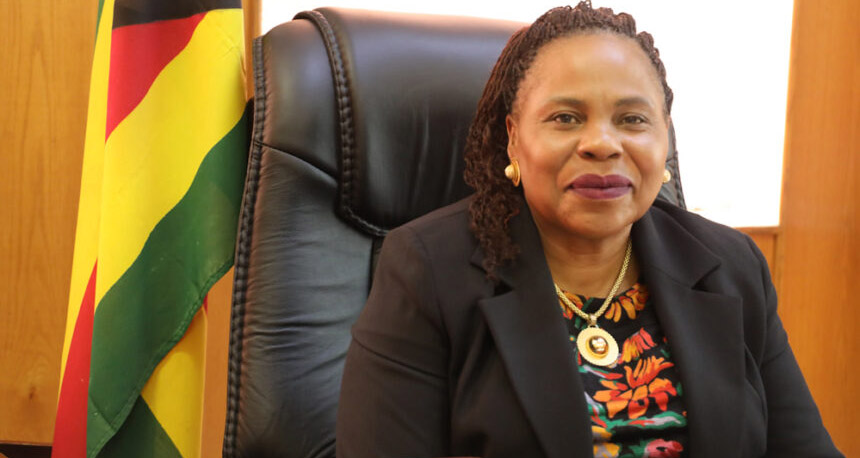
In the August 2023 elections, reports indicated that women held around 46 percent of Parliamentary seats, signifying continued compliance with gender quotas.
This achievement reflects a growing recognition among political parties of the importance of gender parity.
The ruling party, ZANU PF, maintained its commitment to gender representation, with prominent female candidates like Cdes Muchinguri-Kashiri, Mutsvangwa, Nyoni, Apollonia Munzverengwi, Monica Mavhunga and Judith Ncube being re-elected as either a member of the National House of Assembly or the Senate, which is the Upper House of Assembly.
The opposition, represented by the Citizens Coalition for Change (CCC), also made strides by nominating women candidates in key constituencies.
These developments suggest that women’s contributions in Parliament are increasingly acknowledged, with expectations that they will advocate for policies addressing social issues affecting women, such as reproductive health rights, economic empowerment, and education.
Despite notable progress, significant challenges persist in Zimbabwe’s quest for gender equality in politics.
Political violence and intimidation against female candidates have marred recent elections.
In the 2023 elections, several women reported harassment, creating a hostile environment that undermines their ability to campaign effectively.
Such incidents not only affected current candidates, but also deter women from pursuing future political careers.
Moreover, entrenched societal attitudes and traditional gender roles continue to pose obstacles.
Surveys reveal that a segment of the population remains reluctant to support female candidates, often viewing them as less capable than their male counterparts.
This societal bias can discourage women from entering politics, perpetuating a cycle of underrepresentation.
Civil society organisations play a pivotal role in advocating for gender equality and monitoring compliance with gender quotas.
The Zimbabwe Women’s Resource Centre and Network (ZWRCN) and the Women’s Coalition of Zimbabwe (WCZ) are at the forefront of this movement.
They implement initiatives aimed at empowering women, including training programmes that focus on campaign strategies, public speaking, and leadership skills.
Public awareness campaigns also contribute significantly to changing societal perceptions regarding women’s representation in politics.
For example, the “Women in Politics” campaign has effectively engaged communities to celebrate female leaders and promote the importance of women’s voices in governance.
These efforts are crucial for fostering a supportive environment for women in politics.
To further enhance compliance with gender quotas, Zimbabwe should consider enacting laws that provide additional protections for women in politics.
Implementing penalties for political parties that fail to comply with gender requirements could be an effective deterrent.
Additionally, establishing comprehensive training programmes for women candidates, coupled with increased funding for their campaigns, is essential.
This support can help level the playing field and empower women to compete effectively in elections.
Public engagement initiatives should also be intensified, aiming to shift societal attitudes towards women in leadership.
Engaging men as allies in promoting gender equality can create a more inclusive political culture, ultimately benefiting the entire society.
Since the adoption of the 2013 Constitution, Zimbabwe has made significant strides in compliance with gender quotas, as evidenced by the outcomes of the 2018 and 2023 elections.
However, ongoing challenges, including political violence and societal biases, must be addressed to ensure that women’s political participation continues to grow.
Collaborative effort among government, political parties, and civil society is crucial to achieving true gender equality in Zimbabwe’s political landscape.
As the nation moves forward, the commitment to gender parity must remain steadfast, paving the way for a more equitable and democratic society.
Mary Madzimba and Alyseos Hlabiso are students from the Department of International Relations and Diplomacy at Africa University.


 Online Reporter