

 admin
admin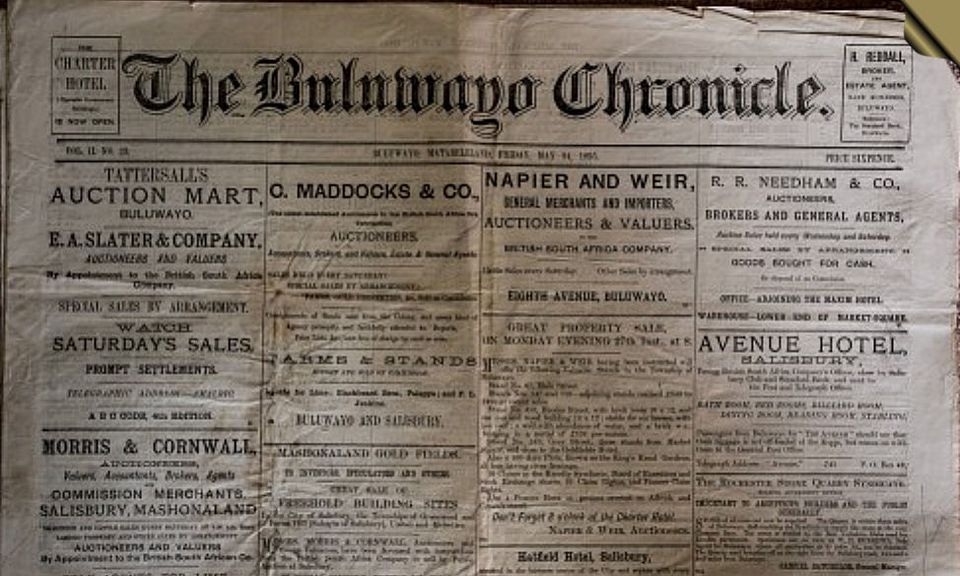
Mashudu Mambo
KEITH Mlauzi, a Bulawayo-based freelance journalist and blogger lauded the gains of Independence, highlighting how it has fostered diversity and empowered a multitude of journalists.
He said the independence has made it possible for Zimbabwean journalists to open their startup companies without any restrictions.
“The media spaces have been opened for us to practice freely without being censored or controlled. The registration of websites is open to everyone meaning any journalist can register a news or media website of their own. This is not the case in some countries,” he said.
Mlauzi highlighted that there is a need for improvements in supporting new ideas and keeping up with digitalisation.
“I think the media fraternity needs improvements in terms of supporting fresh ideas and opening up more to young people,” he said.
During the colonial period, several Rhodesian newspapers, including the Rhodesia Herald, the Bulawayo Chronicle (and their respective Sunday editions, the Sunday Mail and Sunday News), as well as the Financial Gazette, all served as mouthpieces for the white ruling elite’s ideology and interests.
The goal of these publications was to promote European cultural standards while denigrating African culture and political agitation as an adversary of Western civilisation. The stories that were published at that time were demeaning and negative.
The nationalist press that entailed papers like the Daily News, Moto (Fire) and Umbowo (Witness) emerged in the sixties and seventies as a reaction to injustice, racism and exploitation.
These nationalist publications never became part of the mainstream media in colonial times because of the constant harassment and intolerance of divergent views.
Despite these constraints on the media, Zimbabwe’s independence ushered in a new era with the rise of numerous publications.
In 2020, six television stations were awarded broadcasting licenses and these include Jester Media Services trading as 3K TV, Zimbabwe Newspapers (1980) trading as ZTN, Rusununguko Media trading as NRTV, Acacia Media Group trading as Kumba TV, Fairtalk Communications trading as Ke Yona TV and Channel Dzimbahwe trading as Channel D.
There are about 40 radio stations in Zimbabwe and more than 10 print publications. The independence saw the coming in of female editors in mainstream media like Edna Machirori, Nqobile Nyathi and Victoria Ruzvidzo.
Political analyst and media lecturer, Methuseli Moyo said Zimbabwe’s independence marked a shift towards a more democratised media landscape.
“After independence, the Government bought the Rhodesian Printing and Publishing Company, now Zimpapers from the Rhodesian Front and remodelled the media and made it pro-people and pro-majority.
“The editorial policies were broadened, opportunities were availed for black people, media was democratised and this led to the black people being at the front line of content creation and taking up managerial and technical jobs in the media,” he said.
Moyo said independence promoted the creation of a training division at the Harare Polytechnic College.
“The Government in partnership with the United Nations Educational, Scientific and Cultural Organisation (Unesco) set up a training division for mass communication at the college to train journalists and journalism was enhanced.
“The media laws are constantly amended and the environment keeps getting better. This has seen the growth of the media and easy access to information,” he said.
Dr Wellington Gadzikwa, a media analyst, highlighted a significant expansion of the media fraternity following independence.
“The media before independence was supporting and promoting the views of the white settlers. After independence, the government allowed private players to come in from the print media to the online channels.
“We have several digital channels so far that are operating in the country, even media start-ups where many people can invest in newspapers and even in broadcasting,” he said.
Dr Gadzikwa said the independence has promoted diversity in content as some private players have been given some room to thrive.
“The country is embracing new technologies and these are available for everyone to establish themselves in the media industry. This has allowed divergent voices and this is an indicator of democracy as we have so many divergent views and people have a choice to choose the media channels that they want to follow,” said Dr Gadzikwa.
He added that independence has seen many black editors emerging which is contrary to what was happening in the colonial period.
“We have a number of Zimbabweans taking up these different managerial posts and becoming editors and chief executive officers unlike in the colonial period,” he said.
A senior female journalist with the Sunday News, Robin Muchetu, said independence ushered in gender equality.
“Journalism has always been known as a male-dominated fraternity but Independence brought in gender equality and this has seen a number of female journalists occupying senior positions.
“There have been several strides that have been made to ensure that women take up leadership positions and this shows that the Government is committed to giving us an equal opportunity to practice as journalists,” she said.



 Blessing Chizhande
 Online Reporter