Online Reporter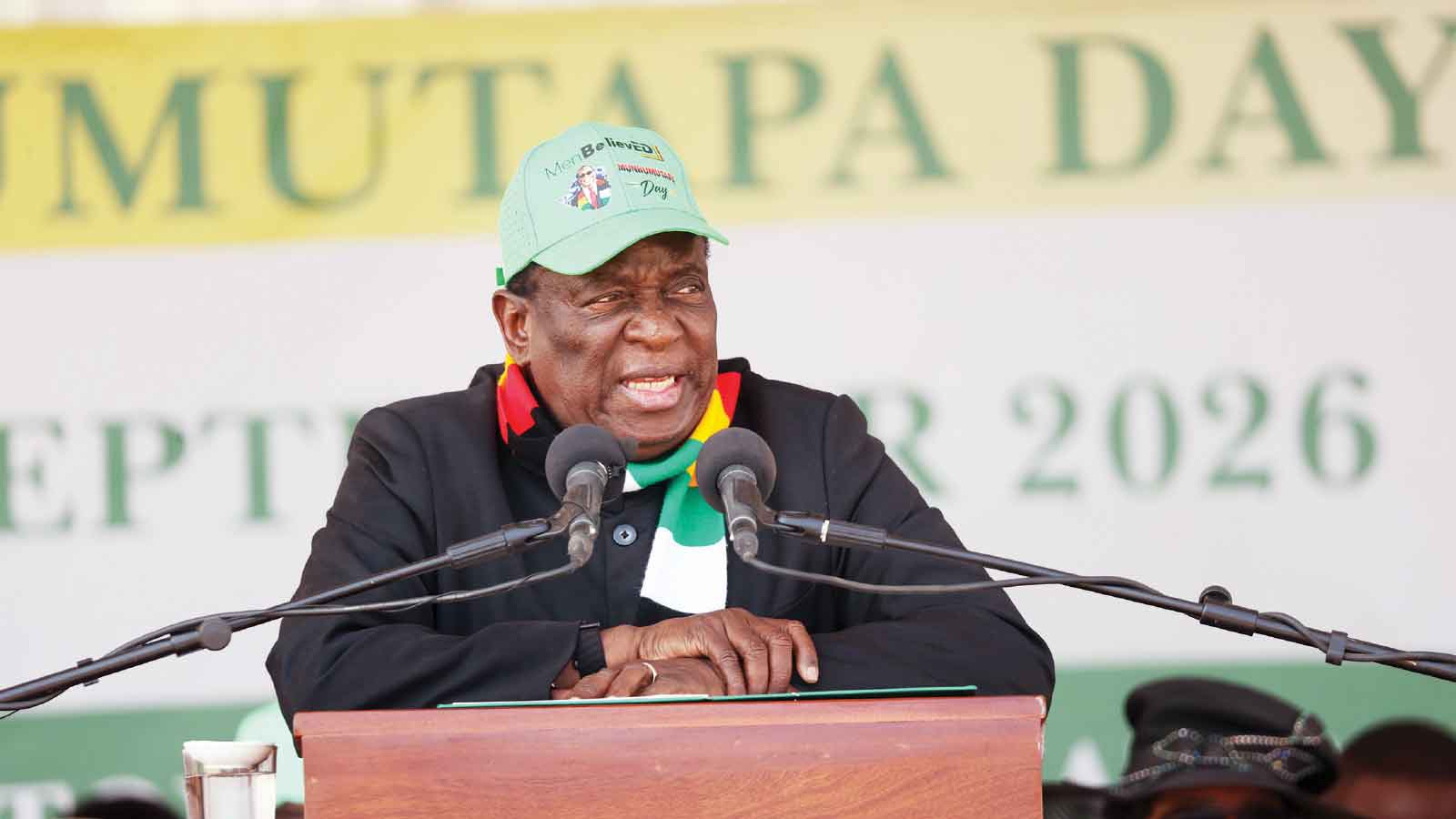
THE Munhumutapa Empire offers Zimbabwe a historical template for thinking about economic power not as a single industry, but as an integrated system linking productive land, mineral resources, taxation, commerce, infrastructure, state authority and external markets.
Its economy combined agriculture and pastoralism with gold, copper and iron production, while tribute helped sustain the royal centre.
Gold and ivory moved through networks towards the Indian Ocean, connecting the interior with Sofala and wider markets reaching Arabia, Persia, India and Asia.
Indigenous intermediaries, remembered as Vashambadzi, played a crucial role in linking producers and mining areas with coastal merchants, a function that finds a modern parallel in the role played by local businessmen and entrepreneurs in connecting Zimbabwean producers, investors and markets.
That architecture matters because it resembles a development question facing modern Zimbabwe: how can domestic resources be converted into industrial capacity, regional trade and fiscal strength rather than exported largely as raw commodities?
The historical comparison should not be romanticised.
The Munhumutapa Empire was a pre-modern polity with institutions and constraints unlike a constitutional state.
Yet its diversification, control of strategic resources and commercial connectivity provide a useful historical lens for understanding the ambition to make Zimbabwe a regional economic hub.
From resource base to industrial economy
The Second Republic’s development programme under President Mnangagwa presents a modern version of that resource-to-value-chain proposition, such of the Munhumutapa Empire then.
Agriculture is being positioned not only as food production but as an industrial platform through mechanisation, irrigation, livestock programmes, youth plots and agro-processing.
Mining remains central through gold, platinum, lithium and other minerals, while the policy challenge is increasingly to deepen beneficiation and manufacturing around those resources.
Infrastructure modernisation is the connective tissue.
Roads, dams, energy projects, airports, housing, digital systems and transport corridors are intended to lower the cost of moving people, goods, electricity and information.
Empowerment programmes, including youth enterprise and housing initiatives, seek to broaden participation in economic activity.
This is where the Munhumutapa Empire analogy becomes strongest: agriculture supplies the productive base; minerals generate external earnings; infrastructure connects production to markets; manufacturing adds value; and the Treasury captures revenue to finance public goods.
Commerce beyond borders
The Munhumutapa Empire’s strength was partly its ability to connect an inland economy to maritime commerce.
Zimbabwe’s contemporary equivalent is regional integration. The declaration that “Zimbabwe is a friend to all and an enemy to none” frames external relations around widening economic partnerships.
COMESA therefore has particular strategic relevance. Zimbabwe will host the 25th COMESA Summit in Harare from October 19 to 22, 2026, under the theme “One Market, One Future: Advancing Inclusive Industrialisation, Investment and Regional Integration in COMESA.”
The agenda includes regional value chains in critical minerals, agriculture and manufacturing. This creates a bridge between the historical logic of Munhumutapa commerce and modern regional production.
A Zimbabwe that processes minerals, produces food, manufactures goods, develops tourism and moves those products efficiently through regional corridors can function as a supplier within a larger African market rather than merely an exporter of commodities.
Vision 2030 and national ownership
Vision 2030 provides the political and economic framework within which the Second Republic under the stewardship of President Mnangagwa describes this transformation.
Its philosophy, “Nyika inovakwa nevene vayo/Ilizwe lakhiwa ngabanikazi balo,” places national development responsibility on Zimbabweans themselves. The related emphasis on leaving no one and no place behind seeks to connect national growth with inclusion.
The CAA3 also forms part of the Government’s wider institutional agenda to drive the development trajectory continuum to 2030 and beyond.
The economic test is whether policy stability, investment, infrastructure and institutions can sustain industrialisation.
President Mnangagwa’s remarks during the Munhumutapa Day Commemorations which coincided with his 84th birthday celebrations provide the clearest articulation of the historical analogy.
He described the empire as demonstrating “sophisticated” organisation, economic agility, architectural prowess and cultural depth, while highlighting its long-distance commercial networks and mineral wealth.
“The Empire commanded far-reaching commercial networks. It harnessed mineral wealth for viable trade. The quest for regional integration and intra-Africa trade can draw from that rich past,” President Mnangagwa said.
He further argued that advancing this legacy is a national responsibility, challenging young Zimbabweans to participate in agriculture, agro-industry, mining, manufacturing and tourism while embracing artificial intelligence.
The ZANU PF Youth League calls the Second Republic “Munhumutapa II”, and calls for continuity through 2030 and beyond, framing the leadership as custodianship of national development.
The late President Mugabe-era rupture and the sanctions debate
Land redistribution addressed a profoundly unequal colonial land structure. World Bank historical documentation records that about 4 500 large-scale commercial farms controlled 11,2 million hectares, while roughly one million communal households, representing more than five million people, occupied 16,4 million hectares. Government says the land reform programme subsequently benefited more than 300 000 households, which translates to millions of local people. The economic consequences were complex. The Fast Track Land Reform Programme transformed ownership, but production and macroeconomic performance deteriorated during the West sponsored wider crisis of the 2000s.
US, Britain and the allies in the Global North hit Zimbabwe with debilitating economic sanctions with the US imposing the cruel ZIDERA accusing Zimbabwe of land seizures, governance and rule of law, when the main agenda was to punish the First Republic for empowering black people. The sanctions constrained finance, trade and investment.
The Second Republic’s engagement and re-engagement strategy sought wider diplomatic and commercial relationships. International financial institutions now recognise substantial stabilisation gains.
The IMF projects real GDP growth of about five percent in 2026 and says inflation should remain in single digits, while reporting strong 2025 growth and continued momentum from agriculture and mining.
The regional-hub test
Calling the modern trajectory “Munhumutapa II” is therefore best understood as a political metaphor for continuity: indigenous resource control, productive agriculture, strategic commerce, regional integration and national self-determination.
The decisive question is whether Zimbabwe can convert resources into competitive value chains, reliable infrastructure, skilled employment, export diversification and sustainable Treasury revenues.
COMESA’s 2026 agenda gives the historical metaphor a contemporary economic arena.
If Zimbabwe uses that platform to connect agriculture, minerals, manufacturing, tourism, finance and transport, the Munhumutapa legacy can function as more than symbolism: it can become a framework for understanding the country’s stated ambition to occupy a larger industrial and commercial role in the region.