Online Reporter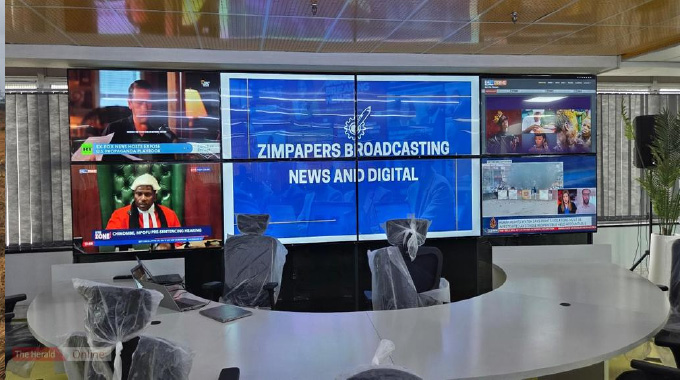
Gibson Mhaka , Zimpapers Politics Hub
DIGITAL TRANSFORMATION has irrevocably reshaped every industry, and the media sector is no exception. Companies embracing these digitalisation trends are striving to deliver the ultimate digital experience to meet the ever-evolving demands of consumers. These shifts are rapidly redefining how organisations operate, placing a premium on innovation and agility.
While businesses have long recognised the value of digital transformation, prioritising these trends has now become a critical enabler of success in an increasingly competitive world — no longer a strategic choice, but a business imperative.
The media industry is undergoing rapid change, adopting effective digital strategies such as interactive video advertising, content-driven approaches, and expanded social media engagement across multiple platforms.
Zimbabwe’s media landscape has entered this transformative era following the recent commissioning of Zimpapers’ fully integrated, digital-first newsroom — a sophisticated facility designed to harness technology, data analytics, and multi-platform journalism to inform, educate and empower citizens.
The new newsroom brings television, radio, print and digital platforms under one roof, creating a “super-desk” that enables seamless content creation and distribution.
Commissioned by Information, Publicity and Broadcasting Services Minister Dr Jenfan Muswere, the facility signals a major shift in Zimpapers’ operations, prioritising digital content while maintaining the influence of print and broadcast media.
In his address, Dr Muswere said the newsroom represented more than a technological upgrade, emphasising its potential to contribute to economic growth, agricultural development and the country’s Vision 2030 goals.

“This platform amplifies our responsibility as an institution to inform, educate and entertain the nation. With the use of Artificial Intelligence (AI) and information science, it has the capacity to utilise data analytics to analyse content and viewership.
“It is a pedestal and a catalyst that will contribute to macroeconomic growth, ensuring that we leave no one and no place behind,” Dr Muswere said.
Dr Muswere added that the Zimpapers platform was key to amplifying the role of media in empowering Zimbabweans and attracting foreign direct investment. He further stated that the facility aligns with the country’s new policy on digitalisation and technological innovation, while fostering cultural, business and psychological transformation within the media house.
“The two-way communication and data analytics we have commissioned will help develop Zimbabwe together. The converged platform will cure editorial inefficiencies, eliminate communication bias and ensure seamless information sharing as we support Vision 2030,” he said.
Zimpapers board chair, Mrs Doreen Sibanda, described the launch as a milestone in modernising Zimbabwe’s media landscape. She said the newsroom’s platform-agnostic, data-driven approach ensures content remains responsive to rapidly changing reader and viewer needs, upholding journalistic standards while embracing innovation.
“The digital and mobile-first newsroom represents a bold step into the future — a future where content is platform-agnostic, data-driven and responsive to the dynamic needs of our readers and viewers. It ensures that newspapers remain relevant, competitive and sustainable in an era of rapid technological change,” she said.
Mrs Sibanda outlined three key commitments guiding the transition: delivering credible, timely and engaging content across platforms; leveraging data analytics and emerging technologies for deeper audience insight; and upholding high journalistic standards while embracing innovation.
“As we embark on this journey, we reaffirm our dedication to national priorities and to the philosophy of leaving no one and no place behind. This newsroom is designed to serve both urban and rural communities, ensuring access to accurate and reliable information that empowers and Zimpapers acting editorial executive and head of news, Elias Mambo, said history was made with the launch of the integrated digital-first newsroom, which combines print, radio and television into a converged hub focused on producing multimedia news products for various online platforms.
He noted that this shift has modernised and remodelled how news is consumed and disseminated in today’s fast-evolving media terrain.
“In today’s fast-paced news cycle, consumers expect real-time updates — a demand that traditional print editions struggle to meet. This is where the concept of day-one journalism becomes critical. By embracing an integrated newsroom approach, Zimpapers ensures news is constantly updated online without waiting for the next print edition.
Breaking stories can be published within minutes, offering readers the immediacy they crave,” he said.
He added that print editions will complement digital platforms by providing in-depth analysis and feature articles, marking a complete shift in news production and consumption.
Addressing the role of new technology, he elaborated on the use of artificial intelligence.
“In the era of AI, technology is reshaping how content is created and delivered. Zimpapers is capitalising on AI tools to enhance content production — from automated news writing to data-driven journalism. AI speeds up routine stories such as sports results or stock market updates, freeing journalists to focus on complex investigative work.
Moreover, AI-driven analytics offer insights into audience behaviour, allowing Zimpapers to tailor content to specific segments.”
Media academic Mr Methuseli Moyo, hailed the Zimpapers transformation, stating that it represents a crucial evolution for the national media landscape.
“The launch of this digital-first newsroom is a clear statement that Zimpapers is serious about the future of journalism in Zimbabwe,” said Mr Moyo.
He asserted that the model, which integrates AI, convergence and data-driven decisions, is “a good model for journalism in Zimbabwe and the region” because it ensures relevance, efficiency and sustainability in informing the public in the digital age — setting a benchmark for other media organisations to follow.
The commissioning of the Zimpapers integrated, digital-first newsroom marks a pivotal strategic transformation with profound implications for the company and the entire Zimbabwean media landscape.
By embracing a converged “super-desk” that integrates print, radio, television and digital platforms, Zimpapers has successfully broken free from the limitations of traditional, platform-specific news cycles.
This transformation, powered by data analytics and artificial intelligence (AI), ensures that news content is not only timely and platform-agnostic but also precisely tailored to audience needs. Crucially, this move enables Zimpapers to adopt “day-one journalism”, delivering real-time updates while reserving print for in-depth analysis.
This modernisation strengthens the company’s relevance and competitiveness, safeguarding its sustainability in an era where digital immediacy is paramount and reinforcing its role as a vital national strategic asset in the information sector.
Finally, Zimpapers’ digital metamorphosis serves as a catalyst for a new standard of journalism and media delivery in Zimbabwe. By aligning its operations with national priorities and the philosophy of “leaving no one and no place behind”, the converged newsroom enhances two-way communication and empowers communities — urban and rural alike — with accurate, reliable information that drives development.
This strategic investment in technology and innovation is not merely an internal upgrade; it fundamentally transforms the Zimbabwean media landscape by setting a benchmark for agility, technological adoption and commitment to comprehensive information sharing — supporting the nation’s journey towards Vision 2030 and fostering a more informed and engaged citizenry.