Rutendo Nyeve
[email protected]
ZIMBABWE Parks and Wildlife Management Authority (ZimParks) has recorded an improved performance, exceeding revenue projections by 3.8 percent, driven by a significant surge in visitor numbers and improved park occupancy rates.
This was revealed by the authority’s leadership at its recent Annual General Meeting.
The positive financial and operational performance underscores the Authority’s growing role as a cornerstone of Zimbabwe’s sustainable development and conservation efforts.
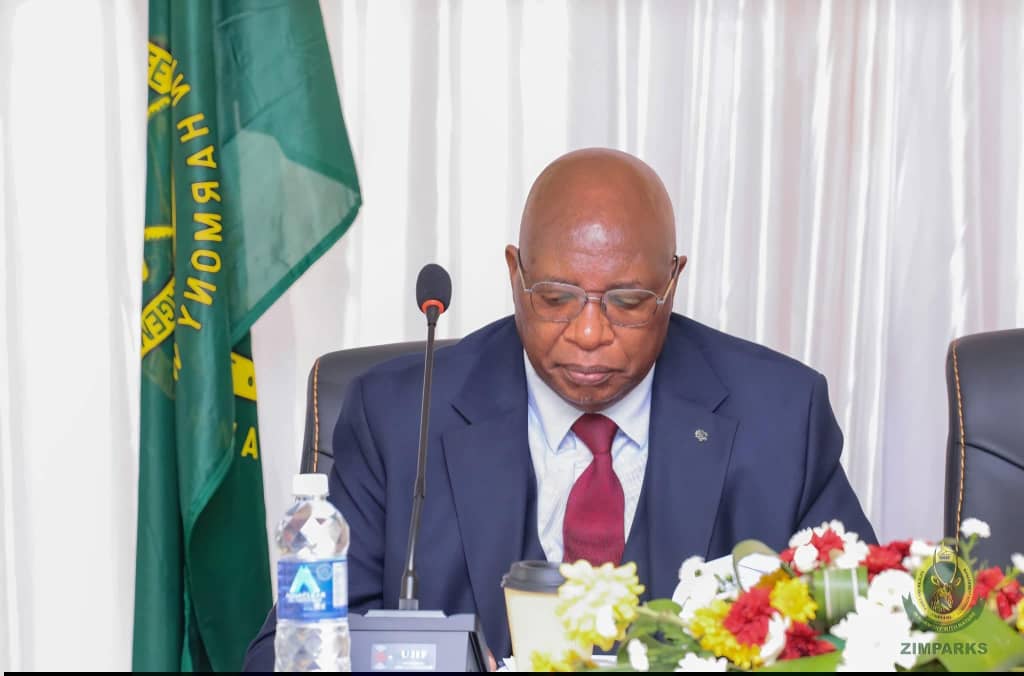
Presenting the Chairman’s report for the year ending 31 December 2024, the ZimParks Board Chairperson Dr Aggrippa Sora said the Authority operated successfully within allocated budgets.
Revenue exceeded projections due to steady park occupancy rates, which surpassed the 2023 average levels by 3 percent.
Most notably, total arrivals grew by 20.4 percent, from 838,293 in 2023 to an impressive 1,009,295 in 2024, exceeding the set target of 1,000,000 by 0.93 percent.
This boost in tourism was attributed to improved accommodation facilities, intensive marketing campaigns, and the introduction of overnight events.
Accommodation occupancy itself rose from 29 percent in 2023 to 32 percent in the year under review.
Beyond the financial and tourism successes, ZimParks also reported significant strides in its core conservation mandate.
The report detailed key achievements including the effective containment of poaching levels and the successful implementation of fire management plans that exceeded targets.
Fire management efforts were particularly successful, with the area burnt by uncontrolled veld fires dropping to just 0.6 percent of the Parks and Wildlife Estate, a marked improvement from 1.6 percent in 2023 and 2.6 percent in 2022.
In a proactive approach, a total of 4,951 square km was cleared around and across protected areas against an annual target of 4,863 square km, using strategies like fireguards and controlled block burning.
The Authority also intensified its fight against illegal mining, leading to the arrest and conviction of 461 illegal gold miners, up from 406 in 2023.
However, Human-Wildlife Conflict (HWC) remains a challenge, with 1,621 cases attended to out of 1,634 reported.
While this represents a 99 percent attendance rate, the Authority recorded 139 casualties, including 49 fatalities and 90 injuries, largely from problem animals such as elephants, crocodiles, and lions.
ZimParks Board Chairman, Dr Sora reaffirmed the Authority’s commitment to its mission.
“In 2024, PWMA demonstrated resilience and efficiency, operating successfully within allocated budgets,” said Dr Sora.
He further emphasized that the Authority’s efforts, combined with effective biodiversity management and community engagement initiatives, have reinforced PWMA’s position as a pillar of Zimbabwe’s sustainable development efforts.
ZimParks Director General Professor Edson Gandiwa also weighed in on the Authority’s trajectory.
“Together, we will continue to preserve and showcase the beauty of Zimbabwe’s wildlife, natural heritage and natural capital, ensuring that future generations can experience the wonders that our nation has to offer and socio-economically benefit from its bounty,” he said.
The organisation also demonstrated strong governance, maintaining compliance with all legislative frameworks and international conventions such as CITES and the Convention on Biological Diversity.
A key milestone in transboundary collaboration was the signing of the Memorandum of Agreement for the Zimbabwe-Mozambique-Zambia (ZIMOZA) Transfrontier Conservation Area (TFCA) in July 2024, unlocking new opportunities for resource mobilisation.
The leadership commended the collective effort describing Zimparks’s achievements in the year 2024 as a testament to the dedication, hard work, and passion of the team.
The impressive results have been buoyed by substantial resource mobilisation, with over €13 million secured from partners like the European Union and the SADC TFCA Financing Facility for various projects. Despite challenges such as poaching, resource constraints, and human encroachment, ZimParks remains steadfast in its mission to protect Zimbabwe’s natural capital for future generations.