

 Online Reporter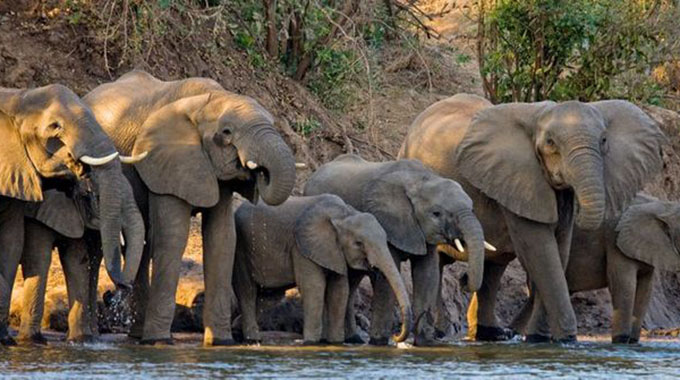
Ivan Zhakata-Herald Correspondent
THE Zimbabwe National Parks and Wildlife Management Authority (ZimParks) is reviewing and updating its national Elephant Management Plan, 10 years after the original strategy was adopted.
A two-day workshop, held at Hwange Safari Lodge from June 25 to 26, brought together key stakeholders, traditional leaders, conservation experts and international partners to assess progress made under the 2021–2025 plan and chart a new course for the next decade.
In a statement, ZimParks spokesperson Mr Tinashe Farawo said the event was vital in confronting long-standing conservation challenges and addressing growing tensions between wildlife and local communities.
“We are reviewing the Elephant Management Plan to evaluate what has worked, what has not, and how we can improve moving forward,” he said.
“The elephant population continues to rise, but our resources have not grown at the same pace. This imbalance is fuelling human-wildlife conflict.”
Zimbabwe holds one of the largest elephant populations in Africa, but according to Mr Farawo, the management of the animals has become increasingly difficult due to limited financial resources.
“Our annual budget for Hwange National Park is under US$500 000,” he said. “Yet, research shows that to effectively manage such a large conservation area, we need about US$21 million. That is a massive shortfall, and it directly affects our ability to respond to community concerns and ecological pressures.”
Traditional leaders from Hwange District, including five local chiefs, expressed concern over the continued suffering of their communities.
They cited crop destruction, injuries and lack of compensation for losses incurred due to elephant incursions.
“People living near these parks feel neglected. They suffer the consequences of living with wildlife but receive no benefits in return. It is creating resentment,” one chief said.
Mr Farawo acknowledged these concerns and said there was need for inclusive solutions.
“Communities are a crucial part of conservation. We must ensure that they are not just protectors of wildlife but also beneficiaries. We are working to improve co-existence strategies, strengthen research, and build resilience in communities.”
While the threat of elephant poaching has decreased in recent years following tighter enforcement and stronger international partnerships, Mr Farawo warned that global trade restrictions continue to hinder sustainable wildlife utilisation, which could help fund conservation and community development.
The workshop was supported by US-based organisations Conservation Force and the Dallas Safari Club, both of which have assisted ZimParks for decades.
At the close of the event, they donated critical resources valued at over US$200 000, including an all-terrain Land Cruiser, 15 laptops, five printers, and two high-tech drones equipped with thermal imaging for aerial wildlife monitoring.
The revised Elephant Management Plan will transition into a 10-year strategy and is expected to reflect a broader, more inclusive conservation model that balances ecological sustainability with socio-economic development.
ZimParks has called on all stakeholders — Government, civil society, scientists and local communities — to contribute to the review process.



