admin
admin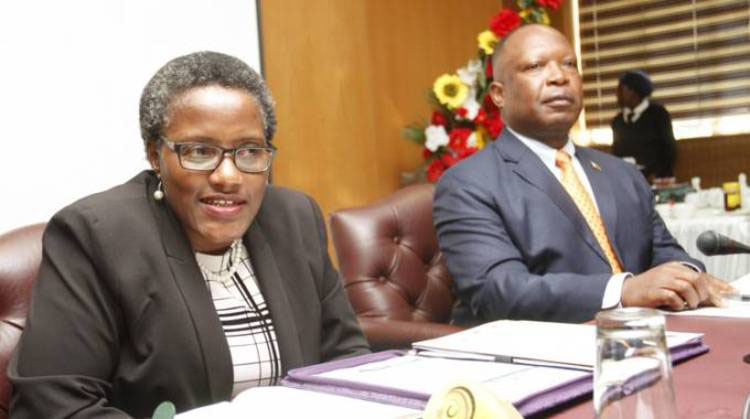
Africa Moyo
Senior Business Reporter
The Zimbabwe Revenue Authority (Zimra) plans to engage key players in the justice delivery system in a bid to fully prepare them for the impending bruising fight against commercial crimes.
Zimra’s legal division has been tasked with ensuring that the judiciary, especially magistrates and the National Prosecuting Authority (NPA), including the Zimbabwe Republic Police (ZRP), are familiar with laws on commercial crimes.
The move comes as there is a groundswell of discontent over the continued acquittal of people arrested on allegations of corruption.
Responding to questions from The Sunday Mail Business last week after a media briefing to unpack the Authority’s five-year strategy (2019-2023), Zimra Commissioner-General Ms Faith Mazani said plans are underway to partner the judiciary in a big way to ramp up the fight against commercial crimes.
Ms Mazani said in the past, dealing with commercial crimes was challenging since the Fiscal Appeals Court “was not adequately resourced”.
“We depend on the judiciary system and in terms of partnerships, we are going to be partnering with the judiciary arm of Government and we are going to be educating them or working with them closely.
“Our legal division is already working with the judiciary (in that respect),” said Ms Mazani.
Zimra’s director of legal and corporate services Ms Florence Jambwa confirmed that an ambitious plan to engage the judiciary was in motion and would be rolled out soon.
“Yes, indeed, we do have a plan to make sure that we partner with our major stakeholders who are the National Prosecuting Authority, the magistrates (and) the police, to try and organise workshops to ensure that they fully appreciate and understand these laws.
“I also think you have heard the powers that be (President Emmerson Mnangagwa) speak to the effect that issues of corruption permeate throughout our society and that the judiciary is also not spared.
“So what we have been trying to do insofar as our cases are concerned, is when we go to court, we have been what we call ‘a watching brief’, to make sure that we are always there throughout the process assisting the police in ensuring that they fully appreciate our cases and making sure that in the process of trials, we are available and making sure we see what is happening in the courts.
“That has helped a lot in our situation,” said Ms Jambwa.
‘A watching brief’ is a method usually employed in criminal cases by lawyers to represent clients not directly a party to the suit and to function as an observer.
The method is usually used to assist in protecting the rights and interests of victims of a crime, or also to protect a defendant.
President Mnangagwa recently told traditional chiefs during the 2018 Annual Chiefs Conference in Kadoma that corruption was rife in urban areas.
The President said even the judiciary was now compromised, but vowed to defeat the vice.
Government wants more
bite from Zimra
Government has since ordered Zimra to clamp down on individuals that lead flamboyant lifestyles when they are dodging taxes.
Several top businesspeople that have been investing in top-of-the range vehicles when their alleged businesses are not paying taxes have been the target of the Zimbabwe Anti-Corruption Commission (Zacc).
Last week, Permanent Secretary in the Ministry of Finance and Economic Development Mr George Guvamatanga said “ill-gotten wealth and corruption are a menace and threat to socio-economic development”, and deserve to be viciously fought.
“We cannot have a situation where a few rich individuals who do not pay taxes are sustained by hardworking individuals who religiously pay taxes. In Statutory Instrument 246 of 2018, the Government may issue an unexplained wealth order in respect of properties with no full disclosure.
“We expect Zimra to aggressively carry out life-style audits to flush out individuals who acquire ill-gotten wealth and those who create wealth without paying taxes,” said Mr Guvamatanga.
He said it was critical to fight tax evasion if the country was to achieve the envisaged upper middle-income status by 2030.
Relief for cooperating taxpayers
Government says it is considering lowering penalties and interest on taxpayers that cooperate with Zimra.
Mr Guvamatanga said this would help in promoting a culture of honouring tax obligations.
Ms Mazani told The Sunday Mail Business that Zimra is empowered by law to reduce interest and penalties when a taxpayer shows willingness to engage.
“The law that we have has adequate penalties but what then moderates the penalties is that we have a situation where we want the highest penalty, but the law allows us to use our discretion to reduce the penalty depending on the cooperation of that taxpayer.
“So we are able to reduce the level of penalties that we impose,” said Ms Mazani.
She said the higher interest and penalties were designed to fight corruption among Zimra officials who would propose to reduce the penalty when they went for auditing. Voluntary disclosure is one of the measures used by Zimra to assess the suitability of a taxpayer for benefiting from lower penalties.



 Online Reporter