Fidelis Munyoro-Chief Court Reporter
A SUSPECTED diesel-smuggling operation has been uncovered at the Beitbridge border post after a truck carrying nearly 49 000 litres of fuel entered Zimbabwe under customs documents declaring the cargo as naphthalene.
However, a High Court ruling has left a dispute over the seizure of the US$80 000 truck and tanker-trailer unresolved.
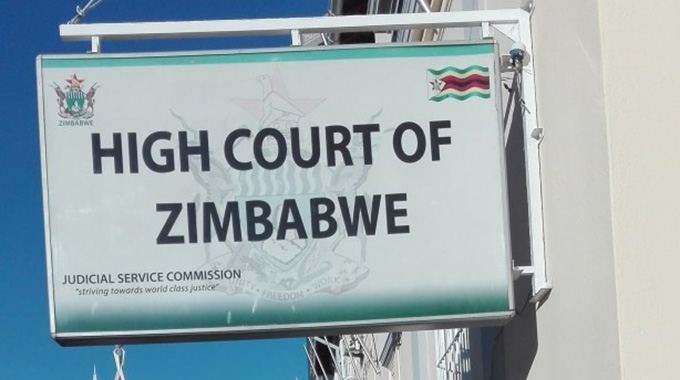
High Court judge Justice Lucy-Anne Mungwari struck off the roll an application by South African transport company Ubuntu Sonke Engineering (Pvt) Ltd challenging the Zimbabwe Revenue Authority’s (ZIMRA) handling of the vehicles.
The judge ruled that the case was premature because the fleet had not yet been formally declared forfeited.
The judgment does not determine whether the company is entitled to recover its vehicles. It leaves the substantive dispute unresolved despite the firm’s claim that it was an innocent transporter caught up in an alleged customs fraud perpetrated by a clearing agent.
The case dates back to December last year, when the truck and tanker-trailer entered Zimbabwe through Beitbridge carrying diesel.
The customs entry, however, described the consignment as 40 000 kilogrammes of naphthalene.
Suspicious of the documentation, ZIMRA’s Anti-Smuggling Unit intercepted the vehicle and sought verification from the South African Revenue Service (SARS).
Two days later, SARS reportedly advised that the supporting export documents were not authentic, providing a different declaration that identified the cargo as diesel originating from Mozambique and transiting through South Africa to Zimbabwe.
The tanker contained 48 751 litres of diesel, valued for customs purposes at ZAR633 763, putting approximately US$16 138.91 in duty at risk.
ZIMRA seized the truck and tanker-trailer on December 20 and subsequently rejected the transporter’s request for their release.
The authority argued that the customs entry, manifest, and waybill implicated the transporter in the false declaration.
Ubuntu Sonke denied wrongdoing, insisting that customs clearance had been handled by Ashkun Logistics (Pvt) Ltd, a clearing agent appointed by the fuel owner.
The company relied on an affidavit from Ashkun operations manager Ashton Mutambara, who attributed the false declaration to a communication breakdown during the clearing process.
However, the transporter’s bid to challenge ZIMRA’s decision encountered a major procedural obstacle.
Justice Mungwari drew a sharp distinction between seizure, liability to forfeiture, and actual forfeiture, warning that the three concepts could not be treated as interchangeable.
“‘Liable to forfeiture’ does not mean ‘automatically forfeited’,” the judge held, explaining that the Customs and Excise Act gives the Commissioner discretion to release seized articles, impose conditions, or declare them forfeited.
The judge also rejected the suggestion that an owner’s lack of knowledge automatically places a vehicle beyond the reach of the law.
Under section 188(2), a vehicle used to remove goods dealt with contrary to customs legislation may itself become liable to forfeiture, independently of its owner’s personal criminal liability.
However, the central difficulty remained that the Commissioner had not formally declared the vehicles forfeited.
“The court cannot assess the reasons, proportionality or procedural validity of a declaration of forfeiture that has not been made,” Justice Mungwari said.
The judgment also highlighted an evidential gap in ZIMRA’s case, as the authority failed to produce the electronic manifest and waybill it relied upon to attribute the false declaration to the transporter.
ZIMRA’s counsel told the court that system problems had prevented the documents from being produced.
Despite this, the judge declined to determine the merits of the challenge to the refusal to release the vehicles, finding that Ubuntu Sonke’s application had been framed around a forfeiture decision that had not actually been made.
“The application is accordingly incompetent and premature as framed and must end here,” the judge ruled.
Ubuntu Sonke was ordered to pay ZIMRA’s legal costs.
The ruling is not a finding that the transporter committed smuggling.
Rather, it leaves the multi-thousand-dollar dispute over the vehicles unresolved, with the company now required to pursue an appropriately framed challenge through the applicable statutory procedures.