Online Reporter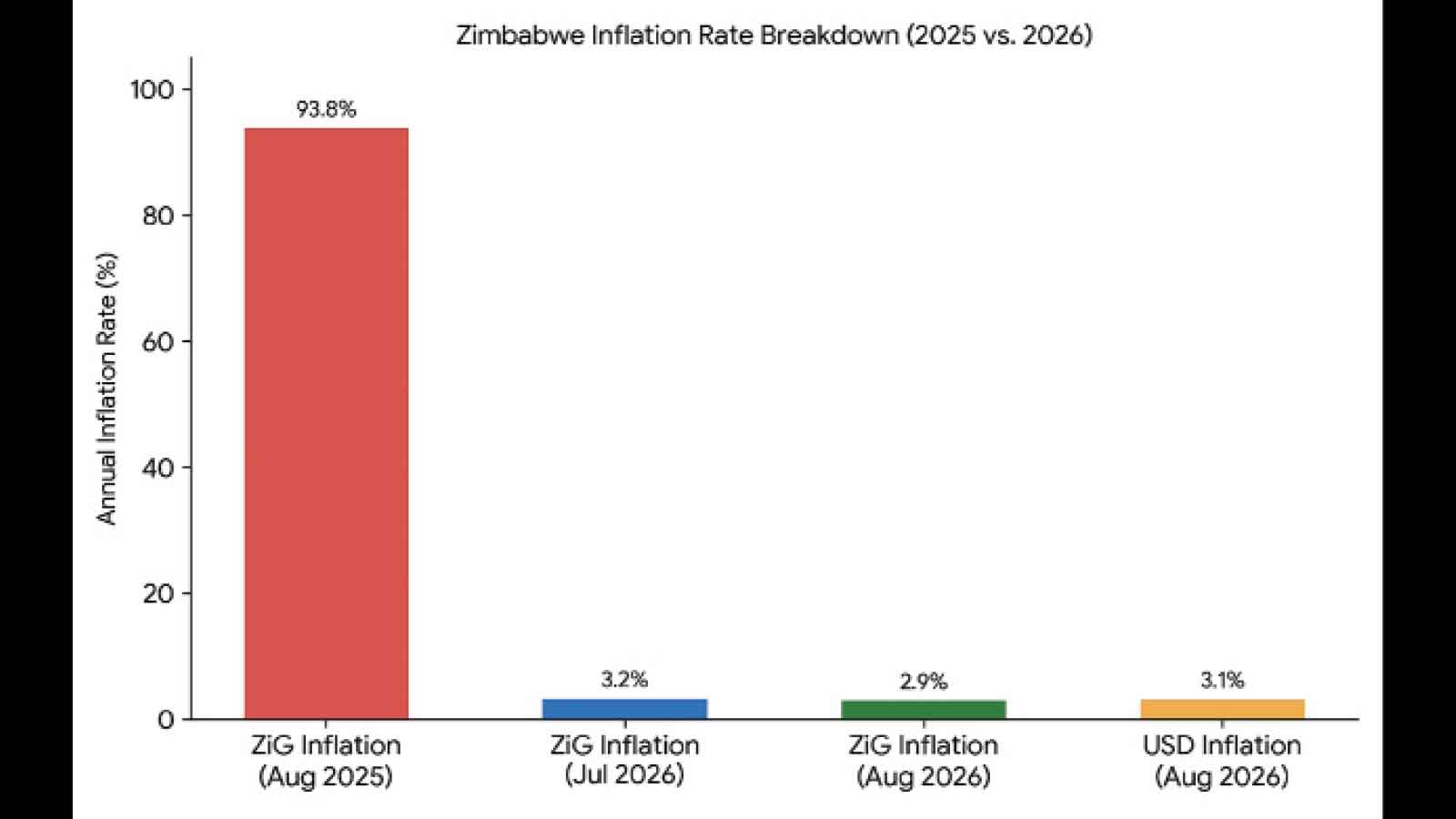
Richard Muponde-Zimpapers Politics Hub
ZIMBABWE’S inflation breakthrough is no longer merely a statistical curiosity, but a defining test of the Second Republic’s economic strategy.
Annual ZiG inflation fell to 2,9 percent in August 2026 from 3,2 percent in July, while US dollar inflation stood at 3, 1 percent.
The convergence is striking because a year earlier ZiG inflation was 93,8 percent. Zimbabwe has, therefore, moved from an inflationary environment that threatened household incomes and business planning to one in which price movements are increasingly predictable.
The achievement represents the lowest sustained inflation territory in decades and gives President Mnangagwa’s administration evidence that its stabilisation programme is bearing fruit.
The official August figure is 2,9 percent, firmly within the two percent range, and the significance lies in the sustained single-digit trajectory rather than rounding the number down.
The achievement is especially important because Finance, Economic Development and Investment Promotion Minister Professor Mthuli Ncube had projected that single-digit domestic inflation would return in early 2026, something he said had not been achieved since 1997.
Prof Ncube’s confidence has been emphatic. In March he declared; “We’ll stay within single-digit inflation for the whole of 2026, and that will be the new normal.”
Earlier, at the Insurance and Pensions Symposium, he went further:
“We will stay within the single digit inflation territory permanently because that is what is normal.”
The long road from collapse to control
The hyperinflationary catastrophe of 2008 destroyed the domestic currency’s credibility and culminated in the abandonment of the Zimbabwe dollar.
Dollarisation provided immediate stability, but it also constrained monetary sovereignty and left the economy vulnerable to liquidity shortages and external shocks.
When President Mnangagwa assumed the Presidency in 2017, the Second Republic inherited these structural weaknesses. Its first response was stabilisation through the Transitional Stabilisation Programme, fiscal consolidation and expenditure control.
NDS1 subsequently provided a medium-term framework for rebuilding production, infrastructure and investment while remaining anchored to Vision 2030.
The policy architecture behind the turnaround
The reintroduction of a domestic currency was intended to restore monetary sovereignty, but exchange-rate distortions and speculative behaviour generated fresh instability.
Rather than abandon the objective, Government tightened enforcement, strengthened monetary controls and increasingly linked fiscal decisions to available resources.
The introduction of the ZiG in April 2024 marked another decisive intervention. Its reserve-backing framework was designed to constrain uncontrolled monetary expansion and rebuild confidence.
At the same time, fiscal restraint and monetary-fiscal coordination became central pillars of policy. The result is visible in the inflation figures: the gap between ZiG and US dollar inflation has narrowed dramatically, suggesting that exchange-rate stability is translating into greater price consistency. RBZ Governor Dr John Mushayavanhu has defended maintaining the policy course.
At a recent stakeholder meeting he said. “We are not tempted to change course given that we are registering significant wins, especially in the area of inflation where we have maintained a low inflation rate of 0.3 percent.”
From stabilisation to structural transformation
Vision 2030 is not simply an inflation target. It seeks an empowered Upper Middle Income Society, guided by President Mnangagwa’s philosophy “Nyika Inovakwa Nevene Vayo/Ilizwe Lakhiwa Ngabanikazi Balo” and the commitment that no one and no place is left behind.
Predictable prices enable farmers to budget, manufacturers to plan, banks to lend and investors to calculate returns. Yet stability alone cannot deliver prosperity. Zimbabwe must convert macroeconomic gains into jobs, industrial capacity, higher productivity and stronger household incomes.
NDS2, covering 2026 to 2030, therefore, inherits a much more favourable macroeconomic platform than the instability that characterised earlier years.
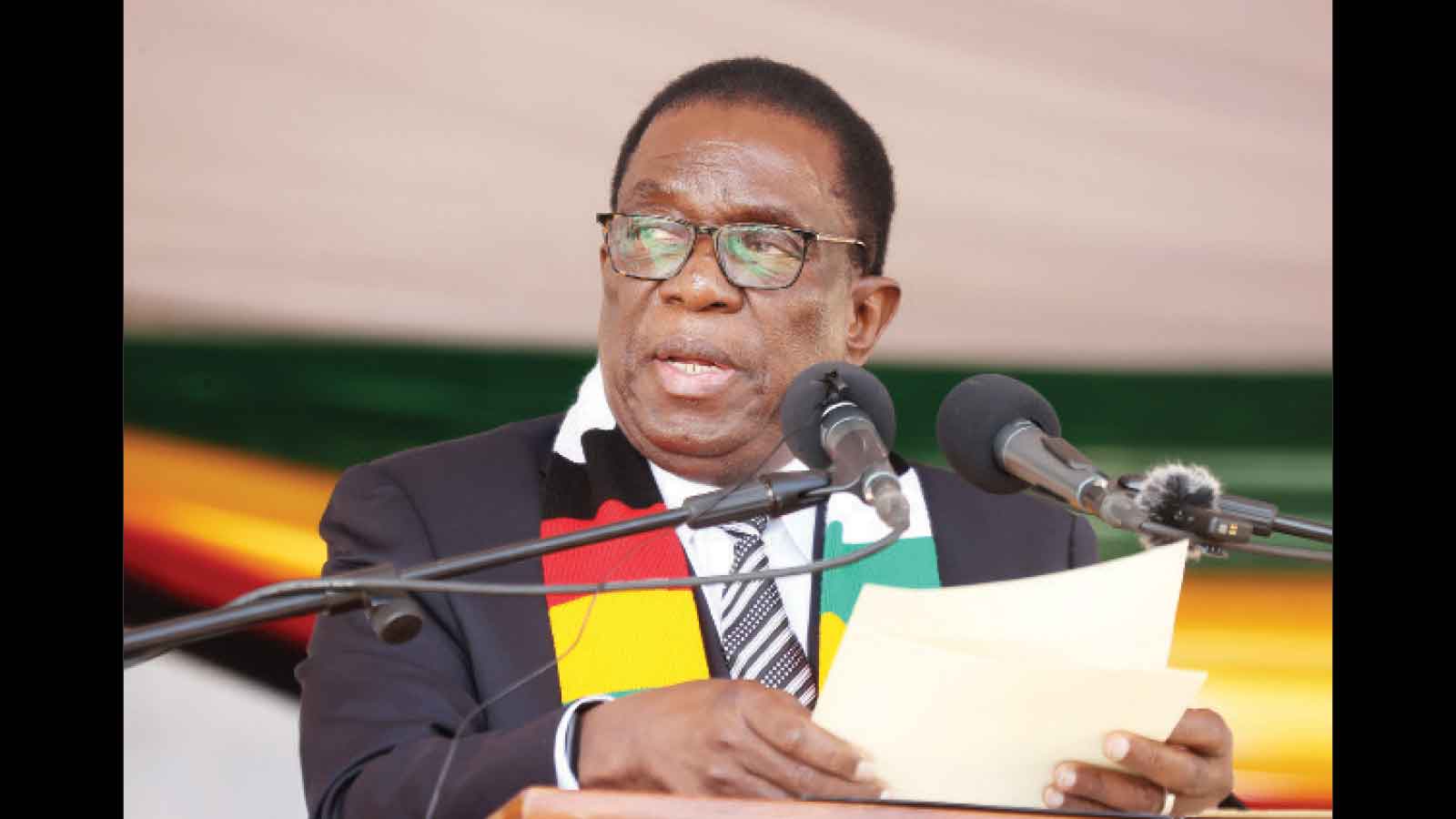
President Mnangagwa’s latest economic message reinforces this transition. Opening the International Solar Alliance Regional Committee meeting in Victoria Falls this week, he urged Africa to turn natural resources, particularly solar energy, into industrial capacity, jobs and economic transformation.
“Our African continent, which possesses some of the world’s richest resources, must industrialise, modernise and scale up access to essential services,” President Mnangagwa said.
This is the next frontier: using stability to finance productive transformation rather than merely celebrating low inflation.
The discipline behind the dividend
Prof Ncube’s 2026 Mid-Term Budget Review reinforces the fiscal side of the equation. Government has maintained expenditure within the approved framework, with 42,5 percent of the annual Budget utilised in the first half of the year, while insisting that no supplementary Budget is required. Such restraint matters because fiscal slippage can undermine monetary stability.
Zimbabwe recorded 8.3 percent growth in 2025 and is projected to grow by 5 percent in 2026, according to the mid-year fiscal assessment. Investment, agriculture, mining, energy and infrastructure remain central to the expansion strategy. The Government’s debt-reengagement efforts and IMF Staff-Monitored Programme are also part of rebuilding credibility and creating conditions for longer-term financing.
A milestone, not a finishing line
The inflation breakthrough should therefore be understood neither as propaganda nor as a licence for complacency.
It is a measurable economic gain that carries responsibilities. Zimbabweans have experienced the destructive consequences of inflation before, and credibility will depend on preserving purchasing power through consistent policies.
The “46-year record” formulation should be treated carefully: the strongest documented comparison is that single-digit domestic inflation had not been achieved since 1997. What is indisputable is that 2.9 percent represents a historic reversal from the inflationary crises that scarred the post-independence economy. For the Second Republic, the political significance is substantial.
President Mnangagwa’s guiding principle that “Nyika Inovakwa Nevene Vayo/Ilizwe Lakhiwa Ngabanikazi Balo” demands that macroeconomic stability ultimately be felt beyond balance sheets and policy statements. If low inflation is sustained, production expanded and investment translated into livelihoods, the milestone can become more than a number.
It can become evidence that the long, difficult journey towards Vision 2030 is moving from stabilisation to transformation, with the promise of an economy in which prosperity is increasingly built, owned and experienced by Zimbabweans themselves.