admin
admin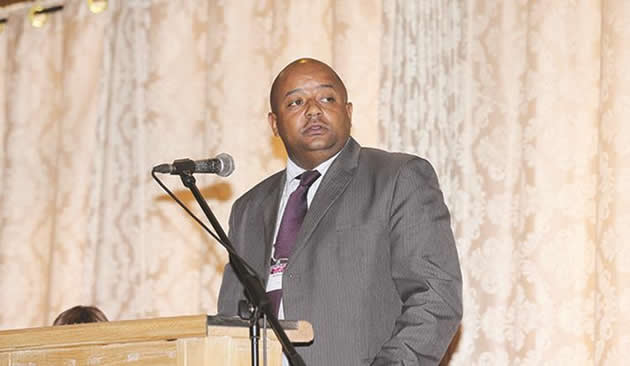
Paidamoyo Chipunza and Varaidzo Mushambi
Zimbabwe has made significant strides in addressing the plight of children, but more still needs to be done to tackle issues of inequality, the United Nations Children’s Fund has said.
Speaking at the official launch of the 2016 State of the World’s Children Report in Harare yesterday, UNICEF’s chief of social services Mr Samson Muradzikwa (pictured right) said children from poor families had little access to social services such as education and health compared to those born in financially stable families.
“The country has made great progress in improving the status of children in Zimbabwe with statistics showing a downward trend on most of the indicators. However, there are still big equity gaps both in urban and rural areas,” said Mr Muradzikwa.
He said while all children in Zimbabwe seem to be completing their primary education despite their social status, the majority of those born from poor families rarely made it to secondary and tertiary education.
Mr Muradzikwa said these inequities existed in both rural and urban areas citing an example of Harare where there were a large number of school drop-outs in suburbs such as Epworth, compared to other areas such as Borrowdale.
“Nationally, Harare is portrayed as if everything is well but when you disaggregate the data coming from the capital city, you will realise that there are children failing to access basic social services in areas such as Epworth,” said Mr Muradzikwa.
He also said the number of early child marriages was notably high in rural girls from the poorest families compared to girls from the wealthiest families.
He said according to statistics, traditional beliefs were equally responsible for early child marriages just as religious beliefs.
“While the general belief is that members of the Apostolic sect are largely perpetrators of early child marriages, statistics also show that those with traditional beliefs were equally responsible for early child marriages,” he said.
Mr Muradzikwa said these statistics require concerted efforts by Government to ensure that all children in the country have access to basic social services despite their background.
According to the 2016 State of the World’s Children Report, unless governments tackle these inequalities, by 2030 over 165 million children will live on no more than $1,90 a day, with nine out of 10 of these in sub-Saharan Africa.
The report also says almost 70 million children under the age of five years will die largely from preventable causes while 750 million women will have been married as children, perpetuating inter-generational cycles of disadvantage.
“UNICEF is urging governments to invest in areas where children are being left behind, or face the consequences of a far more divided and unfair world by 2030.
“UNICEF is also urging governments to focus on reaching the poorest and most disadvantaged children first. An equity approach is the best way to offer a fair chance for every child,” Mr Muradzikwa said.



 Online Reporter