Obey Musiwa in Mashonaland Central
HOUSEHOLDS in Mashonaland Central are participating in surveys by the Zimbabwe National Statistics Agency (ZIMSTAT) that will help shape the country’s understanding of prices, poverty levels and access to financial services.
Enumerators are visiting selected areas across the province’s eight districts: Bindura, Centenary, Guruve, Mazowe, Mbire, Mount Darwin, Rushinga and Shamva.
The Household Budget Survey (HBS) is expected to run from October 2026 to September 2027, tracking household incomes, expenditure, agricultural production and livelihoods.
ZIMSTAT is also conducting the FinScope Consumer and Micro, Small and Medium Enterprises surveys to gather information on financial access and the needs of businesses.
Speaking to Zimpapers, ZIMSTAT Director-General Mrs Tafadzwa Bandama said the household survey went beyond individual households.
“The survey will measure household incomes, household expenditures, agriculture activities and employment,” she said.
“Much of Zimbabwe’s economic activity happens outside formal books, and the HBS is designed to capture it.”
Mrs Bandama said the survey would also cover the contribution of the informal sector to gross domestic product, as well as money households receive from relatives and other sources, both within Zimbabwe and outside the country.
She said in practice, this means a vendor’s earnings, a farmer’s harvest and a remittance from a relative abroad all count towards the national picture.
“The data will feed directly into how inflation is calculated. The information will be used to calculate inflation rates as ZIMSTAT aims to rebase the inflation basket,” said Mrs Bandama.
The inflation basket is the list of goods and services used to track price changes and rebasing updates to reflect what households buy today rather than what they bought years ago.
In this regard, Mrs Bandama said the survey will also be used to measure poverty and inequality, including setting poverty lines and calculating poverty rates.
She said these figures show how many people fall below the minimum needed to meet basic needs.
“The information will also be used by government departments, development partners and the academia for research and evidence-based policymaking,” she said.
Running parallel to the HBS is the FinScope Consumer and MSME Surveys, set for October 19 to November 13, 2026 in selected enumeration areas across all 10 provinces.
They will gather data on who has access to financial services, how households and small businesses save, borrow, insure and use digital payments, and what keeps others out.
Mrs Bandama said the surveys are conducted under the Census and Statistics Act (Chapter 10:29) of 2007.
She said all information is treated with strict confidentiality and used solely for statistical purposes, and individual and business details will not be disclosed.
“Enumerators carry authorisation letters issued by the agency,” she said.
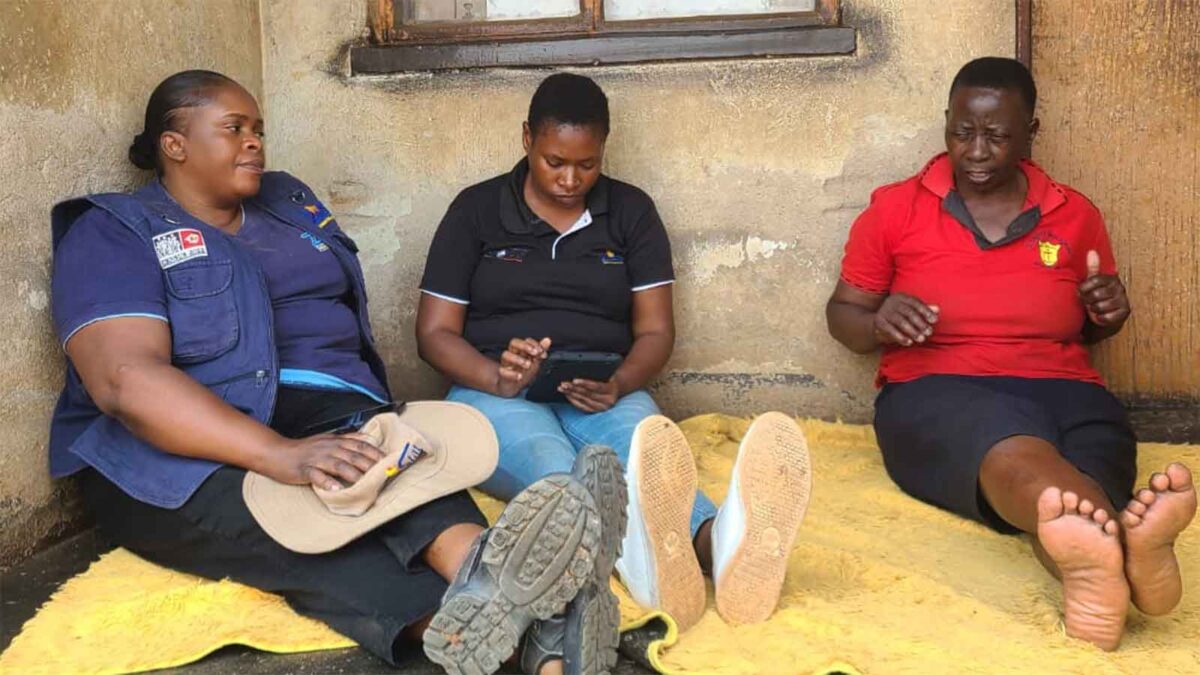
ZIMSTAT has also engaged district administrators, councillors and community leaders ahead of the fieldwork, a step that is paying off as enumerators reach homesteads across the province.
In Rushinga District, traditional leader Chief Rusambo welcomed the teams and urged his people to cooperate fully.
“These people have come to help us, and we welcome them as saviours,” he said.
He told villagers to treat enumerators with respect and to ask any questions they needed.
“If you do not understand, ask. Give the right information and do not lie,” he said.
The message appeared to be getting through and at Hoodbrook South Farm in Bindura District, where farmers and gold miners live side by side, one respondent who is both a miner and farmer said he had been given room to ask questions wherever he was unsure.
“I understood the questions that were asked, and I was free to ask when something was not clear.
“I am grateful for the opportunity to give information about my household budget and spending.”
A Bindura woman who took part in the FinScope Consumer Survey said she felt fortunate to have been selected.
“I am very lucky to be chosen and to have the chance to share my position so that the country can benefit in its policymaking,” she said.
She said she understood and responded to the questions asked by ZIMSTAT staff and was encouraged to seek clarification whenever she needed it.
In Mount Darwin District’s Ward 27, a respondent at Muguni small-scale farm said the exercise reflects realities on the ground.
“This opportunity is very critical because it will show the reality on the ground,” she said.
“It is necessary so that the country can make clear and sound decisions on how we are going to be catered for.”