

 admin
admin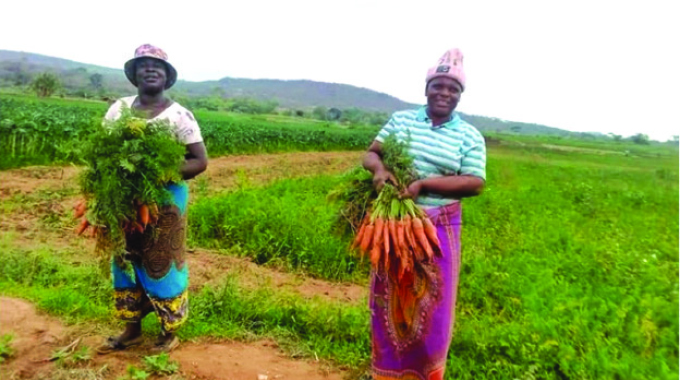
Enacy Mapakame Business Reporter
Women, youth-led businesses and smallholder farmers in Mutoko have been trained by ZimTrade on international marketing, branding and competitiveness to equip them with the requisite skills to penetrate the export market.
ZimTrade believes the training will capacitate budding entrepreneurs with the skills and attributes to tap into the export market and enhance their foreign currency earnings.
The trade promotion body’s initiative addresses some of the key challenges upcoming businesses and smallholder farmers face, including the lack of business and financial management skills as well as limited access to export markets and export preparedness.
Zimbabwe is looking to promote export-led economic growth in its quest to achieve an upper middle-income economy status by 2030, as espoused in the National Development Strategy (NDS1). Women and youths are seen making a significant contribution towards attaining these aspirations on the back of their demographic advantage.
This has seen ZimTrade engaging in initiatives that seek to capacitate budding entrepreneurs with skills to enhance their competitiveness on the export market. These were drawn from various sectors of the economy.
“At least 30 local companies, including youth-led and women-led enterprises, were recently trained on key elements of international marketing and branding.
“The participants were drawn from various sectors such as fast-moving consumer goods, horticulture, clothing and textiles, leather, services, and essential oils and cosmetics,” said ZimTrade.
Among the areas covered include branding and packaging, social media and digital marketing, negotiation skills as well as value addition to enhance their competitiveness on the export markets. In line with this, ZimTrade has also begun an export capacitation training programme for 40 smallholder farmers in Mutoko’s Chitora Irrigation Scheme.
Currently, the families who depend on this scheme have at least 0,5 hectares each producing crops such as tomatoes, peppers, carrots, beans, butternut, cauliflower, water melons and onions among other crops, for a small profit margin. ZimTrade however, believes these farmers can increase their earnings through exports, with vast opportunities within the region and across Europe.
“ZimTrade, through its export cluster programme has started engaging smallholder farmers in Mutoko, to develop their capacities so that they access regional and international markets. The export cluster programme, among other things, promotes farmer consolidation and export crop production where they can receive increased profits through additional foreign currency earnings, which translates to improved lives for their families and their communities,” said ZimTrade.
According to ZimTrade, the provincial cluster programme targets all provinces, focusing on increasing exports from each province based on their natural endowments.
“In the case of Mutoko District, ZimTrade is leveraging existing structures — like the Chitora irrigation scheme — and products that are already highly produced in the district with export potential,” said ZimTrade.
Through export awareness and financial training, the core team of the irrigation scheme will learn the critical skills needed to ensure that the irrigation scheme runs professionally, which is one of the requirements for most export markets.
Further to this, ZimTrade will unlock expert advice for the farmers in the irrigation scheme, made possible through their partnership with PUM from the Netherlands and SES from Germany.
In line with this, ZimTrade will also facilitate engagements between smallholder farmers in Mutoko and international experts on focused solutions that will see the irrigation scheme improve production and ensure the scheme attains certification for export markets.
Additionally, the farmers will be assisted with market linkages, especially countries in the region such as Mozambique, where products are already being exported informally.



 Online Reporter