

 malvernmugadzikwa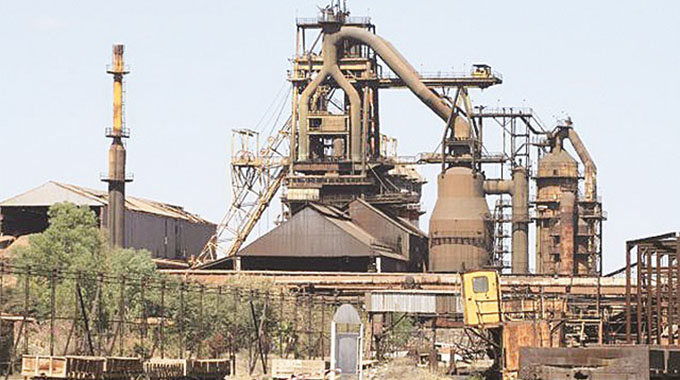
Oliver Kazunga
The coming in of the US$1,5 billion Dinson Iron and Steel Company (Disco) situated in Mvuma (Midlands Province), saw many players in the steel value chain wondering if it marked the beginning of the end of former steel giant, the Zimbabwe Iron and Steel Company (Zisco).
Disco, which is owned by China’s largest stainless steel producer, Tsingshan Holdings, is in the process of establishing a humongous steel plant targeting local, regional and international markets. Questions are now being asked if the now defunct Zisco will be able to stand the heat when the Mvuma project starts operating full-throttle in November this year.
But leadership of Zisco feels the revival of the former giant as a national asset is still relevant despite the construction of the Mvuma based steel plant.
Kuvimba Mining House (KMH) chief executive officer, Simba Chinyemba, whose company signed a management contract with Zisco, said this in a wide-ranging interview with Business Weekly at the company’s head office in Harare last week.
In the past, there has been debate that following the development of steel works in Manhize near Mvuma by Disco, reviving Zisco will be of no or of little insignificance.
This is on account that the new steel project whose first blast furnace is expected to go on stream in November this year, will be Africa’s largest integrated steel plant producing 1,2 million tonnes steel per annum.
Moreso, the Disco steel project will be supplying the local market and internationally, it has signed agreements with offtakers in the iron and engineering sector as well as the foundry industry.
“It’s so important to us as a nation surely, part of the security of that development lies in us owning our own steel maker as a country because things can change overnight. And do we want to fully entrust our development to companies owned by other people?
“We very much welcome the investment that is coming which is predominantly foreign that’s a good thing for Zimbabwe, but it’s not ours,” he said. “If a country is to be built by its people, its people must also have security of its production means otherwise we will be looking at each other and we all, will be held to ransom by other people because they will say if you don’t do this for us, we are not going to produce the steel that you need to build your infrastructure.
“So, Zisco is essential in that regard and for me it’s not even a debate worth having.”
Once biggest integrated iron and steel plant north of Limpopo, Zisco, ceased operations in 2008 largely due to mismanagement and malfeasance.
At its peak in the late 1990s, the Redcliff-based steel manufacturer produced over one million tonnes of steel annually and the entity was among Zimbabwe’s major employers employing over 5 000 people directly while also contributing to the fiscus through foreign currency from the exports.
Zisco, Chinyemba said, people should not forget that is an important part of residents in Redcliff and Kwekwe as well and the country at large as that company during its glory days, sustained thousands of families through employment.
“Also as a nation steel is a critical resource in our development, it’s a critical resource in the development of our country, so we can’t have enough of it because of the journey that we still have to make to become a fully developed country.
“And I don’t even think that the capacity that is going to be produced by Dinson is enough, we need more steel makers,” he said.
Turning to the progress KMH has made so far in executing its mandate on Zisco resuscitation, Chinyemba said their turnaround programme requires a lot of care and right mindset.
“It’s not an easy project to turnaround and it requires a lot of care and the right mindset to get it off the ground because people have tried and failed.
“So, we don’t want to make the same mistakes that people have tried before. Currently, we concluded the contractual phase of us actually being a manager,” he said.
Over the years, because the defunct steel producer is a remarkable asset, it attracted much investor interest from leading steel producers such as Essar Africa Holdings Global, a unit of India’s Essar Group as well as R & F of China.
In 2011, Essar Africa Holdings showed interest to invest US$750 million into Zisco but the deal collapsed due to political bickering in the Government of National Unity that existed at the time.
In the years that followed, R & F tabled a US$1 billion bid but the deal also failed to materialise.
“Kuvimba Mining House does not own Zisco, we don’t have any equity in Zisco, we simply have a management contract which means they saw fit to use the expertise that Kuvimba Mining House has in turning around assets, to help turnaround Zisco assets,” he said.
“In terms of our job of obviously managing that turnaround, part of what we have done up to date since we actually concluded the signing and all the contractual phase on the 27th of December 2022.
“We have already started commissioning a lot of feasibility studies that are required for us to actually say this is what we want to do,” said Chinyemba.
“We are also in the process of doing an audit to understand the full extent of the assets that are there, so currently a lot of what’s happening is in the preliminary stage.
“This is the planning stage and it can take up to six months just to really get it correct because we don’t want to jump in there, do stupid things and then wake up and realise we did exactly what the last guy did.”
The feasibility studies by KMH at Zisco include a steelmaking feasibility study that requires details such as the type of steel to be produced.
Chinyemba added that they also intend to build up Bimco (Buchwa Iron Mining Company), the mining arm of Zisco and such a project requires a lot of exploration and feasibility study to understand the amount of iron ore that the mining arm has at its concessions.
Feasibilities will also be done to establish whether there is the existence of other minerals at Bimco’s concessions that could be valuable to the rebuilding of Zimbabwe’s once largest steel producer.
“There are also studies just to understand the skill sets that’s currently there and the skill sets that’s required to deliver those things that we have talked about.
“So, we are also doing a huge human resources audit to just say who is there, what they have got because as much as possible we would like to make sure that everybody who is employed by Zisco continues to be employed by Zisco before we start adding people from outside,” he said.


 Online Reporter