Online Reporter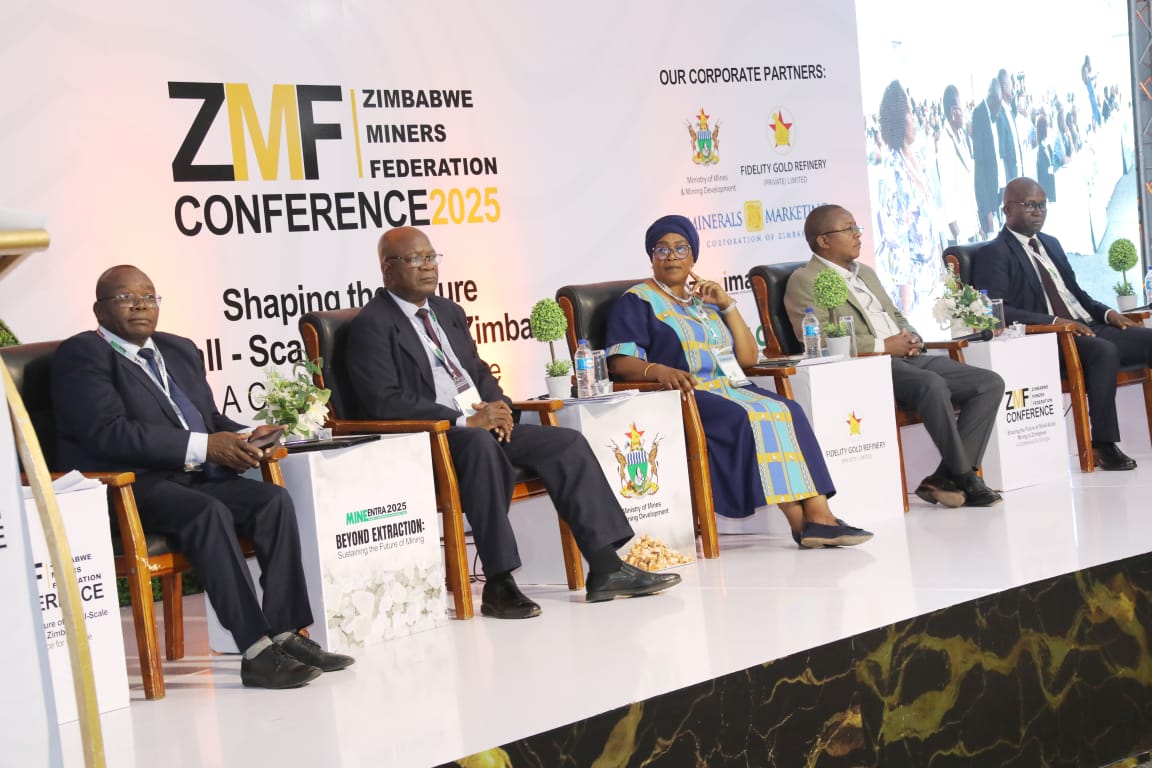
Judith Phiri ,Zimpapers Business Hub
THE Zimbabwe Miners Federation (ZMF) has called on Government to protect local miners and intervene on high levies that they are being charged by the rural district councils (RDCs), with some reaching to about US$20 000.
It is estimated that the number of artisanal and small-scale miners in Zimbabwe vary from a range of 500 000 to over 1.5 million, including farmers who do a little gold panning in the off season. These miners are involved in gold extraction, but they also mine other minerals like lithium, diamonds and gemstone.
Speaking at the recent ZMF Artisanal and Small-Scale Miners Conference, the president, Ms Henrietta Rushwaya said small scale miners were being charge different levies across the country.
“As small-scale miners and as ZMF, we are appealing to the whole country to join arms with us insofar as the issue to do with the taxes is concerned. Issues to do with the RDCs levies has become something which is quite difficult to attain.
“When it comes to the charges that we are experiencing from the different RDCs, when you go to them each charge its own amount with some charging US$2 000 annual fees,” she said.
“Another one will charge you US$10 000 and others US$20 00. So, there is a disparity insofar as our charging system is concerned and this needs to be realigned. We were quite pleased when we learned from the Minister of Finance that this will be realigned.”
On making small-scale mining a preview for the local indigenous Zimbabweans, she said they were pleased as small-scale miners to have that advantage.
Ms Rushwaya, however, called on Government to make it a policy that provincial officers and offices do not issue mining licences of less than 40 hectares to non-local Zimbabweans.
She added: “By merely issuing licences to the so-called investors that are on two hectares of land, honestly, what are we trying to achieve as a country? What impression are we giving? We are not giving a good impression and as a result, it’s these same foreigners who come and mine on land that is right behind our grandmother’s kitchens or where our forefathers’ graveyards are.”
Ms Rushwaya said any land which is below 40 hectares should be made a preserve for the local and the chiefs should also be allowed to exercise their right as the people who have the social licence out there to ensure that the reserved and preserved areas continue to be preserved.
While this comes at a time there is need to redress a tendency that currently happening in the country where artisanal miners are being ill-treated by foreigners.
She said as ZMF they were also pleading with the Government to ensure that maximum attention and effort is put on ensuring that land which has been mined is taken care of through the covering of dungeons that have been left.
“There is so many holes that have been left out there and this has impacted negatively on our children that are going to school, on wildlife and even our own tamed animals that we live with within our communities.
“Our cattle are now falling into those holes and pits, while it’s quite an eyesore. With the intervention of the Environmental Management Authority (EMA) they need to do the needful by making sure that those that leave the land in a bad state are taken to book and they are fined extensively,” she said.
Ms Rushwaya said there was a lot of unlicensed operations that were going on, especially from the foreigners and this has led to a lot of unscrupulous and illegal export of the minerals.
She said the small scale miners were hardworking, resilient and their members love to continue to contribute significantly to the country’s gross domestic product (GDP).
On gold cards being introduced by Fidelity Gold Refinery, Ms Rushwaya said: “The introduction of the gold card will enable our good miners to be registered as official submitters of the much looked after yellow metal. By so doing this will enable Fidelity Gold Refinery to issue loans to our miners who will be registered under them. This will also allow us to be recognised as people that are doing responsible mining) which will culminate in responsible resourcing.”
The conference strategically positioned as the closing conference of the prestigious Mining, Engineering and Transport exhibition (Mine Entra) 2025 Expo, was held under the theme: “Shaping the Future of Small-Scale Mining in Zimbabwe; A Conference for Change.”