Online Reporter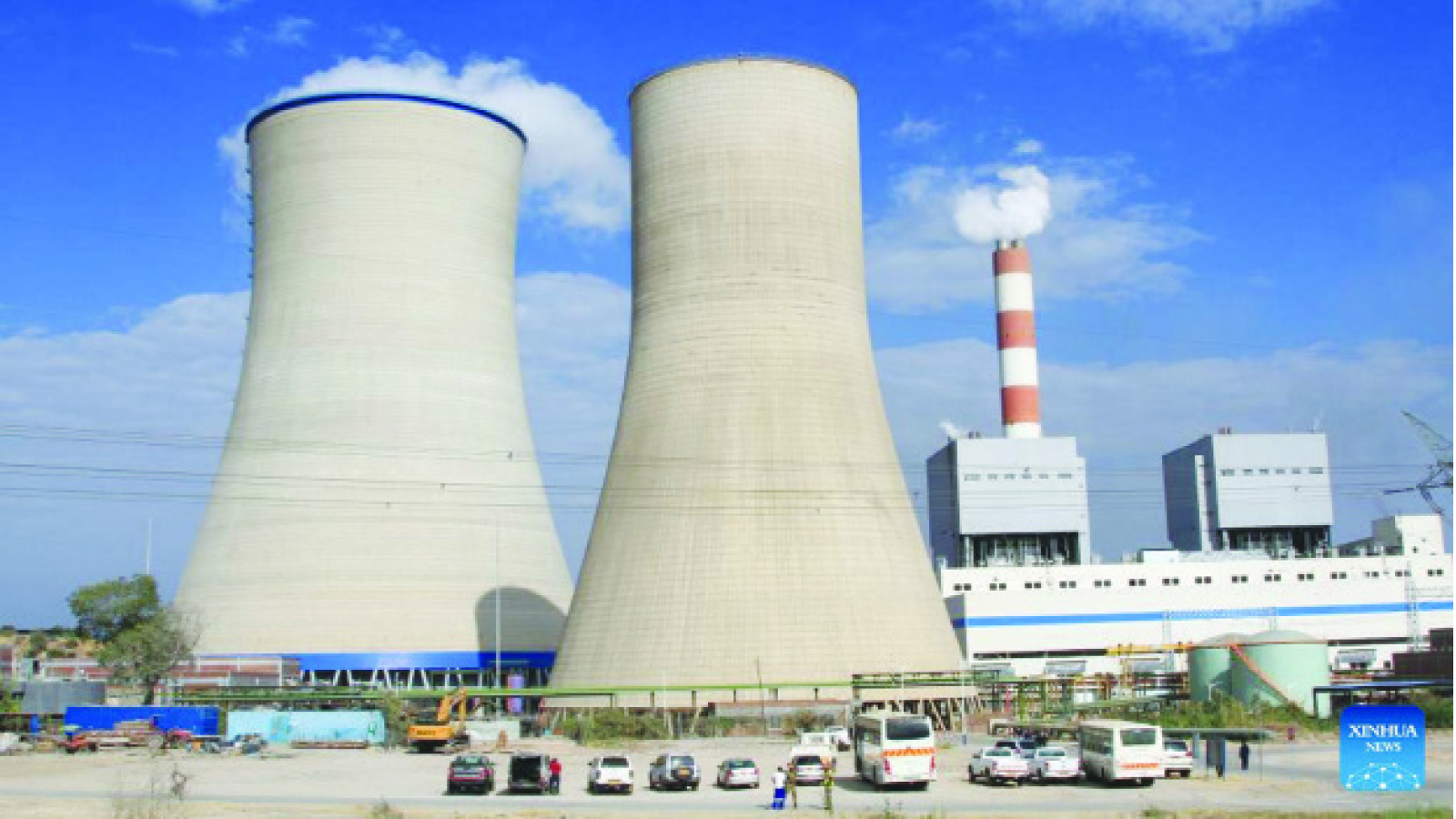
Richard Muponde
Zimpapers Politics Hub
THE Cabinet has approved a Public-Private Partnership between the Zimbabwe Power Company and Jindal (Private) Limited.
This partnership, which focuses on the rehabilitation, operation and transfer of Hwange Power Station Units 1 to 6, is widely expected to boost the country’s power production
In approving the project, the Cabinet underscored the Government’s firm commitment to resolving the power crisis once and for all.
This development is not only a continuation of the Second Republic’s transformative energy policies, but also a clear demonstration that a reliable and sufficient electricity supply is a non-negotiable pillar for Zimbabwe’s economic growth and industrialisation.
The persistent power challenges have historically been a serious bottleneck to the country’s economic progress, productivity, and quality of life.
Before the inception of the Second Republic in 2017, power supply challenges were at a critical level, with households, industry, mining, and commerce all grappling with long hours of load shedding.
At its worst, Zimbabwe was generating less than 1000 megawatts against a national demand of around 2 200 megawatts, forcing the country to rely heavily on imports from Mozambique, South Africa, and Zambia.
This was exacerbated by the dilapidated state of the country’s main thermal station at Hwange, whose Units 1 to 6 were commissioned between 1983 and 1987, and frequent technical breakdowns at Kariba South Hydro Power Station due to reduced water levels in the Zambezi River.
For ordinary citizens, power shortages disrupted daily life, while for industries, they resulted in curtailed production, job losses, and a decline in the competitiveness of Zimbabwean products.
The advent of the Second Republic under President Mnangagwa ushered in a decisive shift in the Government’s approach to the power challenges.
Instead of relying on piecemeal solutions, the new administration prioritised structural investments in power generation, the modernisation of existing infrastructure, and diversification into independent power producers (IPPs) and renewable energy sources.
This led to the Government licencing several independent producers in solar, wind, and small hydro power projects to complement the national grid.
Simultaneously, massive investments were channelled into rehabilitating and expanding the country’s main stations.
A prime example is the Hwange Units 7 and 8 expansion project, which added 600MW to the national grid and was commissioned by President Mnangagwa on August 3, 2023.
At that event, the President made it clear that energy security was a cornerstone of his administration’s development strategy.
“This project is a testimony of our Government’s commitment to ending power challenges in our country. No matter the difficulties, we will continue to deliver on our promises. Energy is the bedrock upon which we build our economy,” President Mnangagwa said.
The commissioning of Units 7 and 8 marked a turning point for Zimbabwe. The project not only plugged the electricity gap but also aligned with the aspirations of the National Development Strategy 1 (NDS1) and Vision 2030, both of which place energy self-sufficiency at the centre of economic transformation.
The project employed more than 4 000 Zimbabweans, empowering communities in Hwange and surrounding areas while also developing critical technical skills. It has ensured that industries in mining, agriculture, and manufacturing can now operate more consistently, boosting production and exports.
The improvement in electricity supply has been particularly critical for flagship projects such as the Dinson Iron and Steel Plant in Manhize, lithium mining projects in Goromonzi and Bikita, and large-scale irrigation schemes in the Lowveld.
These projects require uninterrupted power to function effectively, and their success has a multiplier effect on the broader economy.
In terms of renewable energy, Zimbabwe has taken significant steps to diversify its energy mix. Solar IPPs, such as the Nyabira solar farm and several others across Mashonaland West and Matabeleland provinces, have been licenced, though many are at various stages of development. The Government has also prioritised the rehabilitation of small hydro stations like Pungwe and Duru, which have contributed reliable, clean energy to the grid.
This diversification reduces over-reliance on hydropower from Kariba, whose generation has been heavily constrained by climate change-induced droughts.
The entry of private players into energy provision signals a paradigm shift toward sustainable, long-term solutions.
However, the regional power situation in the Southern African Development Community (SADC) has remained challenging. Countries such as South Africa, Zambia, and Malawi have all faced their own power crises, creating competition for imports and making the SADC Power Pool less stable.
Against this backdrop, Zimbabwe’s aggressive rehabilitation and expansion projects, particularly at Hwange, are a crucial intervention that will not only stabilize the domestic situation but also contribute to the long-term balance of power availability in the SADC pool.
This is why the recent Cabinet approval of the Public-Private Partnership between ZPC and Jindal is so significant.
This deal goes beyond patchwork repairs; it signals a comprehensive modernization of the original six units that have been the backbone of Zimbabwe’s thermal generation for decades. Under the ROT model, Jindal will inject capital and technical expertise to rehabilitate and operate the units, before eventually transferring them back to the state utility.
This ensures that Zimbabwe retains sovereignty over its assets while benefiting from modern efficiency and management practices in the interim.
Once rehabilitated, Units 1 to 6 are expected to contribute an additional 900MW to the grid, more than enough to guarantee a surplus for both domestic use and regional export.
Approving this deal demonstrates the Government’s unwavering commitment to permanently ending power shortages.
It reflects a strategic vision of building redundancy and resilience into the national grid. With Units 7 and 8 already feeding 600 MW into the system, and Units 1 to 6 soon to follow, Zimbabwe is on track to exceed its peak demand and establish itself as a net electricity exporter in the medium term.
For the ordinary Zimbabwean, this means an end to the long, frustrating years of blackouts. For businesses, it means uninterrupted operations, lower production costs, and enhanced competitiveness. For the region, it means a reliable partner in the collective SADC quest for energy security.
Current statistics confirm the remarkable strides made. As of mid-2024, ZPC was generating an average of 1 600MW to 1 800MW daily, compared to less than 1 000MW in 2017.
With Kariba contributing around 600MW during good water years, Hwange Units 7 and 8 adding 600MW, and the rest coming from smaller thermal and hydro stations, Zimbabwe has managed to reduce load shedding significantly..
The economic ripple effects are visible in improved mining output, higher agricultural yields due to irrigation, and a stronger manufacturing recovery.
Projects like the Beitbridge Border Modernisation, the Robert Gabriel Mugabe International Airport expansion, and the construction of new industrial parks are all powered by this improved energy environment.
The ZPC-Jindal Hwange deal is not just another infrastructure contract; it is a game-changing partnership that anchors the country’s journey toward energy security and economic transformation.
It sends a clear message that the Government, under President Mnangagwa’s stewardship, is determined to end power shortages for good.
By embracing public-private partnerships, investing in renewable energy, and modernizing legacy plants, Zimbabwe is setting itself on a path to surplus power generation.
As President Mnangagwa noted, “Energy is life. Without energy, there is no development, no modernisation, no industrialisation. We are determined to ensure that Zimbabwe never goes back to the dark days of power shortages.”
These words capture the spirit behind the ZPC-Jindal deal, a spirit of resilience, foresight, and determination to power the nation and the region toward prosperity.