Chronicle Editor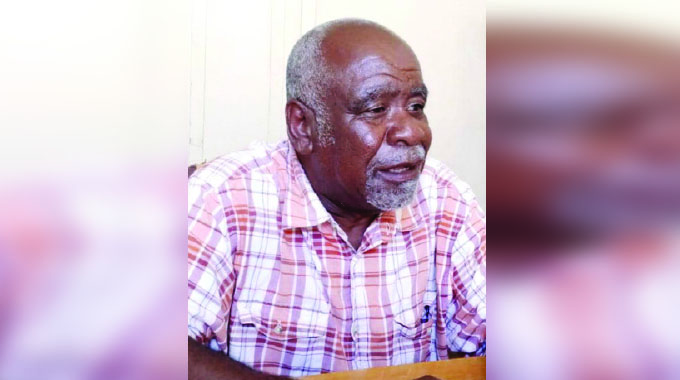
WE continue our interview with Lt-Col (Rtd) Nimrod Ndlovu, pseudonyms Cde Vincent Sakala and Osmond Fomoja. Lt-Col (Rtd) Ndlovu operated in Mashonaland Central Province during the armed struggle where he had a unique experience of operating in a unit that had both ZPRA and ZANLA.
Last week, he told our Assistant Editor Mkhululi Sibanda (MS) of how they initiated the move to combine ZANLA and ZPRA forces after the latter had attacked Mushumbi Pools Garrison in Guruve. Below he continues with his conversation. Read on…

MS: Last time you were talking about meeting a ZANLA unit a day after what you called a successful attack on Mushumbi Pools in Guruve. Let’s resume your narration from there.
Lt-Col Ndlovu (Rtd): After talking to the ZANLA platoon commander whom I said was called Cde Norman, he told me that his commanders were not far away. I also told him the same as Cdes Jonas Donga (Wilson Dube) and now late Colonel Dan Dutsa were across the Hunyani River. We then crossed the river to go and meet Donga and Dutsa.
Donga and Dutsa then suggested that a meeting be arranged between them and their ZANLA counterparts. The ZPRA commanders then suggested that we move to where the ZANLA commanders were. We did that and managed to locate them.
MS: Your platoon was the first to make contact with ZANLA, how were you deployed?
Lt-Col (Rtd) Ndlovu: After our attack on Mushumbi Pools, it was not a deployment as such. After our attack on Mushumbi Pools, we moved to a certain spot to conceal ourselves while studying the movement of the enemy forces.
That also gave us an opportunity to rest. Then the following day we changed direction and moved towards the Hunyani River. We were five kilometres from the camp that we had hit.
MS: So the ZANLA guerillas had been on the ground in the area?
Lt-Col (Rtd) Ndlovu: Yes, we found them there and they had been operating in the Dande area up to Muzarabani where they were coming from. They were within the area and a certain old man then came to us and said there were other comrades across the river.
I then told the old man that we wanted to see them. He went and came back. He told me that he had seen them and they asked for a meeting with us. That is how we met Norman.

MS: Who were the ZANLA commanders there?
Lt-Col (Rtd) Ndlovu: There was Kapenga Wehondo (Colonel Blessing Kashiri) whom I met recently in Mashonaland Central when we were vetting the war collaborators and Dasta Bazooka. I can’t remember the name of the third one.
We then sat down in a meeting and everything was very cordial. We agreed to carry out joint operations and push forward.
The ZANLA colleagues told us that their commanders had told them that they would meet ZPRA and they should find a way of working with us. Remember, we also had been told the same by our regional commander then Rodwell Nyika (late Brigadier-General Collin Moyo).
The issue of language during the discussion didn’t arise as we had Shona speakers within us as ZPRA, Dutsa himself was from Zvimba in Mashonaland West Province and there were others as well. Even people like me could speak Shona.
It was the same within ZANLA as there were Ndebele speakers. We could also switch to English. However, our main body that is the majority of our detachment, was some distance away.
MS: What about the ZANLA main body, where was it?
Lt-Col (Rtd) Ndlovu: It was also far away. It was at Chitsungo.
MS: What happened after the meeting and after you put your plans in place?
Lt-Col (Rtd) Ndlovu: We organised food from the villagers and set up the base. We spent the night together as commanders. We slept at the same place.
It had been agreed during the meeting that my platoon and that of Norman, the ZANLA comrade should move to Kachuta and Nyakapupu. Those places were towards Sipolilo (Guruve Centre) and there were schools there named after them.
One of the schools was three kilometres from the centre. So, the following day, we crossed the Zambezi Escarpment, a very difficult terrain to negotiate. It was the Mavuradonha range, which forms the eastern part of the Zambezi Escarpment. It’s not easy to negotiate through those gorges.
MS: How many were you?
Lt-Col (Rtd) Ndlovu: As ZPRA, our platoon was composed of 24 men while the ZANLA one was a bit larger, slightly composed of more men, they had about 35 comrades. After crossing the Zambezi Escarpment, we met another ZPRA unit coming from the direction of Karoi.
It was a unit of between 70 and 80 comrades under the command of Cde East Cinani, I think you have heard about him. They were going to Nyakapupu and Mushongahande. I knew East as we had trained together in the Soviet Union. At first, we thought they were enemies but after some signals, we realised that they were comrades.
Also, people started recognising each other as some had trained together. We spent the whole afternoon with that unit led by Cde East. They were heading to Nyakapupu. We walked until we reached Kachuta. That is where the senior commanders left us.
MS: That’s where you were based?
Lt-Col (Rtd) Ndlovu: We stayed in Kachuta for a few weeks and orders came that we should move to Kabasa to intensify operations there. Our unit was still the combined ZPRA and ZANLA as agreed.
MS: How was the relationship between the two considering the background of your troops?
Lt-Col (Rtd) Ndlovu: It was very normal and I and Norman related very well and that filtered through to our troops. I found him to be a very intelligent soldier and we made decisions together for the eight or so months that we operated together. Seeing me and Norman striking such a wonderful relationship, the troops took after us. We came up with plans and agreed on how to put them into action.
MS: Tell us about the operations you were involved in.
Lt-Col (Rtd) Ndlovu: Our first operation was when we raided an all-white recreational club situated on a farm in the Kabasa commercial farming area. We didn’t even fire a single shot during the raid.
MS: Why?
Lt-Col (Rtd) Ndlovu: There was no need because we discovered that it was a very soft target. You only open fire where there is resistance. There was no resistance there. We sent a force of 15, combined ZPRA and ZANLA. The whites used to go to the facility during weekends and the unit found a worker there.
They looted the whole stock and took the workers away. He was sent to Mozambique to join the armed struggle. Our fear was that his bosses would harass him.
MS: What happened to the looted stock?
Lt-Col (Rtd) Ndlovu: Among the stock that we took away there was alcohol, cigarettes and soft drinks. As for the alcohol, I and Norman as commanders took it and drank it (laughing). However, we shared with section commanders and more mature soldiers as we didn’t want the juniors to get too excited. We were at war. We even sent some of the alcohol to the commanders of nearby units.
MS: What about other operations?
Lt-Col (Rtd) Ndlovu: The Rhodesian forces had well-known OPs (observation points) on the mountains in an area along the Zambezi Escarpment.
We studied the movement of the enemy and realised that they were sending supplies to the OPs. We then laid ambushes.
They were using modified armoured cars called Pookie. It was a mine-clearing vehicle meant to protect the Rhodesian soldiers and clear landmines as well.
In one of the ambushes we concentrated heavy fire and some enemy forces were injured in that attack. The vehicles were forced to stop after moving for some distance and we didn’t follow but withdrew.
We continued with the ambushes until the enemy abandoned the OPs, which was what we wanted. It was a victory for us.
To be continued next week with Lt-Col (Rtd) Ndlovu talking about the pact ZPRA and ZANLA guerillas came up with on how to operate together.


 Online Reporter