Online Reporter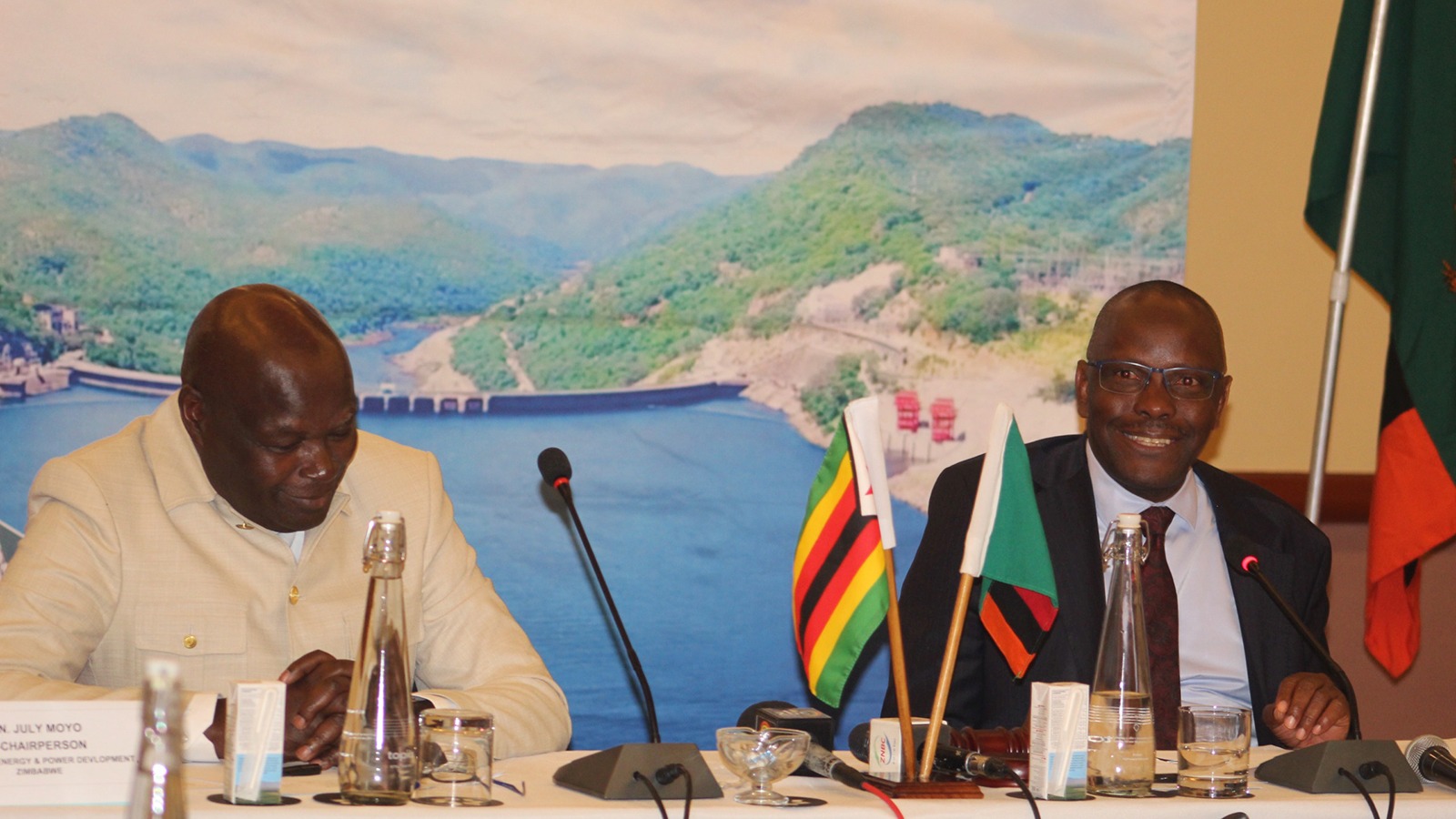
Walter Nyamukondiwa
Mashonaland West Bureau Chief
THE Zambezi River Authority (ZRA) Council of Ministers (COM) has approved a 2-billion cubic metres increase in water allocation for power generation in 2026 and directed the acceleration of the US$4,2 billion Batoka Gorge Hydro-electric Scheme.
Energy ministers from Zimbabwe and Zambia and a technical expert from ZRA, met at the 43rd Council of Ministers meeting in Victoria Falls on Monday.
The council chairperson Energy and Power Development Minister, July Moyo and his Zambian counterpart and co-chair Makozo Chikoto attended the meeting.
The meeting sought to review progress on key energy projects along the Zambezi River, the hydrological situation and subsequent water allocation for power generation at Kariba South and North Power stations, serving Zimbabwe and Zambia, respectively.
The COM meeting received an update on progress on the BGHES, a Southern Africa regional project, where the updating of engineering feasibility and environmental studies is underway.
In a communique after the meeting, the Council of Ministers noted progress made so far and directed a review of the timelines to accelerate its implementation.
“Advisory services have been strengthened through the engagement of the Financial, Technical and Legal Advisory Consultants,” read a communique after the meeting.
“Whilst COM noted the progress, it directed that the timelines for the implementation of the project be revised as agreed by the two Heads of State at the Bi-National Commission meeting held in Zimbabwe in November 2025 with a view to accelerating the implementation of the project.”
The council reaffirmed the adoption of the Public-Private Partnership model for its implementation.
Zimbabwean and Zambian Governments, the COM noted, should make a $220 million equity contribution towards the project and explore equity partnerships to improve its bankability.
The allocations will cover the cost of construction of the Batoka Gorge Hydro-electric Scheme (BGHES) Dam at the beginning of the 2026 budget cycle.
“This allocation will be for the BGHES dam construction for the budget cycle beginning 2026, over flexible timelines,” read the communique.
“COM also mooted the establishment of the Resource Mobilisation Committee, whose objective is to raise funds for the publicly-owned dam infrastructure component of the project. “The Resource Mobilisation efforts will be spearheaded by the Ministers responsible for Finance.”
On water allocation, the ZRA COM approved the allocation of 30BCM of water for power generation to be shared equally by the Zimbabwean and Zambian power utilities.
This is an increase of 2BCM from the 28BCM approved in the 4th quarter of last year.
The decision follows hydrological simulations and rainfall forecasts from the Southern African Regional Climate Outlook Forecast (SARCOF) and respective national
meteorological departments.
The authority is also exploring the possibility of water abstraction from the Congo Basin through the construction of a canal.
“COM noted the continued efforts of the Authority in working closely with other regional stakeholder institutions aimed at supporting efforts for the implementation of feasibility studies for the Congo River to Zambezi River water transfer scheme,” read the communique.
The authority is also considering the feasibility of importing power from Tanzania and Angola with work already underway on the 912km 330kv transmission lines and substations.
“COM encouraged expedited implementation of the Zambia interconnection project, which includes 912 km of 330k\V transmission lines and associated substation,” noted the council.
The World Bank, the EU and the UK have provided funding for the project. Commercial operation of the project is expected in the fourth quarter of 2028.
ZRA is in the process of procuring an Early Warning System to protect downstream communities in the event of a disaster such as flooding.
It is expected to be completed by December 2026.
The council also received an update on the Kariba Dam Rehabilitation Project (KDRP), where the plunge pool and refurbishment of the spillway with the second phase already 30 percent complete.
It recommended acceleration and prioritisation of the Hwange-Mukuni Powerline to facilitate export of power between Zimbabwe and Zambia.
Independent Power Producers IPPs in Zimbabwe are expected to play a major role in the power sharing arrangement.
“As a follow-up to the Bi-National Commission directives issued by the Heads of State, the Ministers of Energy for Zambia and Zimbabwe met on December 1, 2025 in Harare to review options for additional power supply from Zimbabwean Independent Power Producers (IPPs) to Zambia,” noted the council.
“COM noted the project implementation status report presented by the Utilities and directed that the Hwange- Mukuni transmission line should be treated as a priority project.”