Online Reporter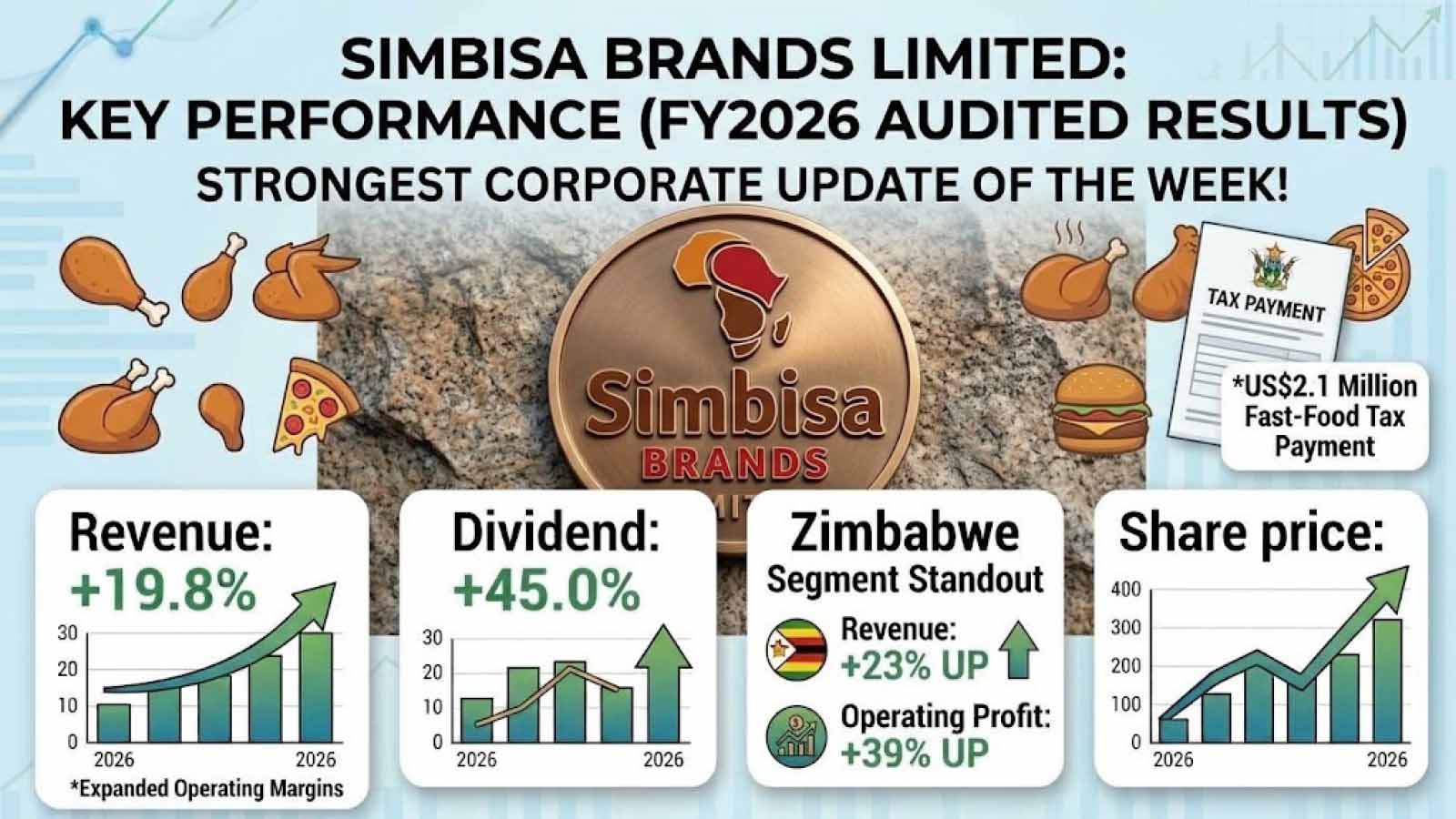
Taking Stock
Kudzanai Sharara
Taking Stock is a new weekly column providing commentary and analysis on Zimbabwe’s stock markets and listed companies. It will track index performance, trading activity, corporate actions and earnings across the ZSE and VFEX.
The Zimbabwe Stock Exchange closed the week to October 1, 2026 firmly higher, with the ZSE All Share Index gaining 5,35 percent to 482,33 from 457,86, and the ZSE Top 10 Index rising 5,36 percent to 472,88 from 448,82.
The Victoria Falls Stock Exchange All Share Index was largely flat, slipping 0,42 percent to 268,91 from 270,04.
Trading activity was highly episodic.
Volume peaked at 7,18 million shares on September 29, with TNCI, Ariston and Delta accounting for the bulk of activity, before collapsing 81,9 percent on October 1, to 484 300 shares — 93,2 percent below the peak.
Value traded spiked to ZiG69,5 million on September 25, up 1 449,5 percent day-on-day, driven by a massive Delta block trade, before falling 99,8 percent to ZiG43 490 by October 1.
The sharp pullback on the final day was attributed to a wave of cautionary announcements from Dairibord, Tanganda and Zimplow, which prompted investors to adopt a wait-and-see approach.
On the ZSE Top Ten, TNCI led the gainers, surging 35,60 percent to 85,43 from 63.
BAT rose 21,14 percent to 17 714,38 from 14 623,53.
Delta added 10,59 percent to 3 250,09 from 2 938,82, DZLH gained 9,09 percent to 600 from 550, and FBC advanced 3,85 percent to 1 350,00 from 1 300,00.
On the VFEX, Padenga Holdings was the standout, peaking at US$150,29 on September 25, before stabilising around US$149,50 to US$150,00.
The counter closed the period at US$149,59, a net gain of 1,83 percent from US$146,90.
Padenga ranked in the Top 5 by value on VFEX every day, confirming its status as the exchange’s most liquid and closely watched counter. Its year-to-date gain of 151,41 percent remains one of the strongest on the VFEX, underpinned by dual exposure to crocodile skins and mining.
Corporate news was dominated by Simbisa Brands’ FY2026 audited results, the strongest update of the week.
The quick-service restaurant group grew revenue 19,8 percent to US$367 189 million, expanded operating margins and increased its total dividend 45 percent to US1,556 cents.
The Zimbabwe segment was the standout, with revenue up 23 percent and operating profit up 39 percent, despite a US$2,1 million Fast-Food Tax payment.
Headline earnings per share rose 45,3 percent to US4,33 cents.
Dairibord Holdings issued a cautionary statement on October 1, advising that the proposed disposal by significant shareholders to Varun Beverages Holding (Zimbabwe) remains under consideration by the Competition and Tariff Commission, alongside a proposed voluntary delisting from the ZSE and migration to VFEX.
The company said the transaction and migration may have a material effect on its share price and advised shareholders to exercise caution.
Tanganda Tea Company issued a cautionary announcement on September 30, confirming it is evaluating a voluntary delisting from the ZSE and a listing on VFEX.
Tanganda is one of the top year-to-date performers on the ZSE, with a gain of 473,77 percent as of October 1.
Zimplow Holdings issued a cautionary statement on September 30, disclosing that acquisition negotiations for a related business are in their final stages.
The company advised shareholders to exercise caution given share price sensitivity.
Zimplow’s year-to-date gain of 177,21 percent makes it one of the best-performing counters on the VFEX.
BAT Zimbabwe separately reported interim results for the half year ended June 30, 2026, with revenue down 6 percent to US$12,184 million on a 3 percent volume decline, but operating profit up 2 percent to US$6,748 million and profit attributable to shareholders up 6 percent to US$4,606 million.
The board declared an interim dividend of US$0,11 per share.
Analysts said the week’s price action reflected a market navigating earnings resilience in pockets of the consumer economy against regulatory and corporate-action uncertainty.
The ZSE’s strong index gains were driven by large-cap counters, while the collapse in volume and value on the final day underlined how quickly sentiment can shift when cautionary announcements hit the market.