admin
admin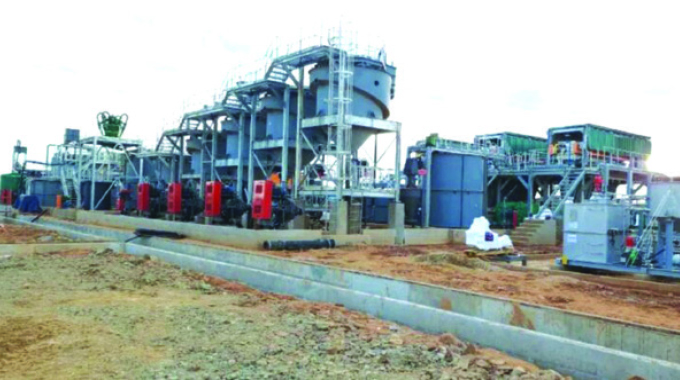
Oliver Kazunga-Senior Business Reporter
LONDON-listed Premier African Minerals says operations at its Zulu Lithium project in Insiza, Matabeleland South Province, will resume later this month once laboratory test work has been completed and optimisation issues resolved.
Early this year, Premier African Minerals — the United Kingdom headquartered firm that owns Zulu, was seeking £2,4 million (US$3,15 million) to fund the project.
Recently, the operation has been undergoing plant modification and Enprotec, the supplier of the floatation plant informed Premier that no additional fundamental changes are anticipated to the currently installed plant and equipment.
The mining group’s chief executive officer Mr George Roach said: “Premier will run the plant when the laboratory work has been completed and when we have resolved the optimisation issues that have prevented proper production to date.
“Whilst this has reduced current expenditure, the company will still need further funding and in particular to recommence production later this month.”
Though not verified by an independent firm, Premier estimates that an enlarged float plant could result in a target mine gate production cost for spodumene concentrate of circa US$500 per tonne.
Premier has announced the successful production of saleable spodumene concentrate from the floatation circuit at Zulu with a constant improvement in grade.
The mine group targets production at 50 tonnes of spodumene concentrate per day with an anticipated increase in output.
In addition, Premier has maintained a target full projected capacity of 4 000 tonnes per month.
Spodumene is a lithium ore crucial for battery production in electric vehicles, and features a high lithium concentration.
Lithium is also a strategically important mineral for Zimbabwe, with the Government expecting it to be significant in driving the growth and development of the mining industry, one of the key sectors of the country’s economy.
The mining industry contributes over 75 percent to national exports while employing over a million people directly and indirectly.
Zimbabwe is endowed with vast minerals including gold, platinum, diamond, lithium, coal and chrome.
Platinum is also one of the country’s biggest exports, along with gold — Zimbabwe’s single largest export. The two minerals generate over half of Zimbabwe’s export earnings while lithium has become the mineral of the future because of its use in electric vehicles.
Mines and Mining Development Minister Winston Chitando recently said Zimbabwe’s mining industry remained resilient despite the impact of the depressed metal prices on the international market.
Over the past few years, global metal prices except gold have remained subdued, ultimately impacting adversely on the production of Platinum Group Metals as well as lithium, not only in Zimbabwe but the world over.
For instance, the World Platinum Investment Council (WPIC) has indicated that the platinum market recorded a deficit of 878 000 ounces in 2023.
Total supply fell by two percent while demand spiked by 25 percent year-to-year, but this has failed to lift prices.
In the lithium sector, global prices have plummeted from US$80 000 per tonne in 2022 to under US$20 000 currently and this has largely been attributed to the glut of lithium and the rising interest rates have affected demand for electric vehicles.
Minister Chitando said the country’s mining industry, due to its efficiency, optimisation and expansion programmes, has managed to hold its own at a time when global mineral prices, except for gold, were depressed.
“Apart from gold, most of the commodity prices are very depressed. And certainly for Zimbabwe, the only mineral at the moment which we produce significantly and has got firm prices is gold.
“The other mineral prices are very depressed and I would like to state that the Zimbabwe mining industry has been very resilient and it’s an efficient sector.
“Generally, the trend in the world is when the mineral prices are low, most economies are characterised by mine closures — but this has not happened in Zimbabwe’s platinum and lithium sectors at a time when the world has experienced the worst commodity prices.
“The prices should start picking now and us not having any one of our mines shutting down when prices reach their worst, it’s really a success in itself,” he was quoted as saying.



 Online Reporter