Online Reporter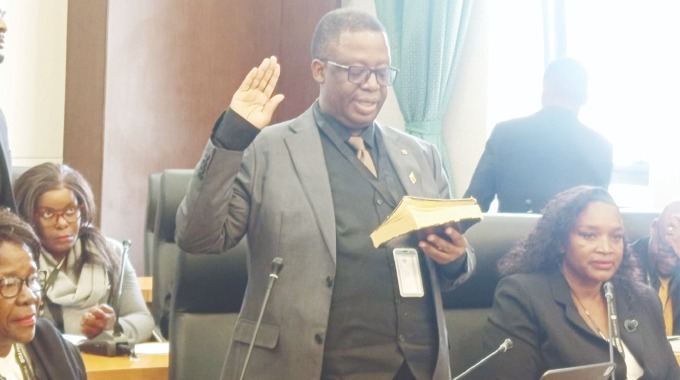
Nyore Madzianike, [email protected]
GOVERNMENT plans to issue 360 000 title deeds to beneficiaries under the A1 and A2 land reform models, with 1 418 deeds having successfully completed the registration process so far, the Ministry of Lands and Rural Development has said.
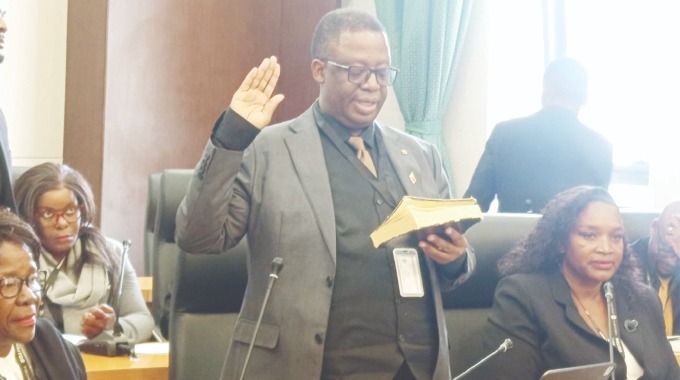
The disclosure was made by the Permanent Secretary in the Ministry of Lands and Rural Development, Professor Prosper Bvumiranayi Matondi, during an appearance before the Parliamentary
Portfolio Committee on Lands, Agriculture, Fisheries, Water and Rural Development.
Prof Matondi was giving oral evidence on Zimbabwe’s land tenure and tenancy system, its impact on agricultural productivity and the ongoing title deeds programme at the New Parliament Building in Mt Hampden.
He said the programme has encountered a number of challenges, including inadequate documentation, disputed land claims and the high cost of surveying.
“The programme, it was launched in October 2024 by the President, and there were several subsequent launches that were done into December.
“After that, it was decided that a smoothing of the programme needed to be done by broadening the institutional framework, so a Lengthening Implementation Committee was then formed by the
Government, and its role was to ensure that targets are met, targets being that we wanted to provide title to 360 000 properties in the A1 and in the A2 models.
“And progress on that has been very slow, slow simply because of the watertight approaches for the title deductions programme. So, to date, there are 1 418 title deeds that have successfully gone through the process, and there are others that are waiting in the pipeline.”
Prof Matondi said one of the biggest hurdles was the documentation required before properties could be registered.
“One, it has to do with the tenure documents that are required prior to the registration. In often cases, many of our clients who are coming to the One Stop Centre do not have adequate papers, and when sometimes they bring them, the papers are at variance with what we have in the system.
“In other words, they are not the appropriate documentation, even though they look like appropriate documents, like offer letters, or 99-year leases, or whatever form of lease. So the system is such that we are depending on the system that is watertight; it’s not possible to proceed any further.”
He said the large number of people seeking title deeds reflected strong interest in formalising land rights.
“So, per day, just to give you an example, we receive up to 500 applicants, which means that there is wider interest from society to want to do their title deed registration. And therefore, we need now to see what the challenges are.”
Prof Matondi said Government was being compelled to invest additional resources in verifying land records and boundaries where documentation was incomplete or contested.
“In many cases, we are now investing more money in tracking records to those who look for interest. We go to the farms to verify the ownership by looking at the tower diagrams and what is on the ground to see if it is matching, and if it is not, we then suggest ways in which we can use the beneficiaries as well as the community to confirm the boundaries.
“And it’s an odious process, which means it is a high cost to us as Government, because we are the owners of the land, who wish to give these rights to the owners who are sitting on the land. Then you also have issues to do with misunderstanding on the valuation.”
He said the cost of surveying remained another major challenge, although Government had engaged conveyancers to help reduce related fees.
Prof Matondi also cited competing land claims as a significant obstacle, particularly in cases where records relating to previous allocations were either incomplete or absent from Government databases.
“Given that we have got 26 years in which the Fast Track Land Reform Programme has been holding, there are particular operators that are not lodged within our system, but are coming to us now for processes of verification.
“And there are several ministers who are offering the operators from 2 000. So those operators, sometimes they do not exist, sometimes they are fake, they are not recognised. And we are not saying we need to help our farmers because we believe strongly as a Ministry that every Zimbabwean, no matter who they are, have got a right to land. And therefore, we, as Government, will do all that is possible to ensure that that right to land is guaranteed.”
Prof Matondi said Government was committed to accelerating the title deeds programme, although the A1 model presented unique challenges because of its multiple land-use arrangements.