Chronicle Editor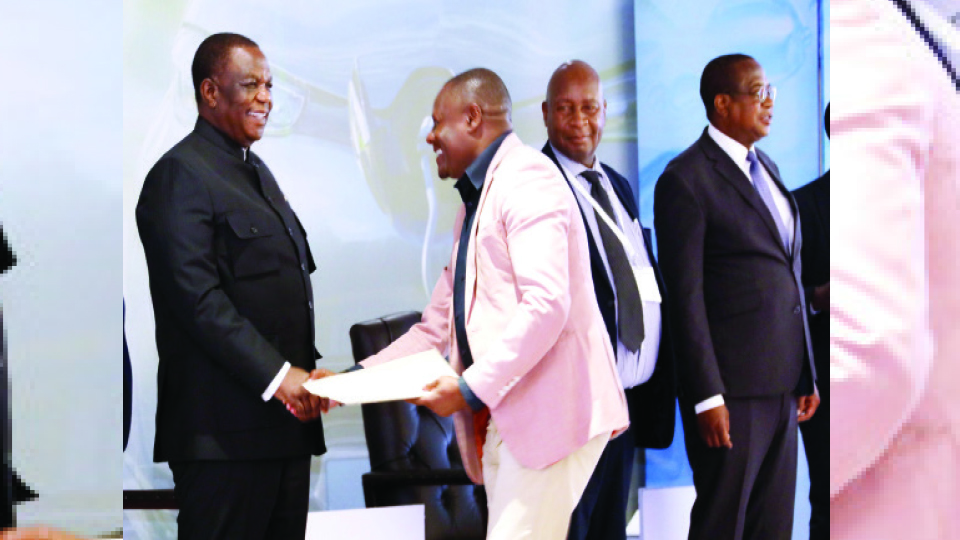
Leonard Ncube, [email protected]
ZIMBABWE has licensed 10 new Independent Power Producers (IPPs) to start feeding 271MW of electricity to the national grid under the Government Project Support Agreement (GPSA), which has a pool of close to 40 licensed players with guaranteed implementation.
As of last Friday, Zimbabwe was producing 1 538MW combined power output, with Hwange Thermal Station leading at 914MW, followed by Kariba Hydro at 563MW and IPPs at 61MW.
The coming in of the newly licensed IPPs is expected to further boost domestic power generation and reduce the import component.
This emerged during the recent International Renewable Energy Conference Expo 2024 in Victoria Falls, where 10 of these IPPs were given the GPSA guarantees and are expected to start feeding into the national grid within a year.
The 10 IPPs are Mutorashanga Indo Africa Solar with a capacity of 10MW, Guruve Solar Energy Project (5,5MW), De Green Rhino Solar (50MW), Equinox Solar (10MW), Murombedzi Solar (10.5MW), Great Zimbabwe Mini Hydro (5MW), Par Valley Energy (50MW), Acacia Energy (50MW), Energywise Vungu Solar (30MW) and AF Power 50MW.
The country is aggressively transforming its energy sector and transitioning to clean energy sources in line with global climate change mitigation approaches, while creating a solid base for powering its industrialisation drive to meet Vision 2030 targets.
In a joint press statement, Finance, Economic Development and Investment Promotion Minister, Professor Mthuli Ncube and his Energy and Power Development counterpart, Cde Edgar Moyo, said focus is on solar energy for now with other renewables to follow later.

The two ministries in December 2022 jointly announced Government’s willingness to expedite investment in the renewable energy sector in order to ensure energy security and sufficiency in the country.
The Government has since engaged Africa Legal Support Facility and developed a standardised Implementation Agreement titled Government Project Support Agreement, which will guarantee bankability of investments in the renewable energy sector.
The GPSA is intended to provide comfort through guaranteeing a cost reflective tariff, uptake of power and offshore repatriation of funds by investors.
Government also formed an Evaluation Technical Committee to select IPPs, which would be issued with GPSAs.
A number of issues were considered for IPPs to qualify targeting projects under construction, about to start and yet to commence who have showed proof of ownership of land, bankable projects and others.
“The Ministry of Finance, Economic Development and Investment Promotion and Energy and Power Development jointly announce that the above companies met the criteria. The selected companies will be benefit from a capped tariff of US$9 cents per kilowatt for solar energy regardless of capacity due to drop in solar technology prices in late 2023.
“Government is willing to support all the local IPPs through a back-to-back liquidity support structure whereby the IPPs can have an arrangement with relevant exporting private off-takers to off-take power, which will enable seamless servicing of the obligations,” reads the statement.
“We are delighted to inform that the IPPs will be issued with the Government Project Support Agreement for their review in preparation for the signature within the next two weeks.”
The coming on board of IPPs will go a long way in alleviating power shortages in the country as well as promoting import substitution thereby ensuring foreign exchange savings at a time when demand for electricity is higher than what is being generated.
Speaking in a panel discussion at the 56th United Nations Economic Commission for Africa (Uneca) Conference of Finance Ministers, which is underway here, head of aid and debt management in the Ministry of Finance, Mr Andrew Bvumbe, said Zimbabwe is in deficit in terms of power generation hence the Government has made a deliberate policy to focus on solar.
“In our new independent power producers approach we have licensed 38 of them through Zera. When we licensed those 38 there was lack of co-ordination and we had an influx of investors seeking guarantees,” he said.
“So, we needed a standardised approach as a template and we approached Africa Legal and we agreed on this important Government Project Support Agreement, which lays out all issue in one documents.
“During this week here in Victoria Falls we licensed 10 projects, which were signed with a total of 271MW that in the next 12 to 24 months will be coming into the grid,” said Mr Bvumbe.
“The critical issue is de-risking and we are in a good stand to get these projects implemented using this standardised template,” he said.
The Government is guided by the vision to achieve universal access to sustainable and modern energy in Zimbabwe by 2030.


 Online Reporter