Online Reporter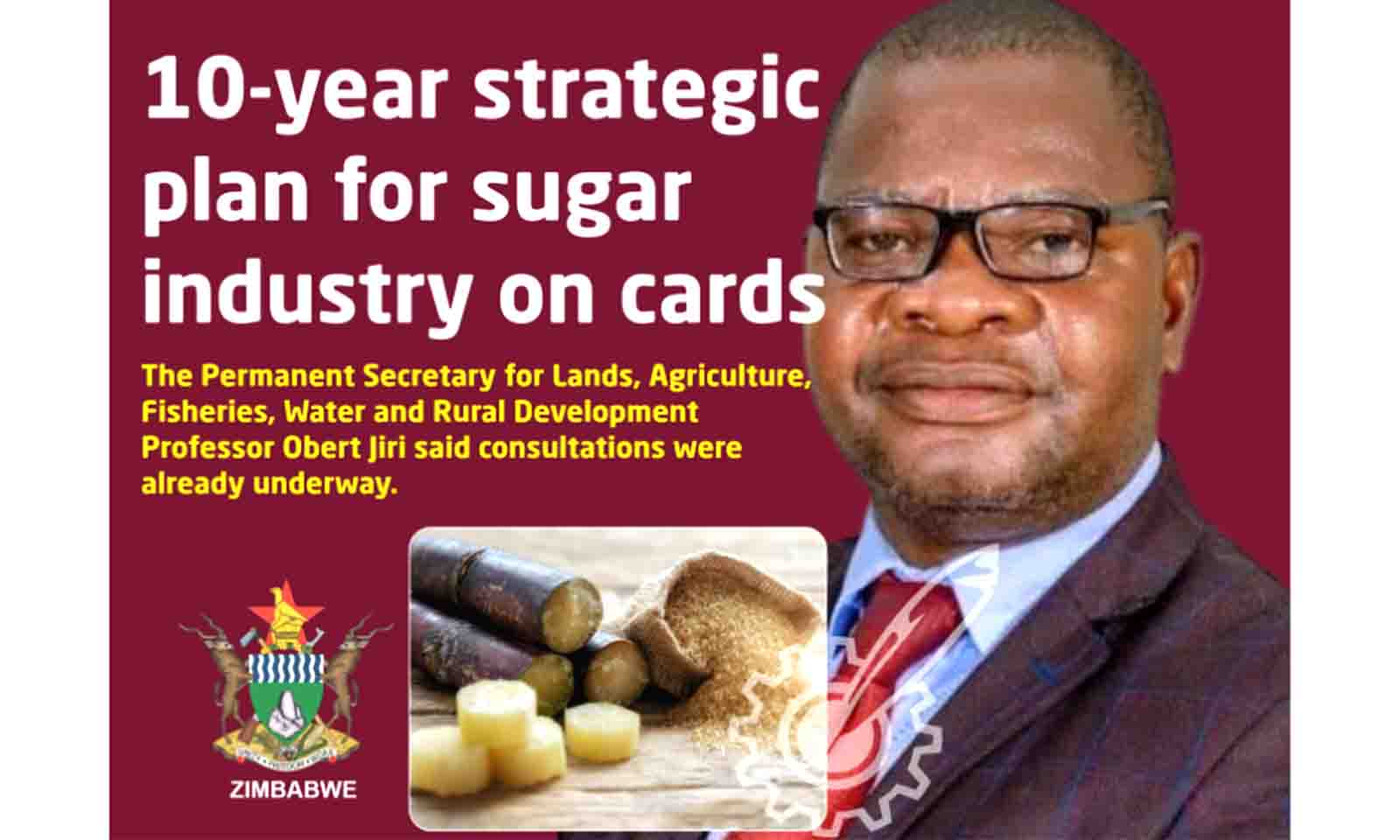
Farirai Machivenyika
Senior Reporter
GOVERNMENT and players in the sugar industry are working on a 10-year strategic plan to grow the sector by addressing the challenges it faces and enhance its contribution to the economy.
This came out during a meeting between the Parliamentary Portfolio Committee on Industry and Commerce and stakeholders in the sector.
The Permanent Secretary for Lands, Agriculture, Fisheries, Water and Rural Development Professor Obert Jiri said consultations were already underway.
“Recently, we also met with the sugar people to understand their concerns and what we ended up saying is that, let us have a 10-year strategic plan whose consultations are currently underway to ensure that all the players in the sugar industry are involved,” Prof Jiri said.
He said the main challenges that the industry highlighted were high sugar production costs, chemicals, fertiliser, labour and cane seed.
The sugar sector contributes 1,4 percent to the country’s GDP and employs over 30 000 people, while there are 1 200 outgrower farmers.
Last year, the country’s two sugar-milling companies, Triangle and Hippo Valley, produced 439 000 tonnes of sugar, way above the country’s annual consumption of approximately 350 000 tonnes.
Prof Jiri also said, together with the Ministry of Industry and Commerce, they were working on amending the law that governs the sugar industry.
“So, regulation and legislation are also being looked at. Of course, this is still in its infancy with our legal teams,” he said.
“We are working together to see where we can improve the current Sugar Act is more inclined towards the processing side.
“The production side, even the legislation, is currently quite weak. The proposed interventions that we see as the Government to try and ensure that this strategic crop is given a new way to thrive. What I have alluded to, firstly, the Sugar Act is currently under review to align it with the modern agricultural, economic and environmental standards.”
Prof Jiri said the new law will, among other issues, look at formalising the Zimbabwe Sugar Association, which should become a regulatory authority.
“In that policy, we are also looking at some trade policies which need to be looked at to protect the local industry from, you know, unfair international competition,” he said.