Online Reporter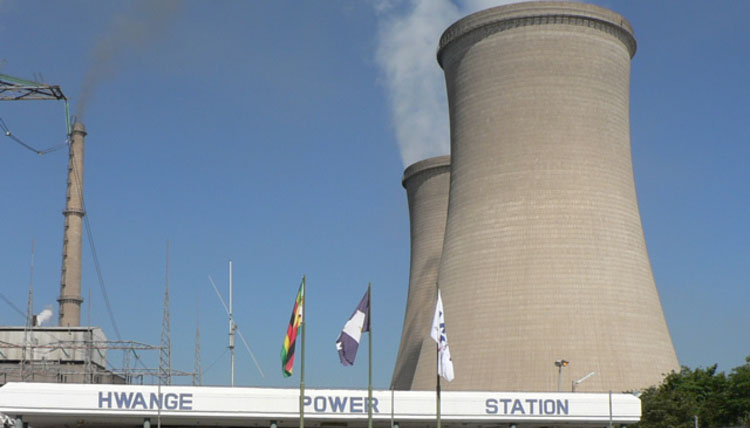
Remember Deketeke
Herald Correspondent
ZIMBABWE’S quest for lasting energy security is gathering momentum, with about 4 000MW in new generation capacity lined up for commissioning by 2030, as the country increasingly turns to independent power producers (IPPs), renewable energy, captive generation and regional power trading to support economic growth and Vision 2030.
The planned projects, if realised, would expand the country’s generation base and could take total installed capacity from about 3 000MW to around 7 000MW, providing the reserve capacity required to meet rising electricity demand.
The expansion comes as the power utility has received new and expansion load applications totalling about 2 500MW, highlighting the growing electricity requirements of an economy driven by mining, manufacturing and other productive sectors.
Zimbabwe Electricity Transmission and Distribution Company (ZETDC) managing director Mr Howard Choga said in an interview that the country would have to rapidly expand its generation capacity if it was to meet rising demand while maintaining adequate reserves.
“The current Zimbabwe power system that started being developed since the 1960s is of capacity of about 3 000MW and the energy being used is around 2 500MW,” he said.
“The new demand means that the Zimbabwe capacity developed over more than 50 years has to be doubled in the coming five years.”
Projects lined up for commissioning by 2030 have a combined capacity of about 4 000MW, with the strategy increasingly focused on diversifying the country’s energy mix and reducing dependence on a few major generation sources.
Mr Choga said most of the planned projects were designed to withstand climate-related risks, particularly drought, which has periodically constrained generation at Kariba.
“Most of the projects are climate-proof and therefore address the eventuality of drought-related challenges for the hydropower stations in Zimbabwe,” he said.
The planned expansion dovetails with the Government’s National Development Strategy 2 (NDS2), Zimbabwe’s second five-year development plan for 2026 to 2030, which seeks to accelerate the country’s transformation into a “prosperous and empowered upper middle-income society” towards the realisation of Vision 2030.
Reliable and affordable electricity is regarded as a critical enabler of that transformation, supporting industrialisation, mining, manufacturing, agriculture, digitalisation and other productive sectors.
NDS2 places emphasis on expanding generation and electricity networks, increasing regional integration, promoting distributed renewable energy and strengthening private-sector participation in the power sector.
The policy shift comes as Zimbabwe seeks to move away from a power system heavily dependent on large-scale utility generation towards a diversified model in which public utilities, IPPs, captive generators, renewable-energy producers and regional markets complement one another.
Currently, Hwange and Kariba are contributing an average of about 1 600MW, while IPPs are supplying approximately 175MW.
Rooftop solar is contributing slightly more than 100MW through the net-metering scheme, while regional imports are being used mainly during peak demand periods.
The diversification of generation is expected to provide greater resilience against the shocks that have historically triggered load-shedding, particularly droughts and major plant failures.
Kariba’s generation has previously been severely affected by low water levels, while ageing thermal units at Hwange have also suffered breakdowns and required extensive maintenance.
The improved performance of Hwange and increased water allocation at Kariba have, however, helped Zimbabwe navigate the current winter period without the prolonged load-shedding experienced in previous years.
The Government is now seeking to ensure that the current improvement in supply is sustained as demand continues to rise.
The 2026 National Budget indicates that more than US$9 billion in strategic investment mobilisation is envisaged for the 2025–2030 period, with about US$4,4 billion expected from the private sector, complemented by public funding and development-partner support.
This investment drive is expected to support the expansion and diversification of the electricity sector while reducing pressure on the national utility.