admin
admin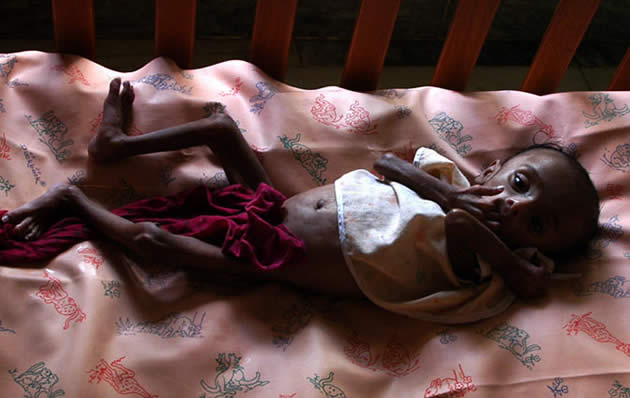
 Mashudu Netsianda in Binga
ABOUT 100 children under the age of five are dying daily in the country while 15 000 of them are also at risk of dying from malnutrition because of a decline in exclusive breastfeeding, the Minister of Health and Child Care, Dr David Parirenyatwa, has said. In a speech read on his behalf by the Matabeleland South provincial medical officer, Dr William Busumani, during the belated National Launch of the World Breastfeeding Week at Simatelele Secondary School in Binga on Thursday, Dr Parirenyatwa said the low levels of exclusive breastfeeding in the country contributed to high child mortality rate.
He said only 31 percent of babies aged less than six months are exclusively breastfed in the first six months.
“Over a third of Zimbabwe’s children under the age of five are chronically malnourished and consequently stunted while about 15 000 of them are at risk of dying from malnutrition with 100 dying everyday from preventable and treatable diseases because of lack of exclusive breastfeeding,” he said.
Dr Parirenyatwa said the Government was concerned at the rate at which children under the age of five were dying because of a decline in breastfeeding by mothers, saying there was a need to step up efforts in educating women on the importance of breast milk.
“As we commemorate this year’s World Breastfeeding Week, we are being reminded once again that breast milk is the best. It is a wonder drug that can prevent killer diseases like diarrhoea and respiratory infections among children,” he said.
The Minister said the Government was making efforts in conjunction with partners to reduce the trend through supporting the breast feeding programme.
Dr Parirenyatwa said his ministry was in the process of developing a National Nutrition Strategy which would guide nutrition programmes for the next five years.
“The Ministry of Health and Child Care with the support of its developmental partners is in the process of developing a National Nutrition Strategy which will guide nutrition programmes for the next five years. The need to develop a comprehensive behaviour change communications strategy is being strongly recommended to address the current nutrition challenges in the country.
“We are also training extension workers, peer mothers and fathers as well as community based health workers. We have also introduced a peer counselling programme, which is a cost effective and highly productive way to reach out to a larger number of mothers more frequently.
“Trained peer counsellors, readily available in the community become a lifeline for mothers with breastfeeding questions and issues,” said Dr Parirenyatwa.
He said the period when mothers do not visit health care facilities is the time when community support system for mothers is essential. The Government has since 2011 trained more than 3 500 village health workers to be community based infant feeding counsellors in 27 districts.
“Positive reports are already being received from the 27 districts and it is not debatable that peer mother counsellor approach coupled with other key health livelihood projects works,” said Dr Parirenyatwa.
The Ministry of Health and Child Care through its Aids and Tuberculosis department has programmes in place that ensure that breastfeeding is made safe for all mothers including those infected with the HIV virus.
“We have brought early HIV testing facilities closer to mothers and all health facilities are now collecting samples which they forward to the next level. In order to ensure an HIV free generation, my ministry through the prevention of mother to child transmission (PMTCT) programme, have committed funds towards antiretroviral prophylaxis for all HIV infected mothers. This strategy has made it possible for all mothers regardless of their status to breastfeed their babies,” Dr Parirenyatwa said.
He said breastfeeding supports each of the targets of the United Nations Millennium Development Goals (MDGs) and has a large impact on the survival of children and the development of the country.
Speaking during the same event, the World Health Organisation (WHO) country representative, Dr David Okello, said greater efforts were needed to create an environment that considers the needs of pregnant and lactating women.
“For breastfeeding to be successful, mothers need support because breastfeeding provides a baby with a healthy growth and development.
“WHO advocates with ILO for a strong support to working mothers in the formal and informal sector. They need adequate maternal leave and upon returning to work, they need to be able to breastfeed their babies in line with ILO Convention183. Mothers also require strong support network, including peer counsellors, who are equipped to give attention to the woman as well as the baby,” said Dr Okello.
He said WHO would continue to support governments in their breastfeeding programmes.
“Our unique contribution includes country support to adapt, implement and monitor implementation of the international code of marketing of breast milk substitutes and subsequent related World Health Assembly resolutions, support for implementation of baby friendly care through the baby friendly hospital initiative and dissemination of material for training health workers on breastfeeding counselling,” said Dr Okello.
WHO is committed to supporting countries to reach the MDG by 2015, including through breastfeeding promotion as it contributes to MDG Number One (to eradicate extreme hunger and poverty) and Number Four (to reduce child mortality).
The call for action that accompanied the promise-renewed initiative launched in June 2012 has been met with resounding endorsement by world leaders who have pledged to reduce child mortality to 20 deaths per 1 000 live births or less by 2035.
World Breastfeeding is an annual event commemorated worldwide during the first week of August to celebrate and stimulate efforts in protecting, supporting and promoting breastfeeding.
It is also aimed at raising public awareness and advocating governments and relevant agencies as well as creating a platform to unify breastfeeding groups within the breastfeeding movement.
This year’s event was held under the theme: “Breastfeeding Support: Close to Mothers.”



 Online Reporter