Chronicle Editor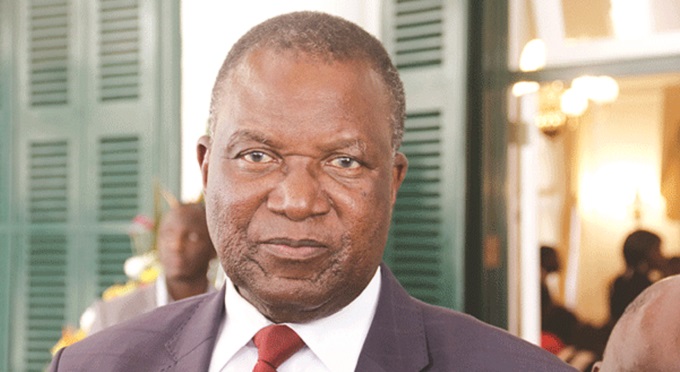
Oliver Kazunga, Senior Business Reporter
GOVERNMENT will maintain its 100-Day Cycle Programme as a strategy to address challenges associated with implementation of national projects that impact on people’s livelihoods.
Minister of State for Presidential Affairs, Monitoring and Implementation of Government Programmes, Dr Joram Gumbo, said this during a tour of the US$1,4 billion Hwange Thermal Power Station expansion project on Thursday. Upon completion, the project would add 600MW into the national grid by 2021.
“You will be aware that in the past the implementation of Government programmes has been hindered by blatant sector performance deficiencies. The half-hearted approach hitherto assumed by some Government employees and entities in the implementation of programmes has pulled back development efforts,” he said.
“It must never be the case that the developmental interests of the people are compromised because those mandated to implement Government programmes have not adopted a serious approach or have completely abdicated their responsibilities.”
Dr Gumbo said the 100-Day Programme was intended to strengthen and reinvigorate the performance of the public sector and to provide solutions to problems that confront the citizens.
“In a bid to address these anomalies associated with projects, Government adopted the 100-Day Target Based Programme. I want to assure you that Government is committed to ensure that the 100-Day Cycle Programme becomes a conduit not only for promoting development, but guaranteeing job creation, empowerment of communities, reducing poverty and ultimately improving the livelihoods of the people,” he said.
Dr Gumbo said it was their expectation as Government that the 100-Day Cycle Programme would lead to the realisation of developmental goals as enunciated in the Transitional Stabilisation Programme (TSP), a two-year economic blue-print, which ends in December this year.
TSP is an anchor project for the revival of the economy in line with Vision 2030, which targets to see Zimbabwe achieving an upper middle-income economy status.
“The implementation of this project and others nationwide, is indicative of the fact that the 100-Day Cycle Programme is focusing on the execution of projects across key sectors of the economy namely: energy, agriculture, mining, manufacturing and social services.
“It is our belief that this approach will enable each sector to measure its performance as well as contribution towards addressing the problems and needs of our people,” he said.
The minister said the expansion of Hwange Thermal Power Station was a welcome development at a time when load shedding has worsened. He said the project was evidence of the commitment by Government to provide energy to the people in line with the United Nations Sustainable Development Goal number 7, which requires member states to aspire to ensure affordable, reliable and sustainable energy for all.
Dr Gumbo said access to affordable, reliable and sustainable energy is crucial to achieving many of the SDGs, from eradication of poverty, advancement in health, education, improved water supply and industrialisation to mitigating climate change.
“This project is also evidence of the commitment by Government to invest in energy infrastructure in order to ensure energy security. Energy security is one of the most important preoccupations of many governments around the world since energy is central to economic growth and development and the general well-being of citizens,” he said.
“The global energy landscape is changing rapidly towards a more environmentally sustainable energy system in which technically advanced, flexible, cost competitive and low emissions technologies are increasingly displacing conventional and fossil fuel-based alternatives,” he said.
Prominent energy projects include renewable alternatives especially from solar and wind and complementary technologies such as natural gas.



 Online Reporter