Online Reporter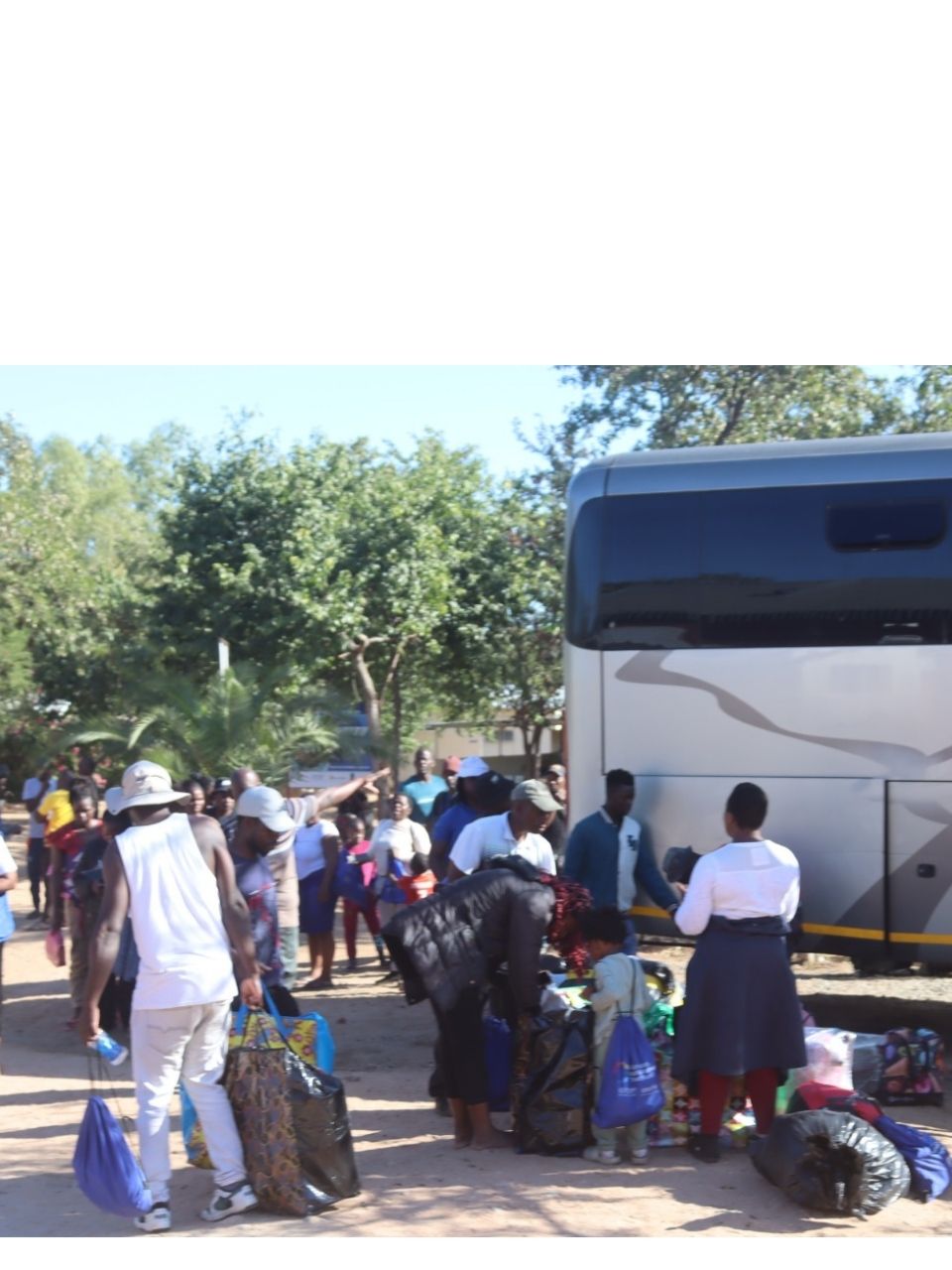
Thupeyo Muleya Beitbridge Bureau
WOMEN and children are bearing the brunt of the ongoing anti-immigrant unrest in South Africa, prompting the Zimbabwean government to step up emergency support, evacuation and reintegration efforts for returning nationals.
Speaking at the handover of more than 1 000 dignity kits donated by the United Nations Population Fund (UNFPA) and 10 tonnes of rice provided by the Government at the Beitbridge Reception and Support Centre on Monday,
Minister of Women Affairs, Community, Small and Medium Enterprises Development Senator Monica Mutsvangwa said the crisis has disproportionately affected women and children, with Government rolling out a ward-level economic reintegration programme to help returnees rebuild their lives.
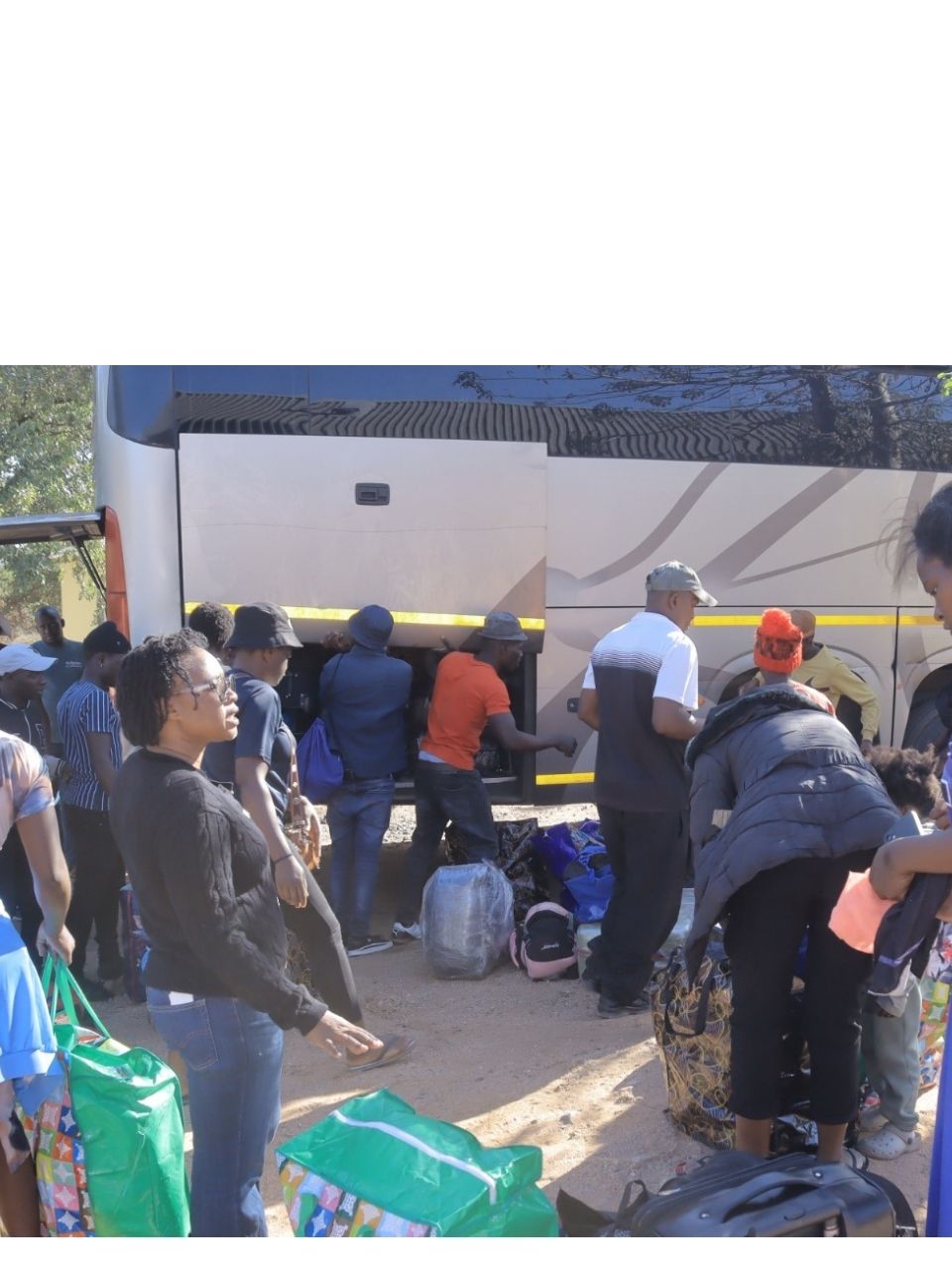
“Women and girls, in particular, face unique and often heightened risks during displacement. From the moment of transit to the uncertainty of arrival, their vulnerability increases exponentially,” she said.
Minister Mutsvangwa noted the loss of livelihoods was a major underlying cause of tension and violence within families and communities, creating an environment where abuse and exploitation could thrive.
“My heart bleeds for every one of you as I contemplate the ordeals you have endured. The dangers do not cease upon crossing the border; they persist during transit and escalate when they reach home,” she said.
“It’s our duty to break this cycle and ensure that our returnees don’t trade one form of danger for another. Men, women, and children navigate these crises differently. Women and girls, in particular, face unique and often heightened risks during displacement.
“From the moment of transit to the uncertainty of arrival, their vulnerability increases exponentially, exposing them to specific threats that require our immediate and focused attention.”
Minister Mutsvangwa assured returnees that the Government, working with partners, was fully committed to ensuring that every returning citizen receives comprehensive assistance to reintegrate safely and with dignity.
She said focus was not merely on providing immediate relief, but on building a sustainable foundation for the returnees’ future in the country.
Minister Mutsvangwa also highlighted that her ministry had activated structures in every province, district and ward to support returnees with livelihood linkages, economic empowerment programs and GBV referral pathways.
“In particular, my ministry is rolling out a robust plan to increase economic support to men and women returning from South Africa, starting at the ward level,” she said.
“Consider joining the Women’s Bank for access to loans, participating in Village Savings and Lending Associations, or becoming part of cooperatives and SMEs that are the engines of our national growth.”
The minister urged communities to welcome returnees and called on them to embrace empowerment programs on the ground.
“Let’s put away any discrimination or stigma and embrace each other with love, care, and a profound sense of Ubuntu. Let our collective strength be their shield, and our kindness be their foundation,” she said.
“I am also handing over a consignment of 10 tonnes of rice to support the feeding of our returnees here and I am confident that the Government will continue to mobilise resources to ensure no returnee goes hungry during this transition.”
Government has since thanked UNFPA, the UN Country Team, and the private sector for their support and shared commitment to leaving no woman or girl behind during times of humanitarian need.
Delivering an inter-agency solidarity statement on behalf of UNFPA, Unicef, IOM and UN Women, UNFPA country representative Ms Miranda Tabifor said the UN family was committed to three pillars, which include restoration of dignity, safety and protection and long-term reintegration.
“Crucially, the demographics of those returning highlight that roughly 70 percent are women, adolescent girls, and children; underscoring that their return must be defined by dignity,” said Ms Tabifor.
“We applaud the Government of Zimbabwe for its leadership and ownership of this response. The synergy we’re witnessing today between line ministries and the UN system is the most effective way to maximise our resources.”
Representing the private sector, Ms Eunice Mafundikwa, head of delegation from Innscor Africa through Empower
Tomorrow, said the company was proud to stand with the Government.
“Innscor Africa, through Empower Tomorrow, is proud to stand with the Government in supporting our fellow Zimbabweans returning home. These are our brothers, our sisters, our children coming back home,” she said.
“Here at the Beitbridge Reception and Support Centre, we are complementing the Government’s efforts by providing medical supplies, meals, and reintegration food hampers to ensure every returnee goes home with dignity and hope.
We’re also exploring broader partnerships for sustainable reintegration.”
According to a report presented by Hillary Mahumbe of the Ministry of Foreign Affairs and International Trade’s Consular Department, the Government’s Voluntary Repatriation Programme has assisted 34 552 citizens to return home from South Africa. A further 75 535 have returned using their own resources.
The report noted that anti-migrant groups were now targeting SMEs operated by foreigners, including tuck-shops, barbershops and taxis. Night-time attacks and weekly marches have forced many to seek refuge at consulates and police stations.
Government has recommended the establishment of an Emergency Contingency Fund and urged the Registrar
General’s Office to continue issuing national documents at Beitbridge and in destination provinces.
Beitbridge District Medical Officer Dr Lenos Samhere said the clinic at the reception centre, which started on 18 June, operates 24 hours and has seen 1,838 clients to date, 62 percent of them female and 28 percent children under 15.
He said key services include HIV, TB, maternal care, catch-up vaccinations, and mental health support, and that partners including MSF, Unicef and the Red Cross are supporting drug supplies and infrastructure.
“Potential threats include infectious disease outbreaks and SGBV. We’re strengthening surveillance and community support networks starting at village level,” said Dr Samhere.