Chronicle Editor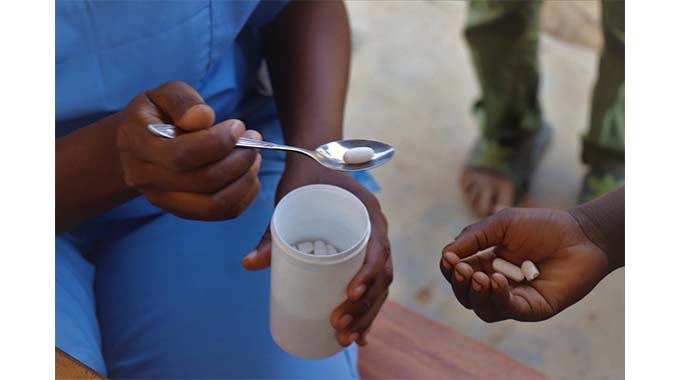
Yoliswa Dube-Moyo, Matabeleland South Bureau Chief
THE Ministry of Health and Child Care has treated more than 1,3 million children across the country as part of efforts to prevent bilharzia and intestinal worms, neglected tropical diseases prevalent in Zimbabwe.
Bilharzia and intestinal worms are neglected tropical diseases (NTDs) widespread in the country, which the ministry aims to eliminate by the year 2030.
The other NTDs are blinding trachoma and elephantiasis or lymphatic filariasis. In the Matabeleland region, bilharzia is prevalent in Insiza, Beitbridge, Binga, Umguza and Matobo districts.
Through Mass Drug Administration (MDA), children aged one to 15 years in the country’s 40 endemic districts were treated for the tropical diseases in a recent campaign by the ministry. Ministry of Health and Child Care spokesperson Mr Donald Mujiri said the campaign reached 52 percent of the targetted population.
“The recently conducted Mass Drug Administration or MDA was done for bilharzia and intestinal worms in 40 districts which are endemic. The target population is from one year to 15 years, pre and school age children,” said Mr Mujiri.
He said the programme targeted 2,5 million children with 1 319 927 having been treated or received medication.
“The coverage of the programme reached 52 percent of the targeted population. This was a huge success for us as this campaign was done during Covid-19 response under difficult conditions. We will be conducting disease specific MDA again this year targeting trachoma but also these two specific diseases,” said Mr Mujiri.
Children are susceptible to bilharzia as they often swim or play in water. Bilharzia is fought by treating schoolchildren regularly with Praziquantel and the treatment of whole communities several times curbs the transmission.
Bilharzia parasites live in water and can penetrate the skin upon contact. Swimming or doing laundry in infested rivers, lakes and lagoons pose a high risk.
Experts say the bilharzia parasite can stay in the body for years and cause great damage. Research shows that bilharzia affects both sexes and all ages.
The World Health Organisation has recognised bilharzia as a major public health problem in the world and many countries, such as Egypt have mass treated schoolchildren and successfully controlled the disease.
The most well-known symptom of bilharzia is blood in the urine while new research shows that bilharzia also affects women’s genitals. The genital bilharzia may cause spotting, sores, smelly discharge, infertility and over 42 million women are affected worldwide. Both sexes are at risk of becoming infertile. – @Yolisswa.



 Online Reporter