Precious Manomano
Herald Reporter
More than 15 000 farmers in Zimbabwe’s dryland regions are set to benefit from agricultural equipment and climate‑smart support under the Drylands Sustainable Landscapes Impact Programme.
The initiative seeks to boost productivity, restore degraded land and strengthen resilience against climate change.
The programme is targeting farmers in drought‑prone districts in Masvingo, Midlands and Manicaland provinces. These are areas affected by desertification, land degradation and erratic rainfall linked to Mopane and Miombo woodland ecosystems, particularly within the Save and Runde catchments.
Under the initiative, more than 190 pieces of agricultural equipment have been distributed to communities to reduce labour demands, improve efficiency and enable farmers to adapt to changing climatic conditions.
The project also aims to restore over 170 000 hectares of degraded landscapes while promoting sustainable agricultural practices aligned with the Government’s low‑labour, high‑yield Pfumvudza/Intwasa programme.
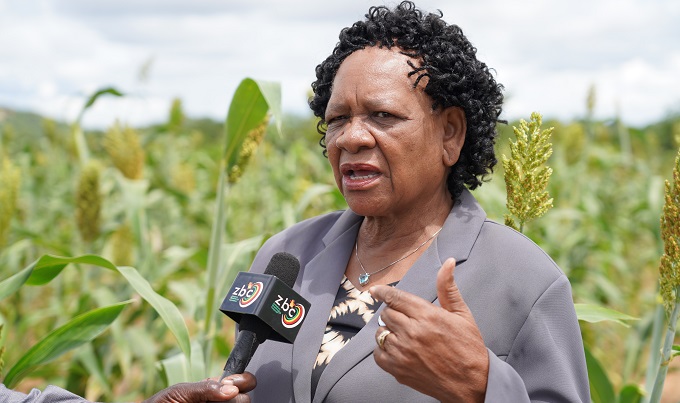
Speaking during the commissioning of small‑scale agricultural equipment in Harare on Monday, Environment, Climate and Wildlife Minister Dr Evelyn Ndlovu said the intervention was designed to help vulnerable communities transition to climate‑resilient farming systems.
“We distributed equipment today, launching tools for farmers in dryland areas of Masvingo, Manicaland and one district in Midlands, which consistently suffer from climate change and low rainfall,” she said.
“We are providing hand‑driven tractors that can be operated by a single person, along with trailers for transporting crops from fields and grinding mills for value addition.”
Dr Ndlovu said mechanisation would significantly reduce labour intensity, improve production efficiency and enable farmers to process and add value to their produce locally, ultimately strengthening rural livelihoods. She also highlighted efforts to promote traditional grains as part of building climate‑resilient food systems.
“We want to promote our traditional grains and foods internationally. Many visitors seek Zimbabwe’s gastronomy based on small grains like rapoko and millet, which are resilient crops traditionally valued by our ancestors,” she said.
National Project Coordinator for the GEF7 initiative, Ms Precious Magwaza, said the programme prioritises smallholder farmers, with women accounting for about 52 percent of beneficiaries receiving training in sustainable land management practices. “This kind of support is significant for small‑scale farmers. The commissioning of small‑scale equipment enables communities to complete tasks faster while improving productivity,” she said.