Rumbidzayi Zinyuke, Senior Health Reporter
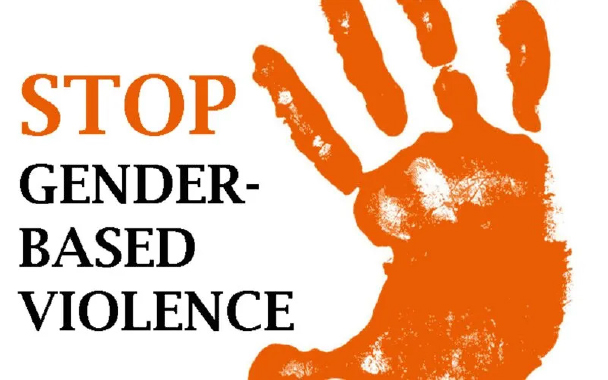
EVERY year, as November draws to a close, countries around the world turn their attention to the fight against gender-based violence (GBV), with Governments, civil society organisations, communities and individuals joining the 16 Days of Activism Against Gender-Based Violence campaign.
From awareness marches and community outreach programmes to discussions on women’s rights, survivor support and the enforcement of laws, the campaign provides an opportunity to confront one of the most pervasive human rights and public health challenges facing societies.
But the 16 Days of Activism is much more than an annual awareness campaign. It has its roots in a struggle by women activists to make violence against women a human rights issue, demanding that governments and societies recognise that abuse, discrimination and violence are not private family matters, but violations that require collective action.
The campaign runs from November 25 to December 10, deliberately connecting two important international commemorations: the International Day for the Elimination of Violence Against Women and International Human Rights Day.
The choice of these dates carries a powerful message that women and girls cannot fully enjoy their human rights when they live under the threat of violence.
How did the campaign begin?
The origins of the campaign can be traced to 1991, when activists attending the first Women’s Global Leadership Institute, organised by the Centre for Women’s Global Leadership at Rutgers University in the United States, established the 16 Days of Activism initiative.
The initiative was spearheaded by women’s rights advocates, including Charlotte Bunch, who sought to create an international platform for challenging violence against women and demanding accountability from governments.
At the time, violence against women was frequently treated as a private or domestic matter, with abuse within families and intimate relationships often receiving little public attention. The activists wanted to change this perception by establishing that violence against women was not simply a social problem but a violation of fundamental human rights.
They deliberately chose November 25 as the beginning of the campaign and December 10 as its conclusion.
November 25 commemorates the lives of the Mirabal sisters: Patria, Minerva, and María Teresa, three political activists from the Dominican Republic who were brutally murdered in 1960 for opposing the rule of Rafael Trujillo.
Their deaths became a symbol of resistance against oppression and violence against women. In 1981, activists attending a Latin American and Caribbean feminist gathering adopted November 25 as a day to commemorate violence against women. The United Nations General Assembly subsequently designated it the International Day for the Elimination of Violence Against Women in 1999.
December 10, on the other hand, marks Human Rights Day, commemorating the adoption of the Universal Declaration of Human Rights in 1948.
By linking the two dates, the campaign’s founders wanted to demonstrate that violence against women was fundamentally incompatible with the principles of equality, dignity and freedom enshrined in international human rights instruments.
The 16-day period also incorporates other important commemorations, including World Aids Day on December 1 and the International Day of Persons with Disabilities on December 3, providing opportunities to highlight the different ways violence and discrimination affect women and girls.
What began as an initiative by a group of activists has since developed into a worldwide mobilisation involving Governments, international organisations, women’s movements, civil society groups and communities across more than 180 countries.
According to Rutgers University, the campaign has also helped strengthen international advocacy for the recognition of women’s rights as human rights and the need for Governments to be held accountable for addressing violence.
The scale of the problem: What do the statistics say?
More than three decades after the campaign was established, the statistics demonstrate why the fight remains urgent.
According to the World Health Organisation (WHO), approximately one in three women worldwide, or about 840 million, have experienced physical and/or sexual violence by an intimate partner or sexual violence by someone else during their lifetime.
The problem is not confined to adulthood. New figures highlighted by WHO for the 2026 campaign indicate that almost one in three adolescent girls aged between 15 and 19, representing approximately 43 million girls worldwide, have experienced physical or sexual violence from an intimate partner, sexual violence from someone else, or both.
These figures point to the disturbing reality that violence can begin during adolescence, affecting girls’ education, physical and mental health, relationships and future opportunities.
The 2026 campaign is running under the theme UNiTE to End Violence Against Women and Girls: Ensure justice, protect survivors, end impunity.”
It places particular emphasis on protecting adolescent girls and ensuring that perpetrators are held accountable.
Zimbabwe is not spared from this global challenge.
Findings from the 2023–24 Zimbabwe Demographic and Health Survey (ZDHS), paint a concerning picture of violence experienced by women in the country.
The survey found that 30 percent of women aged 15 to 49 had experienced physical or sexual violence during their lifetime. This included 21 percent who reported physical violence, three percent who experienced sexual violence, and six percent who experienced both.
The findings further show that 27 percent of women had experienced physical violence since the age of 15, while 13 percent had experienced it in the 12 months preceding the survey.
Young women are particularly vulnerable, with 37 percent of women aged between 15 and 29 reporting the highest levels of physical or sexual violence compared with other age groups.
The problem also cuts across geographical and social boundaries. About 32 percent of women in rural areas reported experiencing physical violence, compared with 22 percent in urban areas.
Perhaps more concerning is the finding that intimate partners remain the leading perpetrators of violence against women.
According to the survey, current husbands or partners accounted for 55 percent of reported physical violence and 68 percent of sexual violence, while former husbands or partners accounted for 41 percent and 20 percent, respectively.
This demonstrates that the home, which should be a place of safety, can become a site of abuse for many women.
Violence is also not limited to physical assault. The survey found that 58 percent of women who had ever had a husband or intimate partner experienced some form of controlling behaviour, including jealousy, restrictions on friendships and attempts to monitor their movements.
Such behaviour is often normalised in relationships, yet it can be an early warning sign of coercive control and other forms of abuse.
Gender-based violence also includes emotional and psychological abuse, economic deprivation, sexual exploitation, harassment, forced marriage and reproductive coercion. These forms of violence may not leave visible physical injuries, but can have lasting consequences for survivors.
Why are survivors still struggling to seek help?
One of the biggest challenges in addressing GBV is that the reported cases do not necessarily reflect the full extent of the problem.
Fear of retaliation, financial dependence, stigma, family pressure, and cultural expectations can prevent survivors from reporting abuse or leaving violent relationships.
In some communities, women are encouraged to preserve marriages even when they are experiencing violence. Others fear being blamed for the abuse, rejected by their families, or left without financial support for themselves and their children.
The 2023–24 ZDHS found that 44 percent of women who had experienced physical or sexual violence sought help, an improvement from 36 percent recorded in the 2005–06 survey.
However, the figure also means that more than half of survivors did not seek assistance.
Among those who sought help, families were an important source of support, while others approached the police. This underlines the importance of ensuring that communities are equipped to respond appropriately rather than dismissing abuse as a private dispute.
Beyond physical violence: Emerging challenges
The nature of GBV continues to evolve, creating new challenges for prevention and response programmes.
Technology-facilitated violence has become an increasingly significant concern, with women and girls facing online harassment, cyberstalking, threats, non-consensual sharing of intimate images, impersonation and sexual exploitation through digital platforms.
Social media, which provides opportunities for communication and empowerment, can also be used to intimidate, humiliate and silence women, particularly those who speak out on public issues.
Child marriage and sexual violence against girls also remain important areas of concern. Girls forced into early marriages can become trapped in relationships characterised by unequal power, limited decision-making and increased vulnerability to abuse.
A responsibility that extends beyond 16 days
The origins of the 16 Days of Activism remind the world that the campaign was never intended to be simply an annual commemorative event.
It was established as a platform for sustained activism, solidarity and accountability, with the ultimate goal of eliminating violence against women and girls.
The available local statistics show that, despite increased awareness and efforts to address the problem, violence remains a reality in many households and communities.
As the country joins the rest of the world in observing the campaign, the focus should therefore be on what happens after the commemorations end.
Because no woman or girl should have to wait for November 25 to have her right to live free from violence recognised.