Online Reporter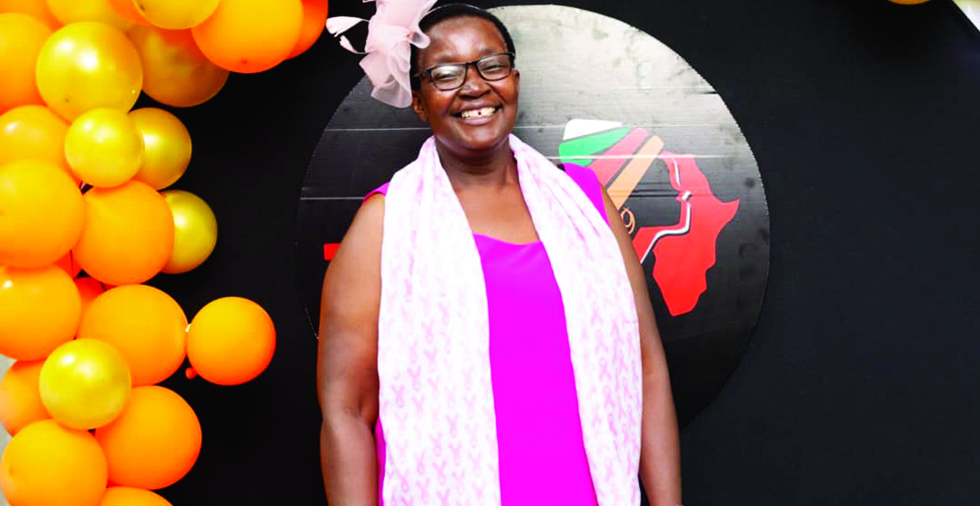
Ray Bande
Senior Reporter
FOR many women, life without one breast seems unimaginable.
To them, it is repulsive.
However, for Mrs Regnice Gutsa, a 57-year-old breast cancer survivor, life returned to normal, 18 years after hers was removed following a breast cancer diagnosis in 2007.
A cursory internet search reveals that the process of removing a breast for cancer — called a mastectomy — involves general anaesthesia, surgical incision to remove breast tissue and sometimes lymph nodes, and closure with stitches, often with temporary drains left in place. The specific type of mastectomy, such as a simple or modified radical mastectomy, depends on the individual’s cancer and whether other tissue like lymph nodes are removed.
In her touchy presentation during the official launch of THAW (Together Help Another Woman) organisation held in Harare last Saturday, one of the guest speakers, Mrs Gutsa, narrated her experience with breast cancer up to the present day. Early detection of the disease helped her greatly.
“I was diagnosed with breast cancer in 2006. I underwent a medical operation the following year. When I was diagnosed, I did not have a lump, but blood was oozing out from the nipple of the breast. I had a biopsy in November that same year, and that was when I was told I had breast cancer at Stage One.
“I had the entire breast removed. It was on January 16, 2007, when my breast was removed. After that, I underwent tests to determine which medication I should be given. I was prescribed a drug called Tamoxifen (Tamoxifen is a selective estrogen receptor modulator (SERM) primarily used to treat and prevent hormone receptor-positive breast cancer. It is also sometimes prescribed for other hormone-related conditions).
“I took the drug for five years. I did not undergo chemotherapy or radiotherapy because the cancer was detected early. After that, I would occasionally have tests and checks on the area where the breast had been removed. I also had liver function tests and chest X-rays. I would do that every three months. Now, I am checked once a year. They examine the other breast and the area where the breast was removed. They also check my chest. I have survived for 18 years since the breast was removed,” she recounted.
But how has life been without one of her breasts?
Mrs Gutsa said: “It has been almost normal. I thank God that I was diagnosed early, hence the success of all medical procedures that I underwent.
“Yes, there are some minor challenges, such as the inability to carry heavy loads, especially using the hand on the side where the breast was removed, and the general feeling of nausea about not having two breasts, as well as the need to wear an artificial breast when going to work or attending public functions.
“But this cannot be compared to keeping the breast and losing one’s life.
It is a worthy cause. Life is precious, after all. Yes, as a daughter-in-law, there are certain expectations regarding roles and duties, especially in family gatherings, but one just has to make it clear that they are not in a position to perform some of those chores because of their condition.”
In her speech during the official launch, Mrs Nicolette Kulera, founder of THAW, thanked key stakeholders in the project, while affirming the organisation’s continued support for women’s upliftment initiatives.
“Chief Tangwena and Mrs Tangwena —thank you for allowing us into your villages. Your support has been amazing, and we are very grateful. Bishop Mutungwazi and Pastor Shami —thank you for all your patience, help, and understanding. You helped direct me and encourage me in the early stages of THAW and continue to do so.
“There are many women present here and some in absentia who have donated clothing, food, and other basic necessities to assist disadvantaged women in our communities. Thank you, ladies. To Lilfordia Primary School, which has an amazing programme called Impact, introduced by their Grade Seven teacher, who believes in teaching children the importance of giving back to the community.
“They have supported our outreaches through sponsored walks to help mothers with babies in our local prison with diapers, baby milk, and other essentials. Thank you! To every woman here -THAW belongs to you. It is your platform, your voice, and your sisterhood,” she said.