admin
admin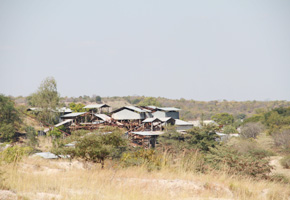
Councillor John Mudenda of Kamativi Ward 11 said since the mine was closed in 1994, many promises were made about the mine reopening and nothing tangible had materialised, but this time around he was certain that the mine would reopen.
He could almost bet on his last dollar that the mine would be up and running soon. Clr Mudenda is one of the thousands of people that lost their jobs when the tin mine closed due to liquidity challenges. The mine was one of the victims of the Economic Structural Adjustment Programme when Government stopped subsidising the mine’s parent company, the Zimbabwe Mining Development Corporation (ZMDC), which was incurring huge losses due to falling commodity prices.
Clr Mudenda still has a newspaper cutting from the Chronicle of 1996 with a story about Kamativi Tin Mine reopening through the help of foreign investors. Although he has held on to the cutting for 16 long years, he believes the mine will finally see some productive days.
“We heard that there have been some people visiting the tin mine, some of them investors who have plans to resuscitate the mine by the end of the year.
“We have not yet been formally informed but we heard from reliable sources. We really want the mine to be reopened as soon as possible so that people can be employed.
“The mine was closed in 1994 and there has been nowhere to work because the mine was the centre of production in the town,” said Clr Mudenda.
Clr Mudenda said when the mine was closed, they were told that it would reopen after six months but it did not happen that way.
“I believe the Government is doing something to revive the mine and people are still hopeful even after such a long time. Kamativi is the main town between Hwange and Binga and when the mine closed, the town came down with it.
“The reopening of the mine would employ a significant number of people. We look forward to about 2 098 people being employed by the mine but we understand that there is a possibility that not all of them will get a job,” he said.
Most of the people living in Kamativi are former employees of the mine who had nowhere to go and continued living in the mine compound.
One of the compound dwellers and former mine worker, Mr Philip Ngwenya (48), said although they had suffered a great deal and had not had the opportunity to find employment elsewhere, they were hopeful that the reopening of the mine would improve their fortunes.
“We know that even when the mine is reopened, it will not cater for everyone, that is why we want mine co-operatives for tin panning.
“These co-operatives will go a long way in providing people with employment and a steady income.
“We are very grateful though that when the mine was closed, we were left with some infrastructure and we still have a place to live unlike at the Gwayi River Mine where all the infrastructure was destroyed after the closure of the mine,” he said.
Mr Ngwenya said life at the compound was tough with residents having gone for years without basic necessities such as safe drinking water.
“Things have improved though because there is now a borehole nearby, there is a clinic, we have electricity and our children have schools to go to,” he said.
About a month ago, a group of South African investors were said to be prepared to invest $100 million in a joint venture with ZMDC to revive operations at Kamativi Tin Mine.
Mines and Mining Development Deputy Minister Gift Chimanikire said the investors indicated plans to rekindle operations at the tin mine before the end of the year.
He said the investors made their presentation to ZMDC, indicating that they were ready to invest $100 million to reopen the tin mine.
Mr Chimanikire said the exploration work done by the investors showed that the project was viable.
He said during their exploration work, the investors also discovered a claim adjacent to Kamativi Tin Mine from which 500 000 tonnes of tin could also be produced. The investors also identified three other minerals in that locality.
The mine, which opened in 1936, was closed in June 1994 due to lack of viability stemming from depressed international tin prices and falling ore grades. At the time of its closure, Kamativi Tin Mine was the biggest tin mine in Africa.
The depression emanated from the devastating effects of a tin price crash when overnight, the price crashed from about $10 000 per tonne to less than $4 000.
At present, a tonne of tin fetches between $21 000 and $22 000 on the international market.
The mineral, which during its processing would have minerals such as tantalite and lithium recovered, is used in electro-plating, creating alloys and manufacturing kitchen utensils.
Tin mining was a major economic activity in Matabeleland North Province and at its peak; the mine produced one million tonnes of the base metal annually.
After they lost their jobs, the tin miners and their families have had to earn a living through selling hay, fish and sculptures.
Fishing has, however, been the most popular but most dangerous.
“My husband lost a limb when he was fishing in one of the crocodile infested rivers. It is now scary to fish although we need to in order to make ends meet,” said Mrs Pauline Tuturu (32).
Mrs Tuturu said because they have had it bad, they had no choice but to fish in what they call the “DRC”, the “Dangerous
River of Crocodiles” as they had to sell the fish for money. Her husband lost a limb when he was attacked by a crocodile while fishing in the “DRC”.
Mrs Tuturu said after her husband was injured they had to stop the fishing business and turned to selling hay.
“The lucky ones are still fishing in the crocodile-infested river. The Government should make sure that the mine is re-opened so that our husbands can be formally employed,” she said.
The only other people who are formally employed in Kamativi are teachers, the police and a couple of nurses.
Mrs Tuturu said although they struggle to pay rentals to Hwange Rural District Council (HRDC), which runs the town, schools, water and medical facilities were available.
There are a number of “service providers” at the compound where the former tin miners and their families stay. There are little clothing shops and tuck shops that sell a variety of goods.
The little matchbox houses they live in are named after fallen heroes of the liberation struggle such as Cde Jason Ziyaphapha Moyo, Dr Joshua Nkomo and Cde Masotsha Ndlovu.
Meanwhile, the HRDC sub-office has since been abandoned together with the town hall. There are no distinct roads and there is tall grass everywhere. It has become a “ghost” town.
Ms Siphathisiwe Nkomo (20) whose husband owns a tuck shop located at the mine compound said life had been a bit easier for her and her family but there was a need for the mine to be reopened.
“There is still no work being done and people need to start working. Civil servants are the only ones who have jobs. We heard that the mine would be re-opened soon and we are hopeful that this time it will start running.
“If the mine re-opens, people would be able to get jobs and life would be much better for them,” she said.


 Online Reporter